

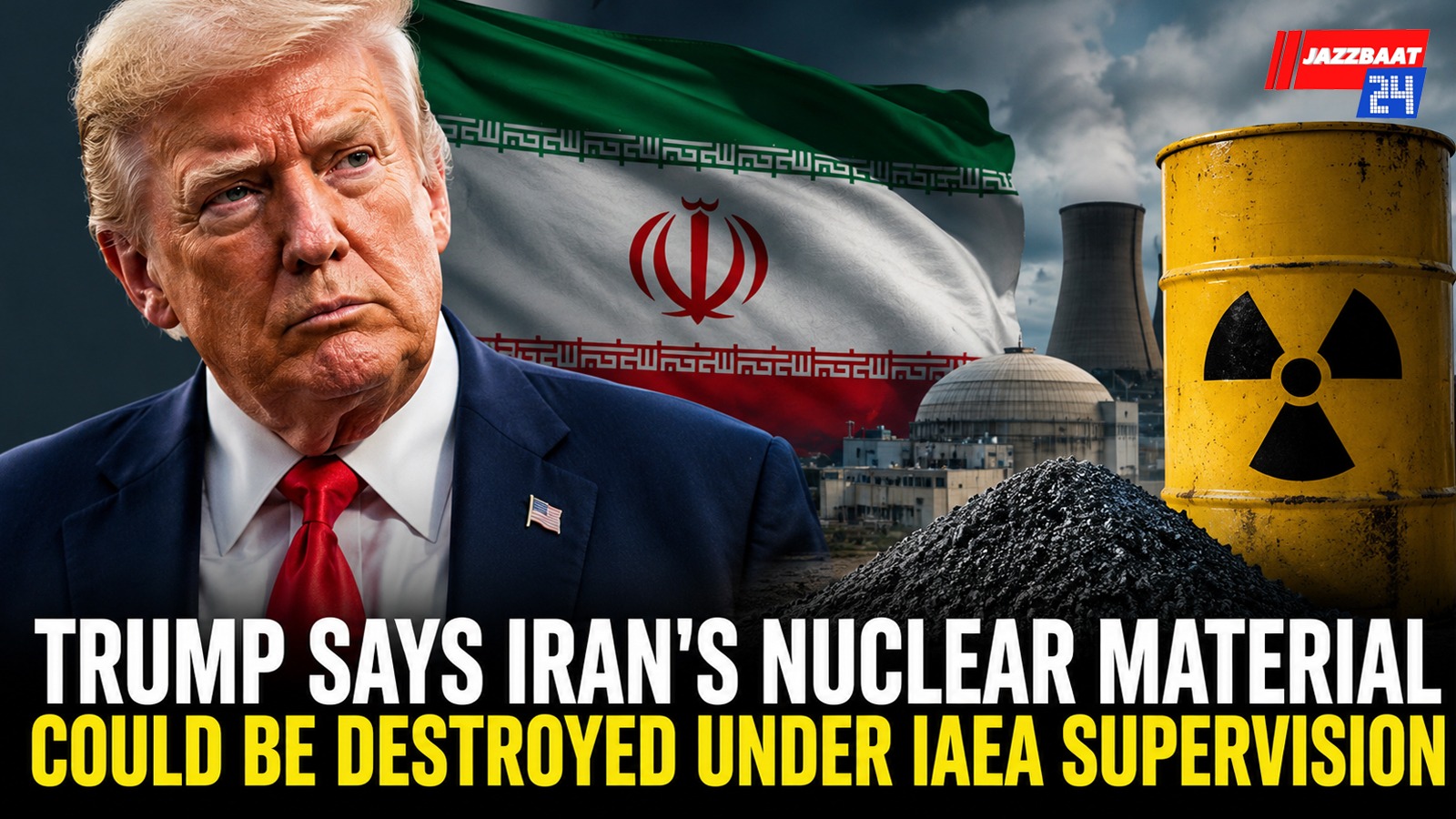
U.S. President Donald Trump has said that Iran's enriched uranium, which he referred to as "nuclear dust," could either be transferred to the United States for destruction or eliminated at its current location or another agreed site under international supervision. The proposal marks a shift from his earlier position that Iran must hand over its enriched uranium to Washington as part of any future agreement.
In a post on Truth Social, Trump stated that the enriched uranium could be destroyed "in place" in coordination with Iran or at "another acceptable location," with oversight from the International Atomic Energy Agency or an equivalent nuclear authority.
The remarks come as negotiations continue between Washington and Tehran amid efforts to secure a broader agreement on Iran's nuclear programme and regional security issues. Trump has maintained that any final deal must ensure that Iran cannot use its enriched uranium stockpile for nuclear weapons development.
According to reports, U.S. officials are considering several options for disposing of Iran's enriched uranium, including destruction within Iran under strict international monitoring or transfer to another country for supervised disposal. These proposals are seen as attempts to find a compromise acceptable to both sides while preserving diplomatic momentum.
Iran, however, has publicly rejected claims that it has already agreed to remove its enriched uranium from the country. Iranian media reports indicate that Tehran has not made any formal commitment on transferring nuclear material abroad as part of the ongoing talks.
The issue of Iran's enriched uranium stockpile remains one of the most sensitive aspects of the negotiations. While diplomatic discussions are continuing, major differences persist over sanctions relief, nuclear restrictions and verification mechanisms.
Trump emphasized that any agreement must be "great and meaningful," warning that if a satisfactory deal cannot be reached, there may be no deal at all. The coming days are expected to be crucial as negotiators work to bridge remaining gaps and determine the future of Iran's nuclear programme.