
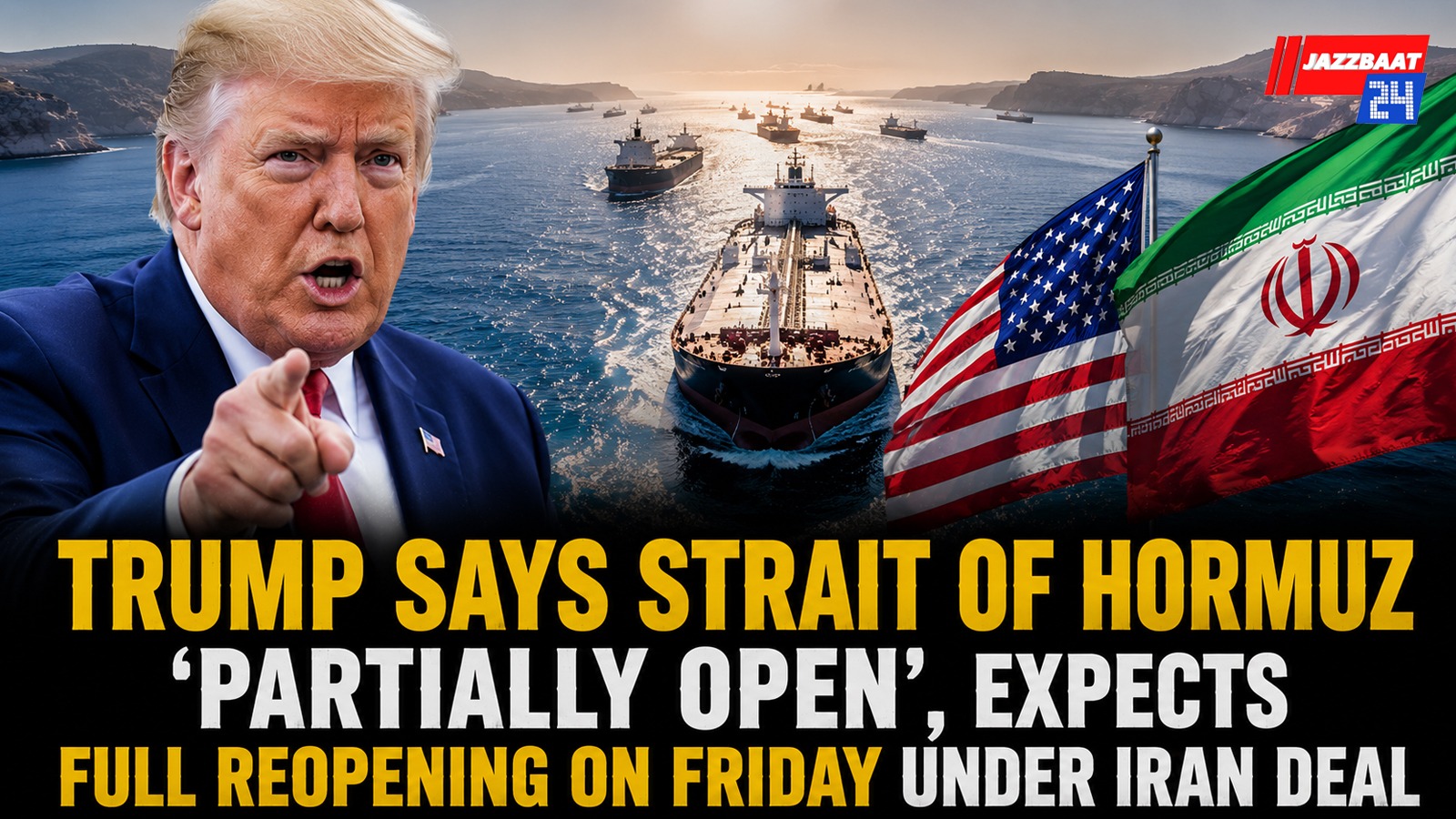
U.S. President Donald Trump has said that the strategically important Strait of Hormuz is already “partially opened” and will be “completely opened” on Friday as part of a newly announced agreement between the United States and Iran. Speaking ahead of the G7 summit, Trump said the deal has been signed digitally, with a formal signing ceremony scheduled for Friday in Geneva.
According to Trump, ships have already started moving through the waterway, which carries roughly one-fifth of the world's oil supplies. He described the reopening as a key component of the agreement and expressed confidence that maritime traffic would return to normal once the deal is formally finalized.
The agreement reportedly includes a ceasefire framework, the reopening of the Strait of Hormuz, and the beginning of negotiations over Iran’s nuclear program. Vice President JD Vance said the deal was signed electronically and stressed that no funds have been released to Iran so far, with any future sanctions relief dependent on Iranian compliance.
However, questions remain about how quickly shipping can fully resume. Maritime experts and shipping organizations have warned that mines, security concerns, and uncertainty over navigation arrangements could delay a complete return to normal operations even if the political agreement takes effect on Friday. Hundreds of vessels are reportedly still waiting for clearer safety guarantees before entering the route.
The Strait of Hormuz is one of the world's most critical energy chokepoints, linking the Persian Gulf to global markets. Any disruption there has a major impact on oil prices and international trade. Following Trump's announcement, oil prices fell as traders anticipated improved energy supplies and reduced geopolitical tensions.
While Trump has hailed the agreement as a breakthrough that could stabilize the Middle East, several allies and analysts remain cautious. Details of the memorandum of understanding have not yet been released publicly, and implementation of the deal is expected to be closely watched by regional powers, including Israel and Gulf nations.
If the reopening proceeds as planned, Friday could mark the first major restoration of unrestricted commercial traffic through the Strait of Hormuz since the escalation of tensions earlier this year.