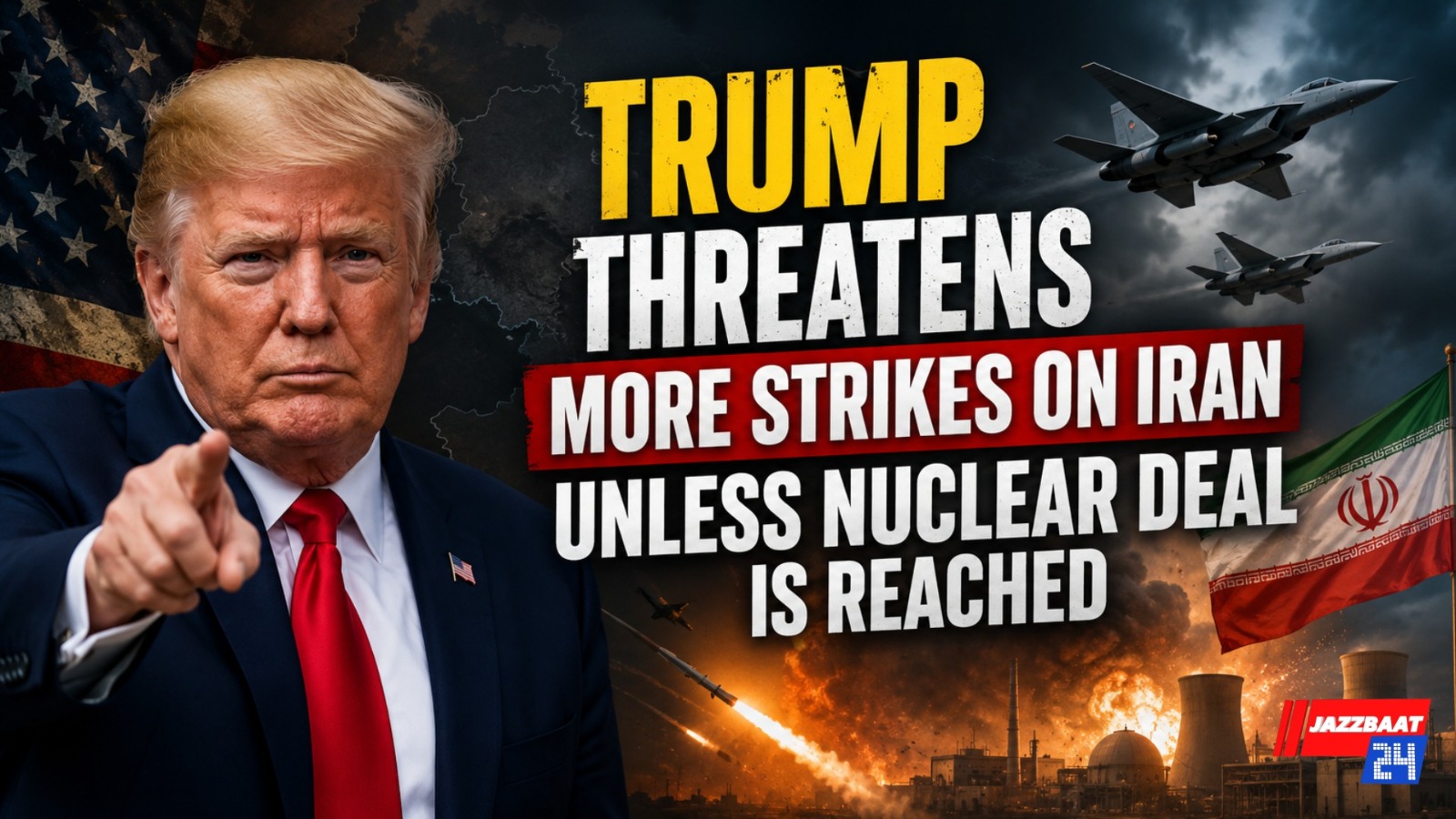
US President Donald Trump has warned that the United States could launch a new wave of military strikes targeting Iran's power plants and bridges as early as next week if Tehran refuses to return to the negotiating table and agree to a deal. The latest warning marks a significant escalation in Washington's pressure campaign against Iran amid rising tensions in the Middle East.
Speaking at the White House on Tuesday, Trump said Iran faced a clear choice between diplomacy and further military action. "You better make a deal," he warned, adding that if Tehran continued to reject negotiations, the United States would expand its military operations to include critical infrastructure. Trump claimed that such strikes would severely weaken Iran's ability to sustain its military and economic operations.
The remarks come after the United States intensified its military campaign against Iran in recent days, including fresh strikes on Iranian military installations and the reimposition of a naval blockade aimed at restricting Iranian maritime activity. The administration has accused Tehran of threatening commercial shipping in the Strait of Hormuz and supporting attacks on vessels and regional military targets.
Iran has strongly condemned the latest US threats, describing them as a violation of international law and warning that any attack on civilian infrastructure would provoke a decisive response. Iranian officials have also threatened to disrupt energy exports through the Strait of Hormuz, one of the world's busiest oil transit routes, if military pressure continues. The escalating rhetoric has heightened fears of a wider regional conflict involving Gulf nations and international shipping lanes.
The Strait of Hormuz remains strategically important, with roughly one-fifth of global oil and liquefied natural gas supplies passing through the narrow waterway. Continued military tensions have already affected shipping activity and contributed to volatility in global energy markets. Analysts warn that any prolonged disruption could push up oil prices and increase inflation worldwide.
Despite the sharp rhetoric, Trump indicated that diplomacy remains possible if Iran agrees to negotiate. Administration officials say the United States is seeking a comprehensive agreement that would permanently curb Iran's nuclear programme, address regional security concerns and ensure freedom of navigation in the Gulf. However, Tehran has repeatedly maintained that it will not negotiate under military threats or economic coercion.
International observers have urged both sides to exercise restraint, warning that further escalation could have serious humanitarian, economic and geopolitical consequences. With Trump's latest deadline approaching, attention is now focused on whether diplomatic efforts can prevent another round of military confrontation or whether tensions will intensify further in the coming days.