

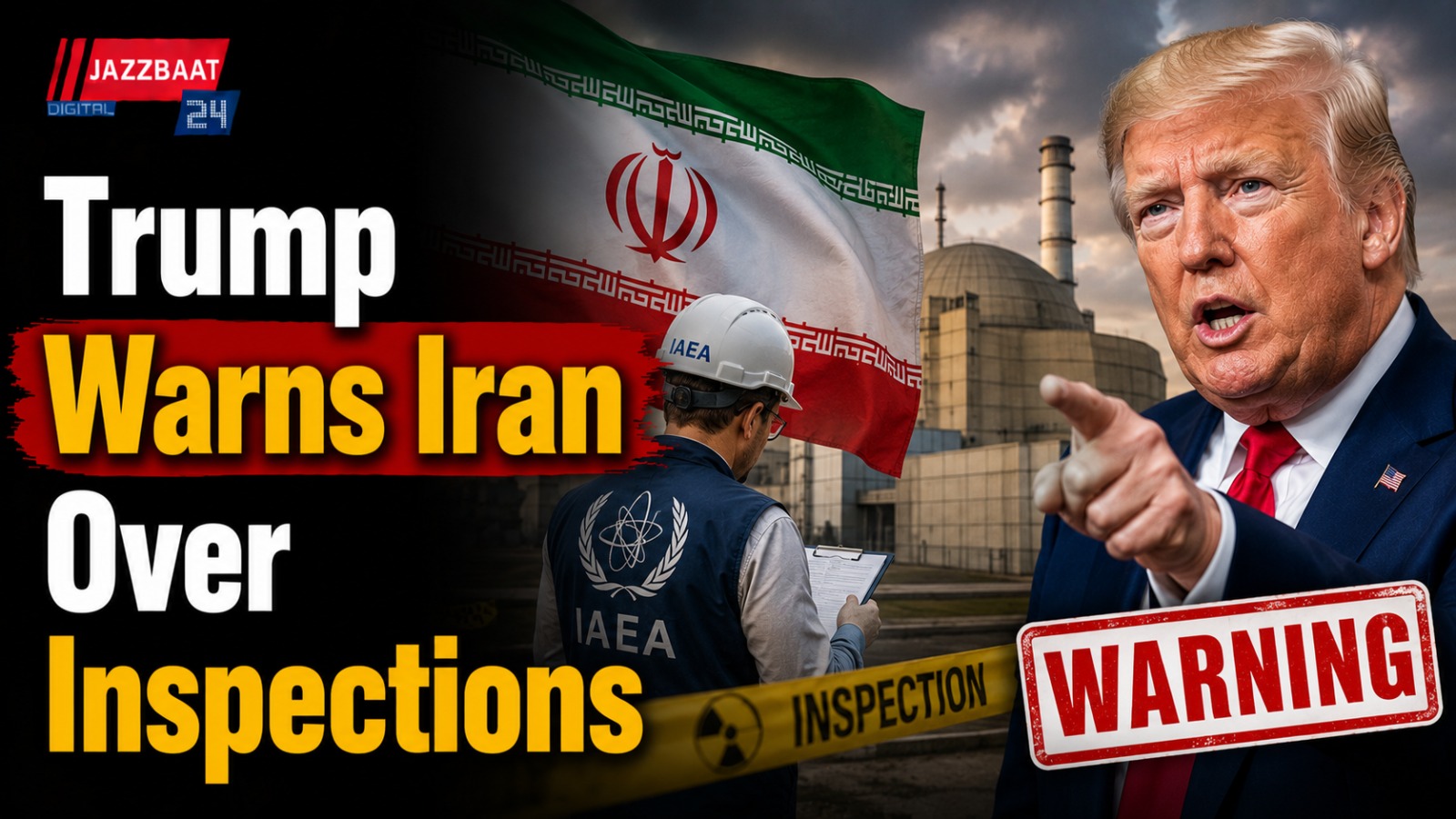
US President Donald Trump has warned that he would cancel planned meetings with Iran if Tehran refuses to allow nuclear inspections by the International Atomic Energy Agency.
Speaking amid renewed diplomatic tension, Trump said Iran must permit full nuclear inspections if it wants negotiations with Washington to continue. He claimed that Iran had already agreed to allow IAEA inspectors access to its nuclear facilities, but Iranian officials have publicly denied any such commitment.
Trump said there would be “no meetings” if Iran rejects inspections. His remarks have added fresh uncertainty to the fragile diplomatic process between the two countries.
The dispute comes at a sensitive time, shortly after the US Senate passed a resolution seeking to limit Trump’s authority to take further military action against Iran without approval from Congress. The vote reflected growing concern among lawmakers over the possibility of another military escalation in the Middle East.
The IAEA has long pushed for wider access to Iran’s nuclear sites, saying inspections are necessary to verify whether Tehran’s nuclear programme remains peaceful. Western nations have accused Iran of failing to provide enough transparency, while Iran has repeatedly insisted that its nuclear activities are for civilian purposes.
Trump has also said that the US would keep pressure on Iran through sanctions and military presence in the region. At the same time, his administration has indicated that talks could continue if Tehran agrees to strict monitoring.
Iran, however, has rejected suggestions that it has accepted new inspection terms. Iranian officials say Washington is misrepresenting the status of negotiations and trying to put political pressure on Tehran.
The latest exchange has created confusion over whether both sides are close to a deal or moving toward another breakdown in talks. For Trump, inspections are being presented as a non-negotiable condition. For Iran, accepting such terms without clear guarantees could be seen as a political risk at home.
The standoff also carries wider regional consequences. Any failure in talks could increase tension in the Gulf, affect oil markets, and raise fears of renewed military action.
For now, the future of US-Iran diplomacy appears to depend on one central question: whether Iran will allow international inspectors back into its nuclear programme under terms acceptable to Washington.