

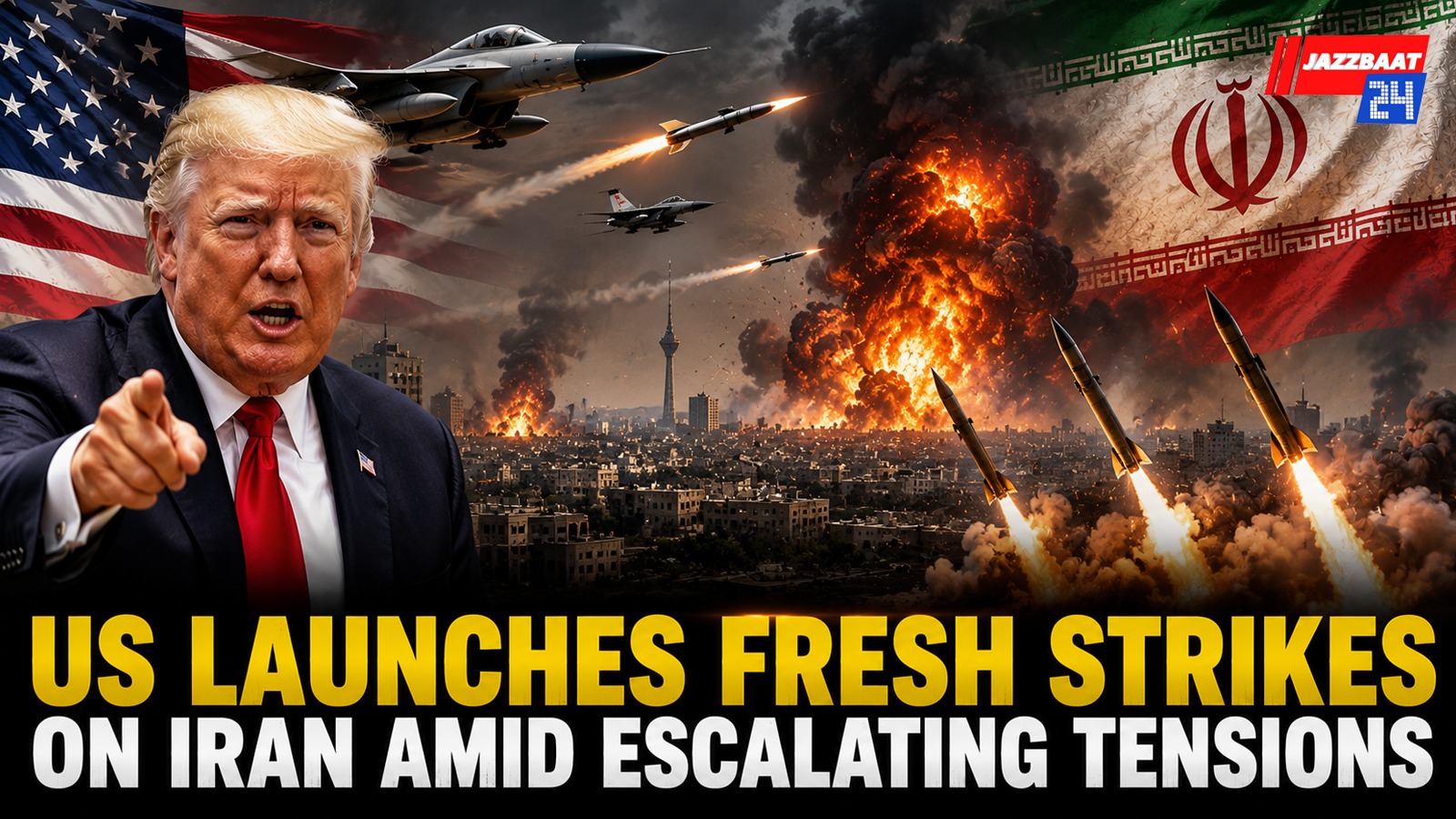
The United States has launched a new round of military strikes against multiple targets inside Iran, marking a significant escalation in the rapidly intensifying conflict between Washington and Tehran. The operation was announced by U.S. Central Command (CENTCOM), which stated that the strikes were carried out in response to what it described as Iran’s “continued and unwarranted aggression.”
According to CENTCOM, the latest strikes began on Wednesday evening and targeted military surveillance systems, communication networks, radar installations, and air-defense sites across Iran. U.S. officials characterized the operation as a defensive response aimed at degrading Iran’s military capabilities and preventing further attacks against American forces and interests in the region.
The fresh military action comes just days after the collapse of a fragile ceasefire that had temporarily reduced hostilities in the Gulf. Tensions surged after the downing of a U.S. Apache helicopter near the Strait of Hormuz, an incident that Washington blamed on Iran. In response, President Donald Trump authorized retaliatory strikes against Iranian military assets, triggering a new cycle of confrontation between the two countries.
Iran has strongly condemned the attacks and vowed to respond. Iranian officials have accused the United States of violating international norms and warned that further military action could destabilize the entire Middle East. Reports indicate that Iran has already launched retaliatory missile strikes targeting U.S. military facilities in Bahrain, Kuwait, Jordan, and other regional locations, though the extent of the damage remains unclear.
The renewed conflict has also raised concerns over global energy supplies. Oil prices climbed sharply after reports of additional U.S. strikes and growing fears over security in the Strait of Hormuz, a critical maritime route through which a large portion of the world’s oil shipments pass. Markets remain on edge as traders assess the possibility of further escalation and disruptions to shipping in the Gulf region.
Despite the military escalation, diplomatic efforts have not completely stalled. Mediators from several regional countries continue to push for negotiations, while U.S. officials have indicated that a political settlement remains possible if Iran agrees to address key security concerns. However, with both sides exchanging military blows and issuing increasingly strong warnings, prospects for an immediate de-escalation appear uncertain.
The latest strikes underscore the fragile security environment in West Asia and the growing risk that localized confrontations could develop into a broader regional conflict. As military operations continue and diplomatic channels remain under pressure, the international community is closely watching developments that could have far-reaching geopolitical and economic consequences.