
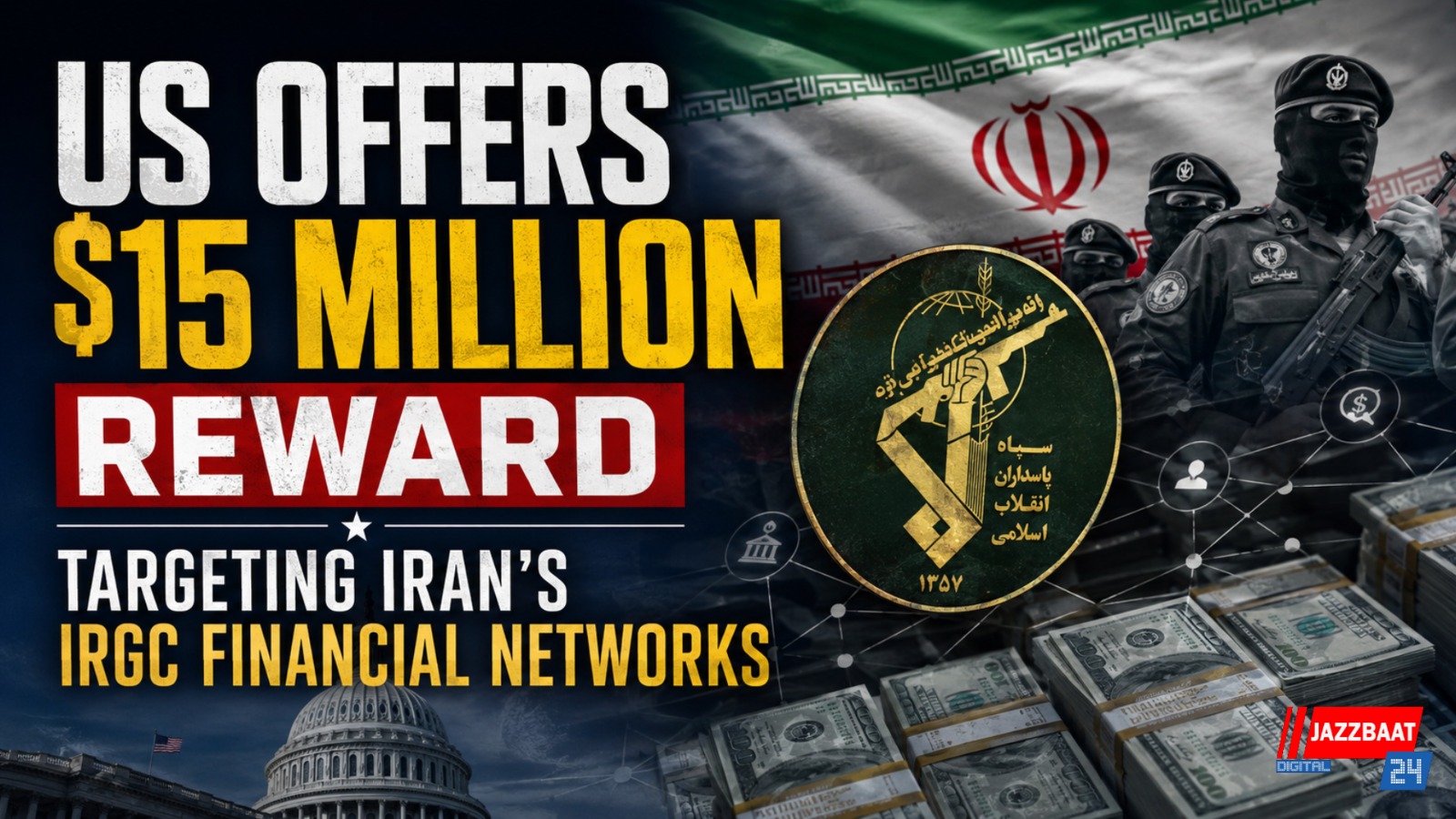
Washington: The United States Department of State has announced a reward of up to $15 million for information that could help disrupt the financial mechanisms of Iran’s Islamic Revolutionary Guard Corps (IRGC), according to official statements and programme updates.
The initiative, part of the State Department’s long-running “Rewards for Justice” programme, is aimed at identifying individuals, companies, and networks allegedly involved in financing the IRGC and its affiliated branches, including the IRGC-Quds Force.
Officials said the move is designed to weaken what Washington describes as a complex system of funding used by the IRGC through illicit trade channels, shell companies, and international intermediaries. The US has long accused the organisation of playing a central role in Iran’s regional military activities and support for allied armed groups.
The announcement comes amid a broader escalation of economic and diplomatic pressure on Tehran. Recent US actions have included new sanctions on individuals and firms linked to Iranian oil shipments and financial transactions believed to benefit the IRGC network.
According to the State Department, the reward is intended to encourage actionable intelligence from across the world that could expose hidden revenue streams and financial facilitators. The programme has previously offered similar rewards for information on terrorist financing networks globally.
The IRGC, established after Iran’s 1979 revolution, is a powerful branch of the country’s armed forces and operates parallel to the regular military. It also oversees external operations through its Quds Force.
Washington has designated the IRGC as a foreign terrorist organisation and argues that it is responsible for destabilising activities across the Middle East. Iran, however, consistently rejects these allegations, calling them politically motivated and part of a broader US pressure campaign.
Security analysts say the latest reward announcement signals continued focus by Washington on financial disruption rather than direct military confrontation, as tensions between the two countries remain high.
The development is expected to further strain US-Iran relations, which have seen repeated cycles of sanctions, diplomatic standoffs, and indirect negotiations in recent years.