

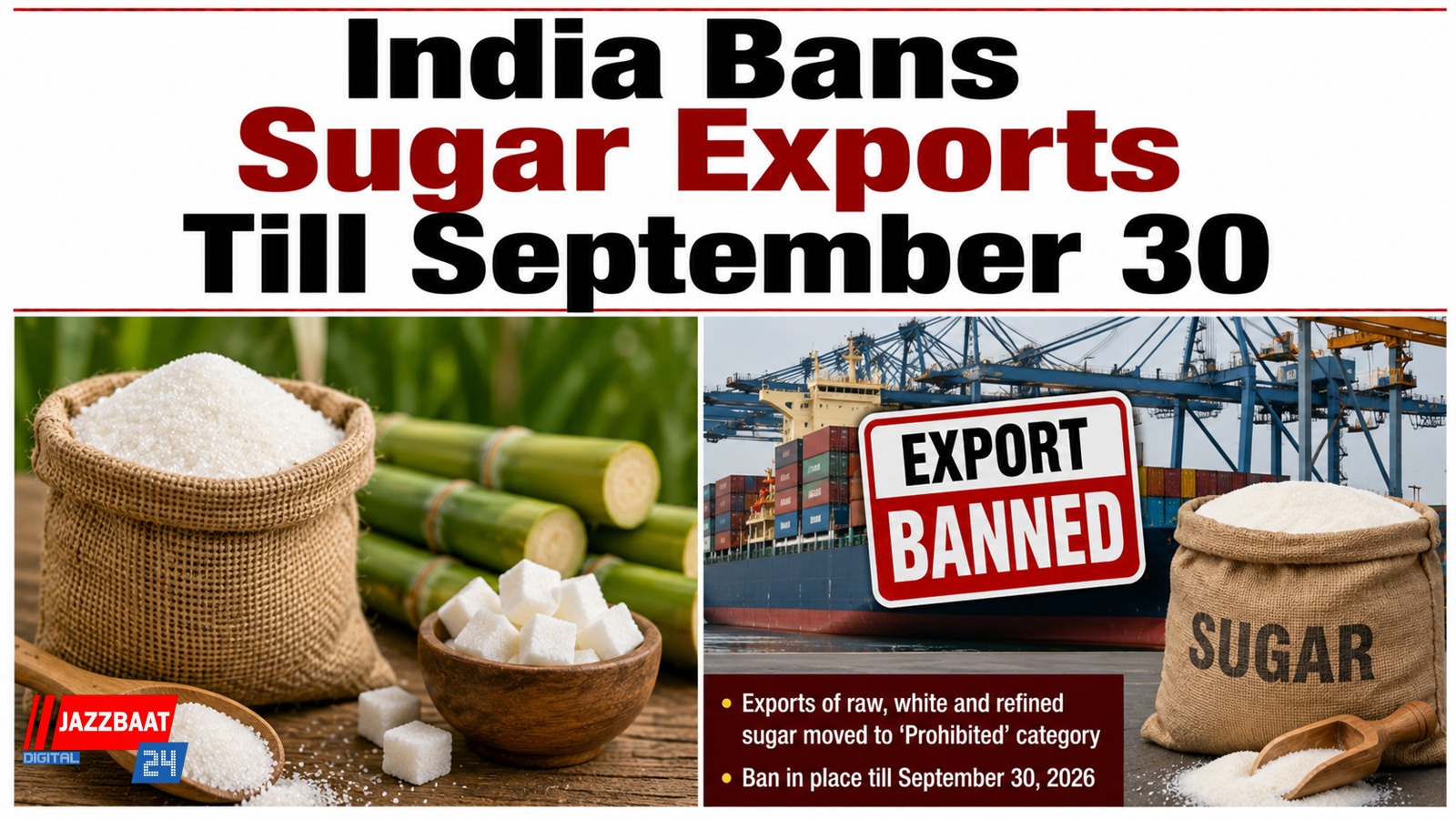
The Centre has imposed an immediate ban on the export of sugar till September 30, 2026, in a major move aimed at controlling domestic prices and ensuring adequate availability in the local market. The decision was announced through a notification issued by the Directorate General of Foreign Trade (DGFT) under the Ministry of Commerce and Industry.
According to the notification, exports of raw sugar, white sugar and refined sugar have now been shifted from the “Restricted” category to the “Prohibited” category with immediate effect. The government said the measure was necessary as India faces concerns over declining sugar production and rising domestic demand.
India, the world’s second-largest sugar producer and one of the biggest exporters after Brazil, had earlier allowed mills to export around 1.59 million metric tonnes of sugar, expecting surplus production this season. However, lower cane yields in key sugar-producing states and fears of weak monsoon conditions linked to El Niño have raised concerns that production may fall short of consumption for the second consecutive year.
The government has, however, provided certain exemptions under international agreements. Sugar exports to the European Union and the United States under CXL and Tariff Rate Quota (TRQ) arrangements will continue. Shipments under the Advance Authorisation Scheme and government-to-government agreements have also been exempted from the ban.
Officials also clarified that consignments already in the export pipeline will be allowed under specific conditions. Exports can proceed if loading had already begun before the notification was issued, or if shipping bills had already been filed and vessels had reached Indian ports before the order came into effect.
The decision is expected to impact global sugar markets significantly. Following the announcement, global sugar prices rose sharply, with raw sugar futures in New York climbing over 2 per cent and white sugar futures in London rising nearly 3 per cent. Analysts believe rival exporters such as Brazil and Thailand may benefit from India’s absence in international markets.
Meanwhile, shares of several Indian sugar companies witnessed declines in early trading on Thursday after the export ban announcement triggered concerns over reduced overseas business opportunities for the sector.