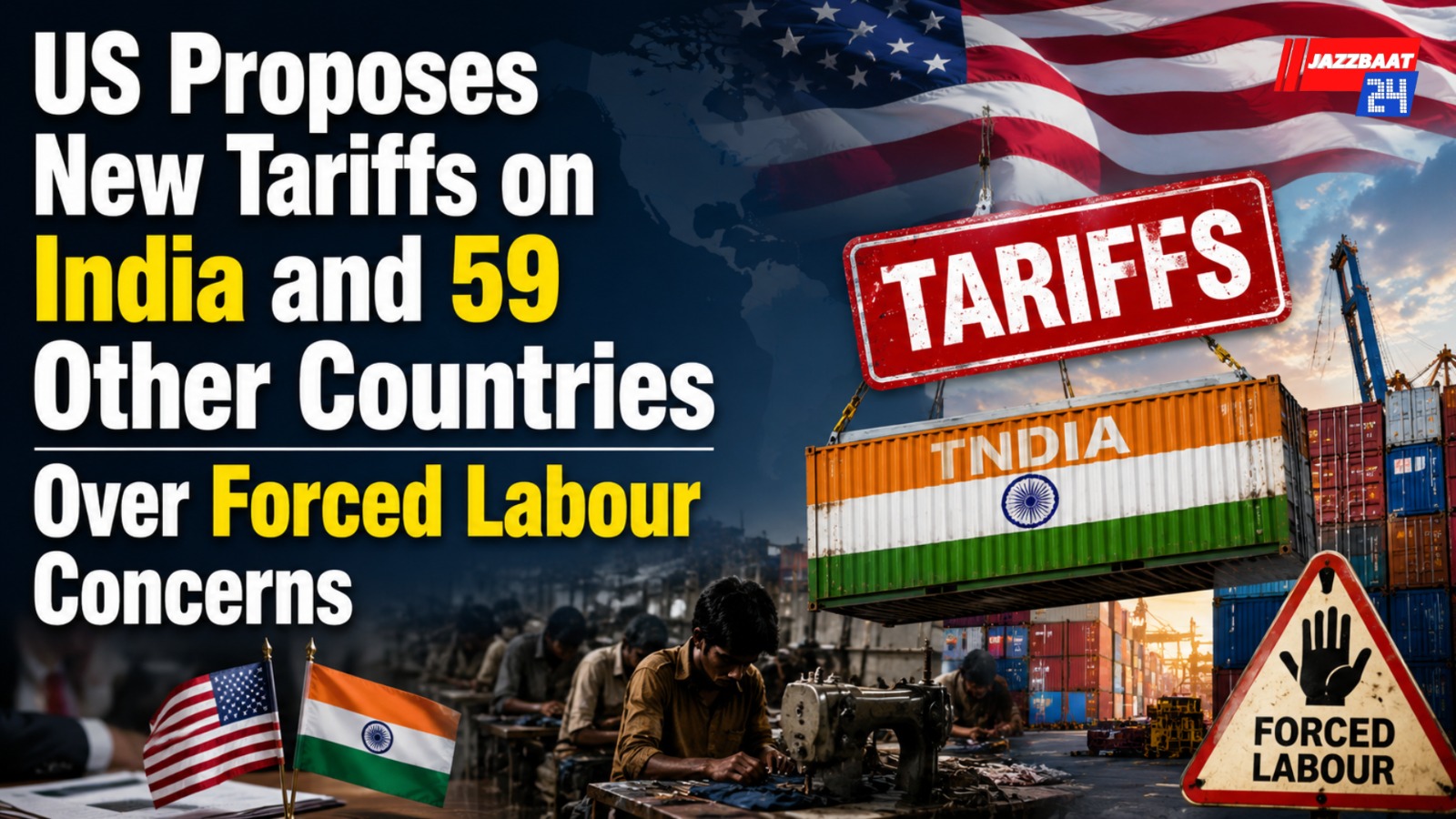
The United States has proposed fresh tariffs on imports from 60 economies, including India, alleging that these countries have failed to effectively prevent the import and trade of goods made using forced labour. The proposal, announced by the Office of the United States Trade Representative (USTR), is part of a wider investigation conducted under Section 301 of the U.S. Trade Act of 1974.
Under the proposal, India could face an additional tariff of 12.5% on exports to the United States. The USTR stated that India is among a group of countries that have not adequately enforced restrictions on products linked to forced labour, creating what Washington describes as an unfair competitive advantage over American businesses and workers.
The move comes at a sensitive time, as India and the United States are currently engaged in negotiations aimed at strengthening bilateral trade ties and finalising a broader trade agreement. The tariff proposal was announced while trade officials from both countries were holding discussions in New Delhi, raising concerns that the issue could complicate ongoing talks.
According to the USTR, 15 economies would be subject to a 10% tariff, while the remaining 45 countries, including India, could face a higher duty of 12.5%. The agency argues that many trading partners have failed to implement or enforce import bans on goods produced through forced labour, resulting in market distortions that disadvantage U.S. producers.
However, the proposed measures are not yet final. The USTR has opened a public consultation process, inviting comments until July 6, followed by a public hearing on July 7 before making a final decision. India’s Commerce Ministry has said it remains engaged with U.S. authorities and is closely monitoring developments.
Several products are expected to remain exempt from the proposed tariffs, including energy products, rare earth minerals, pharmaceuticals, certain chemicals, aircraft parts, and selected agricultural goods. The USTR has also proposed a separate textile import mechanism that could allow limited volumes of apparel and textile products to enter the U.S. at reduced tariff rates.
Trade analysts believe the proposal reflects Washington’s increasing focus on labour standards and supply-chain transparency. While the tariffs are intended to address concerns over forced labour, they could also have significant implications for global trade flows and ongoing trade negotiations with major partners such as India.