
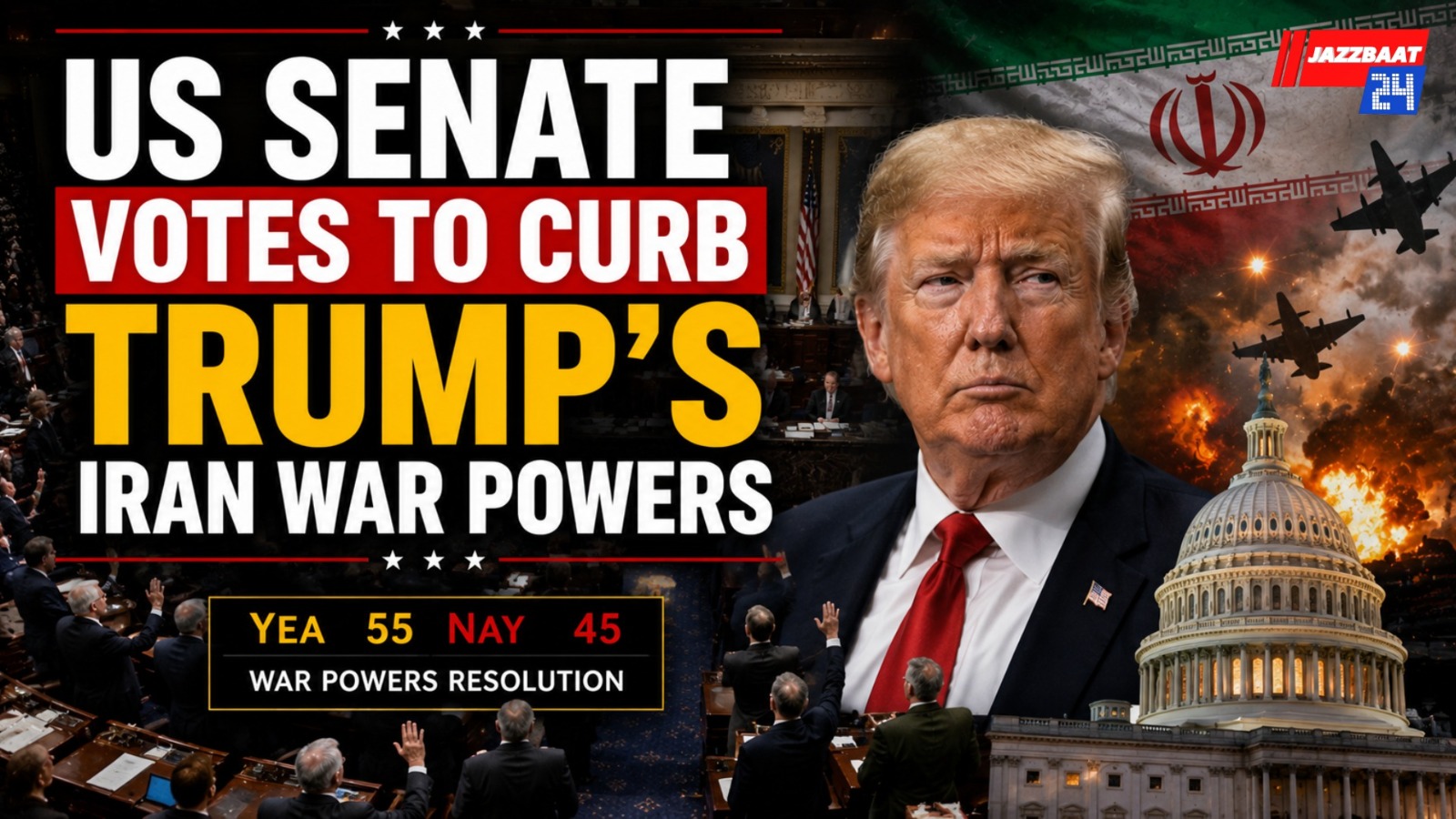
The U.S. Senate has passed a resolution aimed at limiting President Donald Trump's authority to continue military operations against Iran without explicit approval from Congress, marking a significant bipartisan rebuke of the administration's handling of the conflict. The measure was approved by a narrow 50-48 vote, with four Republican senators joining most Democrats in support.
The resolution invokes the 1973 War Powers Resolution, directing the president to remove U.S. armed forces from hostilities against Iran unless Congress formally authorizes military action or declares war. While the measure reflects growing concern among lawmakers over presidential war powers, legal experts note that its practical effect may be limited because of constitutional disputes over the law's enforceability.
Supporters of the resolution argued that the U.S. Constitution gives Congress—not the president—the authority to declare war. They said any prolonged military campaign against Iran should receive congressional approval rather than being carried out solely under executive authority. Senate Democratic leaders described the vote as an effort to restore Congress's constitutional role in decisions involving armed conflict.
The vote comes after months of heightened tensions between Washington and Tehran, including U.S. and Israeli military operations against Iran and continued diplomatic efforts to reach a broader peace agreement. Public opinion has also shifted, with recent polling indicating that only a minority of Americans believe the conflict has been worth its cost.
The White House dismissed the Senate action as largely symbolic, arguing that active hostilities have already eased following a ceasefire and maintaining that the president acted within his constitutional authority. Administration officials also warned that restricting presidential flexibility could weaken the United States' negotiating position in ongoing discussions with Iran and its regional partners.
Although the resolution is unlikely to immediately change U.S. military policy, it represents a rare moment in which both chambers of Congress have voted to challenge a president's conduct of an overseas military campaign under the War Powers Act. The measure underscores growing bipartisan debate over the balance of power between Congress and the White House on matters of war and national security, even as diplomatic negotiations with Iran continue.