
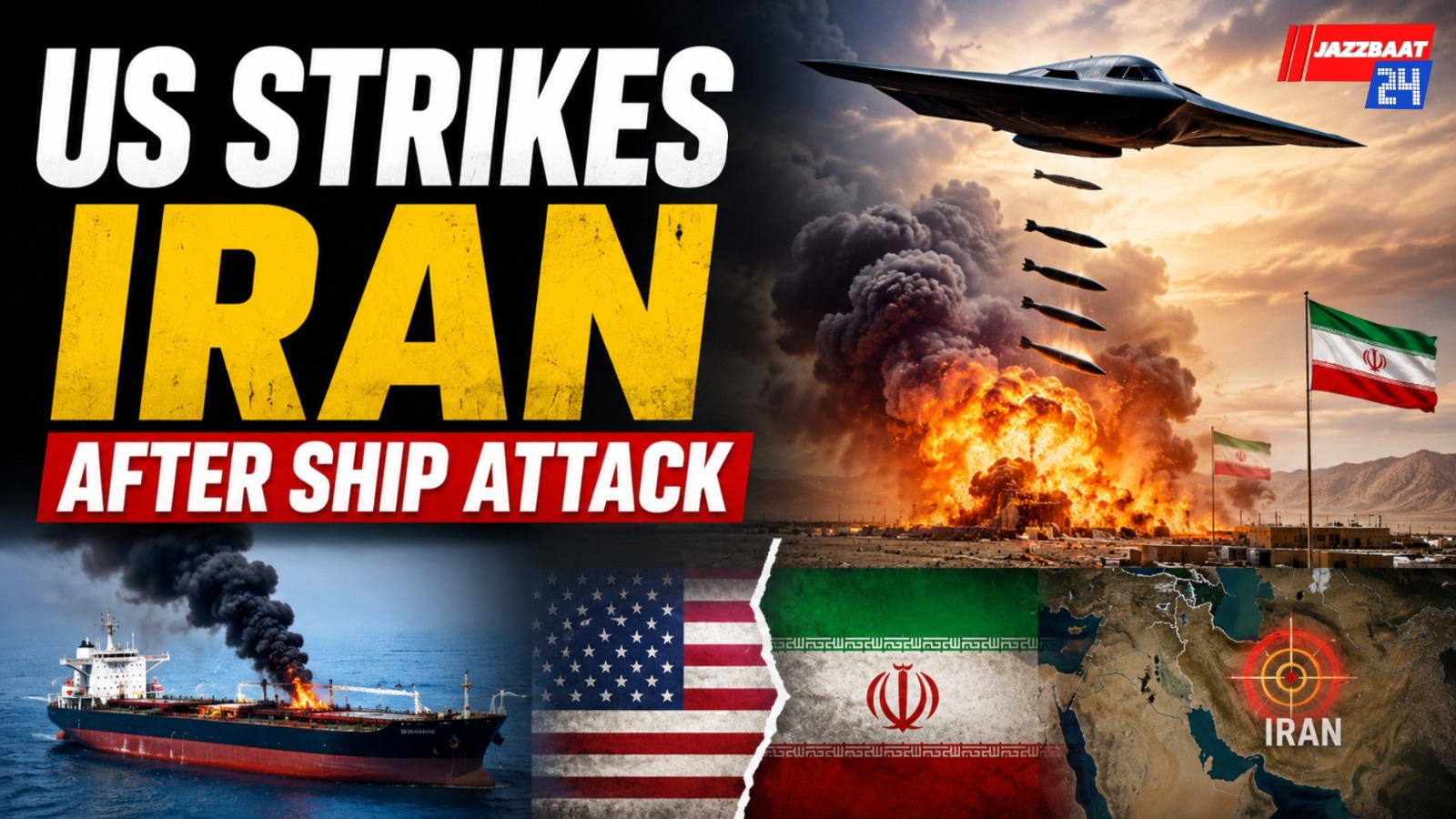
The United States has carried out fresh military strikes against Iran after Tehran allegedly launched a drone attack on a commercial cargo ship in the Strait of Hormuz, marking a major escalation in tensions in the Gulf region. The strikes are the first direct American military action against Iran since both sides agreed to a fragile ceasefire earlier this month.
According to the U.S. Central Command (CENTCOM), American forces targeted Iranian missile and drone storage facilities, launch sites and coastal radar installations that were allegedly involved in attacks on commercial shipping. Washington said the operation was a "proportionate response" aimed at protecting freedom of navigation in one of the world's most critical maritime trade routes.
The retaliation came a day after the Singapore-flagged cargo vessel M/V Ever Lovely was struck by an Iranian drone while transiting the Strait of Hormuz near the Omani coast. The ship suffered damage to its upper deck and bridge, though no casualties were reported. U.S. officials accused Iran of violating the ceasefire agreement and endangering international shipping.
President Donald Trump condemned the attack, calling it a "foolish violation" of the ceasefire and warning Tehran against further aggression. Vice President JD Vance also said that any additional attacks on commercial vessels or American interests would be met with force.
Iran, however, rejected the allegations and claimed that it has the right to regulate traffic through the Strait of Hormuz. Tehran later announced retaliatory actions against U.S.-linked targets in the region, including reported drone attacks near Bahrain and other Gulf locations, though significant damage or casualties have not been confirmed.
The latest exchange of strikes has renewed fears over the security of the Strait of Hormuz, through which nearly one-fifth of the world's oil supply passes. Shipping companies have raised threat levels, and several vessels have reportedly sought special permission before entering the strategic waterway.
Despite the heightened tensions, global oil prices remained relatively stable, as traders hope the conflict will not escalate into a broader regional war. However, analysts warn that any prolonged disruption in the Strait of Hormuz could have significant consequences for global energy markets and international trade.