
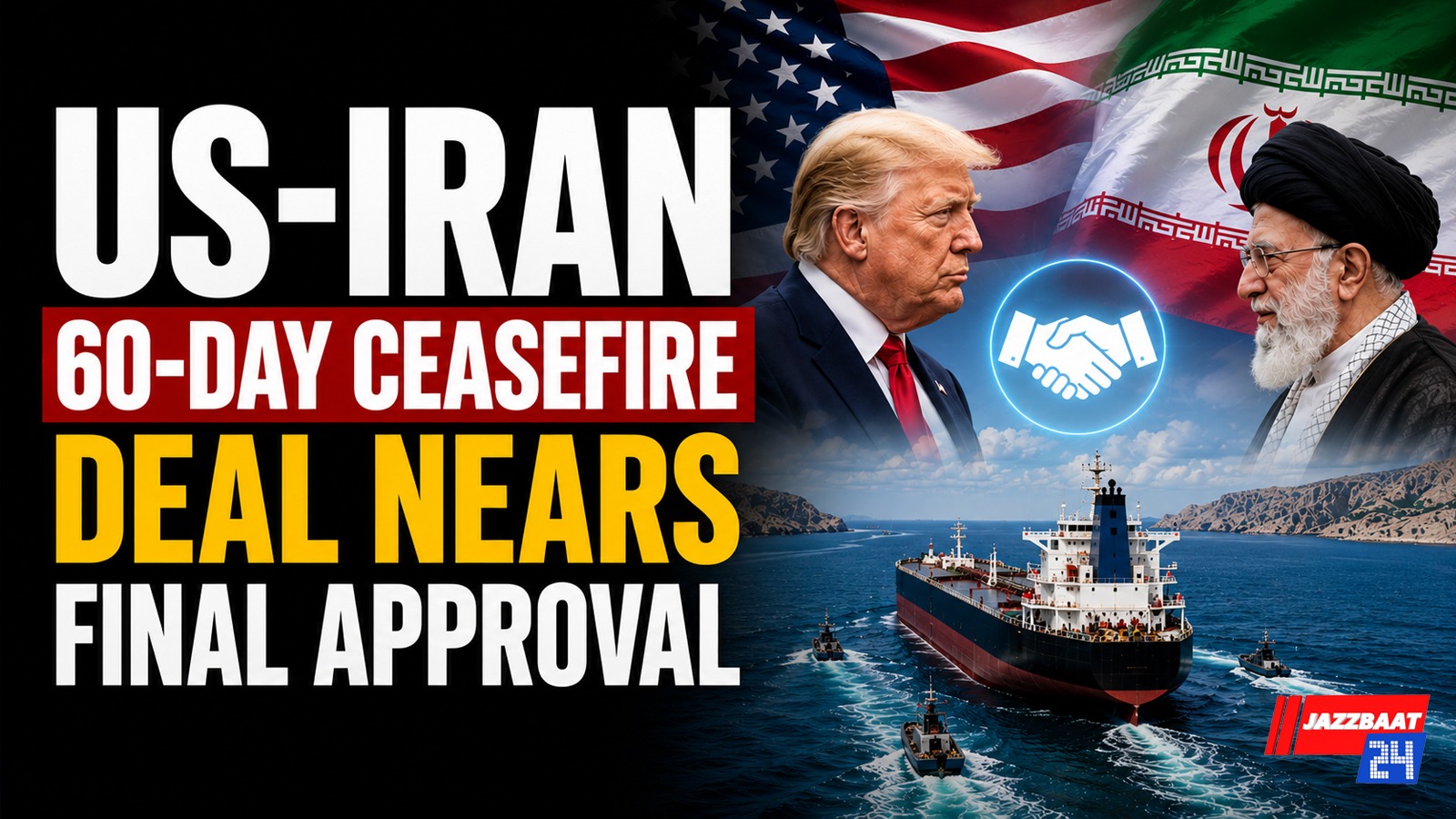
The United States and Iran are reportedly close to finalising a major 60-day ceasefire memorandum that could significantly reduce tensions in the Middle East after months of conflict and diplomatic uncertainty. According to multiple international reports, negotiators from both sides are now working on the final details of the proposed agreement, with mediators expressing cautious optimism that a breakthrough could happen within days.
The proposed deal is expected to include a temporary halt to hostilities, the reopening of the strategically important Strait of Hormuz, and the beginning of fresh talks surrounding Iran’s nuclear programme. The Strait of Hormuz is one of the world’s most critical oil shipping routes, and disruptions there in recent months have caused concern in global energy markets.
Reports suggest that under the draft agreement, Iran would remove naval mines and allow unrestricted shipping movement through the strait without imposing transit tolls. In return, the United States is expected to ease certain sanctions, lift restrictions on Iranian ports, and allow Tehran to resume oil exports during the ceasefire period.
Another key part of the negotiations involves Iran’s nuclear activities. Sources indicate that Tehran may provide assurances that it will not pursue nuclear weapons and could enter discussions regarding uranium enrichment and its stockpile of highly enriched uranium. However, officials from both countries have acknowledged that several disagreements still remain unresolved.
Former US President Donald Trump claimed that the framework of the agreement has been “largely negotiated,” though Iranian officials have responded cautiously and stated that no final agreement has yet been signed. Iranian media outlets have also stressed that discussions are still ongoing and that Tehran will not compromise on certain security interests.
Pakistan, along with regional powers including Qatar, Saudi Arabia, Turkiye and Egypt, has reportedly played an important role in mediating the talks. Pakistani Prime Minister Shehbaz Sharif recently said Islamabad hopes to host the next round of negotiations very soon.
If approved, the agreement could become one of the most significant diplomatic developments in the region in recent years, with possible impacts on global oil prices, regional stability and future US-Iran relations.