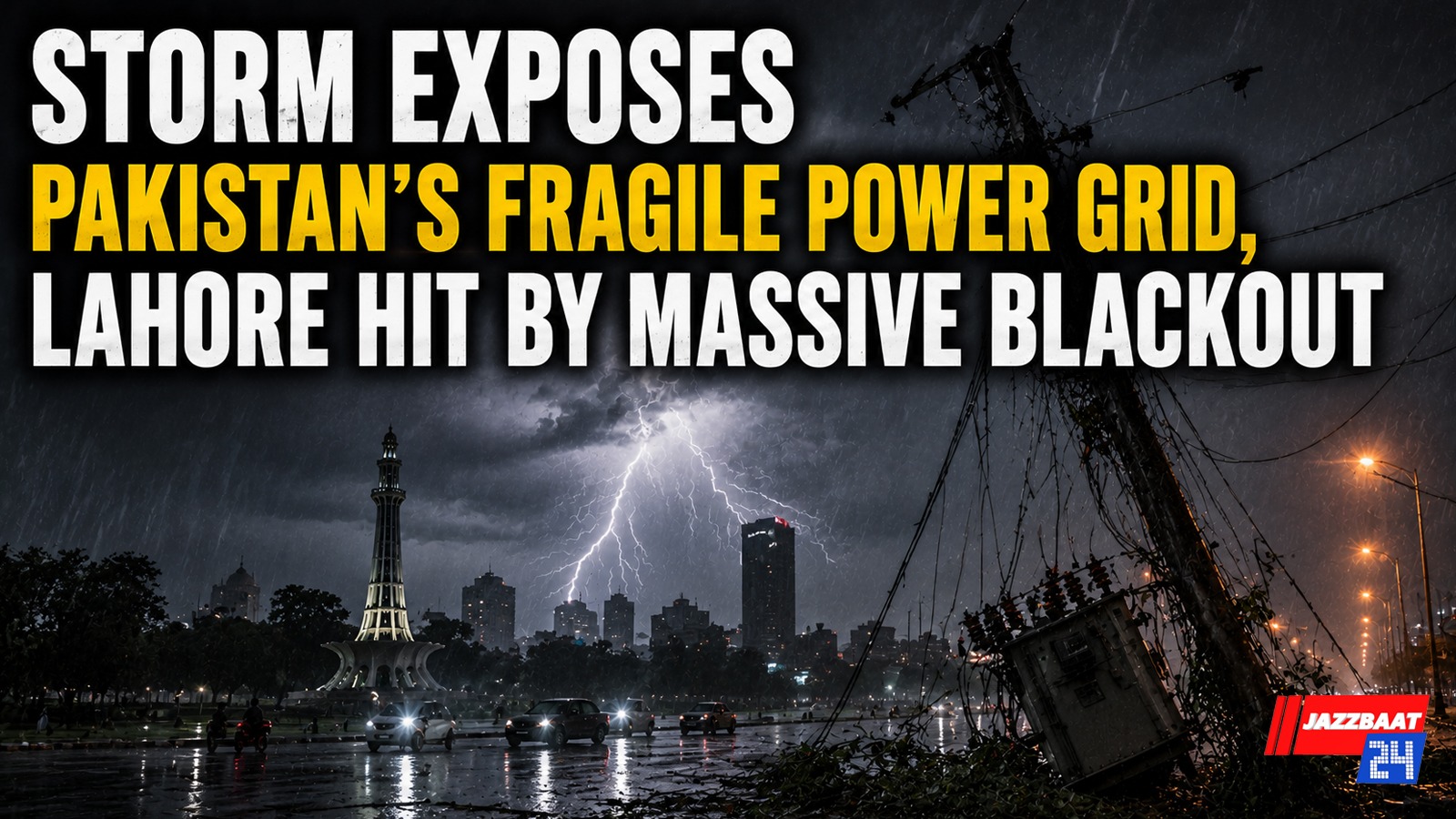
A severe thunderstorm has exposed major weaknesses in Pakistan’s electricity infrastructure, leaving large parts of Lahore and surrounding districts without power for several hours. The storm, which brought strong winds, heavy rain, and hail, damaged power lines, transformers, grid equipment, and utility poles, triggering one of the city’s most widespread blackouts in recent months.
According to officials, nearly 300 feeders of the 11kV distribution network were affected during the storm. The Lahore Electric Supply Company (LESCO) reported that 282 feeders tripped, including around 200 within Lahore alone, causing extensive disruptions across residential and commercial areas.
The outages plunged several neighborhoods into darkness, affecting daily life for thousands of residents. Areas including Johar Town, Gulberg, Garden Town, Wapda Town, Township, Mughalpura, Raiwind Road, Ferozepur Road, and numerous other localities experienced prolonged electricity cuts. Many residents complained that power remained unavailable for several hours despite repeated complaints to utility authorities.
The blackout also disrupted water supplies across parts of the city. Tube wells operated by the Water and Sanitation Agency (WASA) were unable to function without electricity, leaving many households struggling to access water. Residents reported that water services resumed only after electricity was gradually restored.
LESCO officials stated that emergency teams were deployed immediately after the storm subsided. The utility company claimed that crews worked throughout the day to restore damaged feeders and reconnect affected areas. By Saturday afternoon, most of the tripped feeders had reportedly been re-energized, although assessments of infrastructure damage were still ongoing.
The storm caused widespread physical damage, with uprooted trees falling onto overhead power lines and several electricity poles being knocked down. Multiple transformers were also damaged, adding to the complexity of restoration efforts. Utility officials acknowledged that it could take days to fully determine the financial impact of the storm on the power network.
Beyond the power crisis, heavy rainfall led to waterlogging in several low-lying areas and underpasses, disrupting traffic and highlighting concerns over urban infrastructure and drainage systems. Analysts say the incident underscores the vulnerability of Pakistan’s utility network to extreme weather events and raises fresh questions about the resilience of critical public infrastructure in major cities.