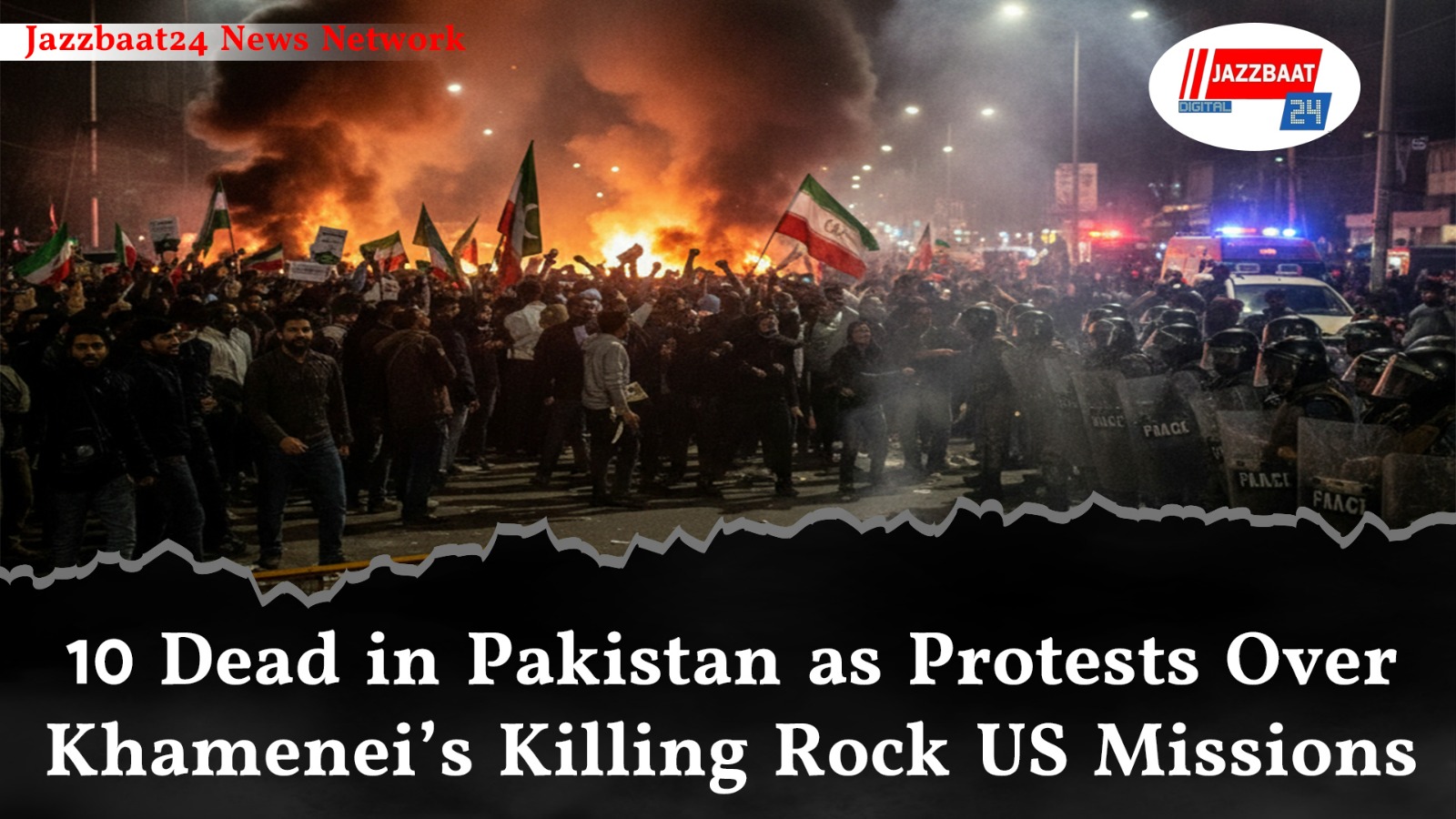
At least 10 people have been killed and dozens injured in violent protests across multiple Pakistani cities after the reported killing of Iran’s Supreme Leader, Ayatollah Ali Khamenei sparking intense anti-American demonstrations, officials said.
The clashes peaked on Sunday (March 1, 2026) when hundreds of protesters gathered outside the United States Consulate on Mai Kolachi Road in Karachi, the country’s largest city, demanding an end to perceived US involvement in the Middle East conflict and expressing outrage over Khamenei’s death in a US-Israeli attack on Iran.
Witnesses and officials said the unrest quickly turned violent as demonstrators breached the security perimeter of the consulate and attempted to enter the compound, prompting police and security forces to respond with tear gas, rubber bullets and live fire to disperse the crowd.
Dr. Mohammad Sabir Memon, executive director of the Civil Hospital Karachi Trauma Centre, confirmed to Dawn that 10 bodies were brought in with apparent bullet wounds, and over 30 people were treated for injuries sustained during the clashes.
The unrest was not limited to Karachi. Demonstrations and smaller clashes were also reported in Lahore, Islamabad, Gilgit and Skardu, where protesters voiced anger against the United States and its perceived role in the Middle East conflict. Authorities reported property damage, road blockades and efforts to confront police in several locations.
Pakistan’s Interior Minister Mohsin Naqvi appealed for calm, urging citizens to express their grief and dissent peacefully and within the law, saying the government understood the nation’s sentiments but violence would not be tolerated.
The protests followed news of Mr. Khamenei’s death in a coordinated strike by US and Israeli forces inside Iran that has sharply escalated tensions in the Middle East. The reaction has been especially strong among Pakistan’s Shiite Muslim community, which represents a significant minority and maintains cultural and religious ties with Iran.
The US Embassy in Islamabad acknowledged the demonstrations and said it was monitoring the situation, advising American citizens in Pakistan to take precautions and stay informed about security developments.
The violence highlights growing regional unrest and the risk of the Iran conflict’s fallout spilling beyond the immediate battleground. It also pressures Pakistan’s government, which must balance domestic public opinion with diplomatic and security considerations amid rising geopolitical tensions.