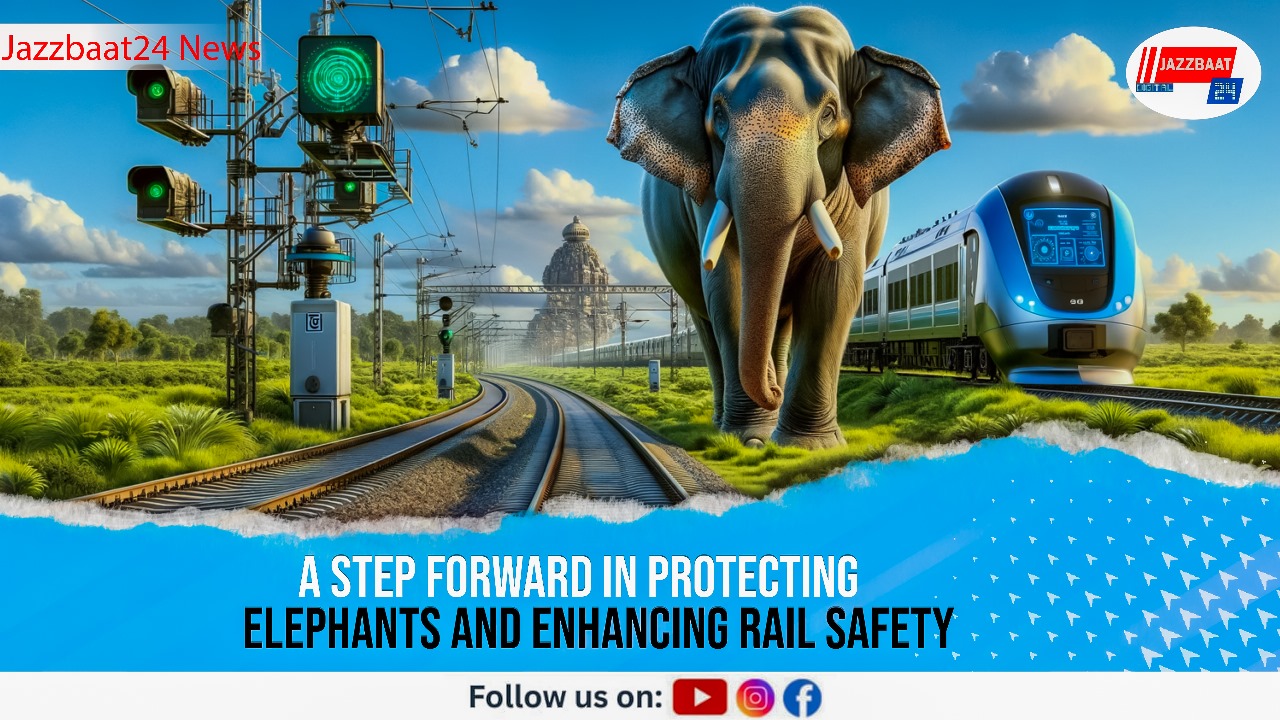
In a significant leap towards modernising its operations and reducing human-animal conflicts, Indian Railways (IR) has successfully deployed an Artificial Intelligence (AI)-enabled Intrusion Detection System (IDS) to safeguard elephants in areas prone to collisions with trains. The initiative, initially implemented over a stretch of 141 RKms on the Northeast Frontier Railway (NF Railway), represents a pioneering effort in using AI for wildlife protection and rail safety. Additionally, tenders have been awarded to extend this technology across 981 more RKms of railway track, significantly scaling up efforts to protect both wildlife and human lives.
Elephants, as majestic as they are, often wander onto railway tracks, especially in regions where forests meet rail corridors. These encounters pose a grave risk not only to the elephants but also to the safety of passengers and train crews. Traditionally, manual detection and communication about such intrusions were slow and inefficient, often leading to fatal accidents. With the AI-based IDS, however, real-time alerts are generated whenever an elephant is detected near the tracks, providing timely information to loco pilots, station masters, and control rooms. This allows for immediate preventive action, including slowing down or halting trains to avoid collisions.
What makes this initiative truly remarkable is its use of Distributed Acoustic Sensing (DAS) technology, which is capable of detecting subtle vibrations caused by elephant movements. This system is both precise and scalable, and as more stretches of track are equipped with it, the overall safety of trains in wildlife-rich areas will improve.
This AI system is part of a broader technological overhaul within Indian Railways, aimed at improving operational efficiency and safety through predictive maintenance and real-time monitoring. The application of AI is not limited to wildlife protection but extends to other areas, such as rolling stock maintenance, signalling, and even the detection of faults in moving trains. For instance, AI-driven systems like the Online Monitoring of Rolling Stock System (OMRS) and Wheel Impact Load Detector (WILD) help in preemptively identifying wear and tear on train components, thereby preventing breakdowns and enhancing overall safety.
Moreover, the signing of Memorandums of Understanding (MoUs) with the Dedicated Freight Corridor Corporation of India Limited (DFCCIL) and Delhi Metro Rail Corporation is a testament to IR’s commitment to embracing AI and Machine Learning (ML) technologies. These collaborations will bring in additional AI-based tools like the Wayside Machine Vision-based Inspection System (MVIS) and Automatic Wheel Profile Measurement System (AWPMS), which further augment IR’s ability to monitor and maintain its vast network.
In conclusion, Indian Railways’ adoption of AI-driven solutions marks a crucial step forward in both wildlife conservation and the future of rail safety. As technology continues to evolve, such innovations will not only make rail travel safer but also foster a more harmonious coexistence between human infrastructure and the natural world.