
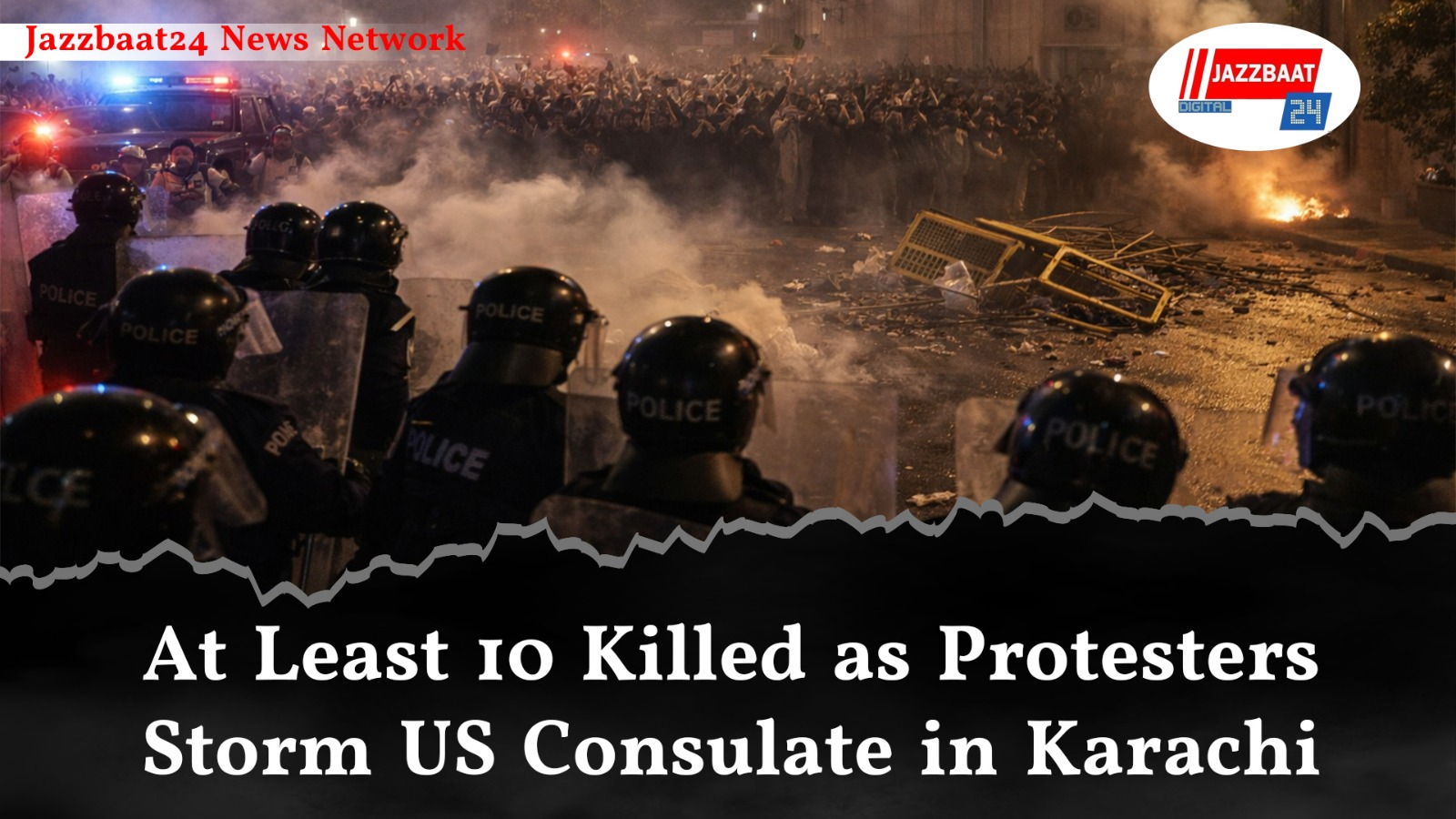
At least 10 people were killed and dozens more injured on Sunday in violent clashes near the United States Consulate General in Karachi, Pakistan, after hundreds of protesters tried to storm the diplomatic mission following the reported killing of Iran’s Supreme Leader Ayatollah Ali Khamenei in a joint U.S.–Israeli strike. The unrest marked one of the deadliest anti‑American demonstrations in Pakistan in recent years.
The protests began early in the day as large crowds, many associated with Shiite groups, gathered near the consulate on Mai Kolachi Road, voicing anger over Khamenei’s death and chanting anti‑U.S. and anti‑Israel slogans. Some demonstrators breached the outer security perimeter and smashed windows, prompting a forceful response from Pakistani police and security forces.
Security personnel used tear gas, rubber bullets and baton charges to disperse the crowd, and at times live fire was reported, leading to the high casualty count. Hospital officials in Karachi said many of the dead and wounded had gunshot wounds, with some in critical condition. Around 30 people, including police officers, were treated for injuries at local trauma centres.
The violence in Karachi was part of a broader wave of protests across Pakistan, where demonstrators also rallied in cities like Lahore, Islamabad and Skardu, condemning Western actions in the Middle East. In some locations, smaller protests remained peaceful, while others saw clashes with law enforcement and damage to property.
Pakistan’s Interior Ministry appealed for calm, urging demonstrators to express their sentiments peacefully and warning against attacks on diplomatic missions which are protected under international law. The United States Embassy in Islamabad advised American citizens to stay away from large gatherings and monitor local developments as tensions continued to flare.
The deadly clashes highlight the volatile regional fallout from the Iran conflict and the strong local reactions to global geopolitical events in Pakistan.