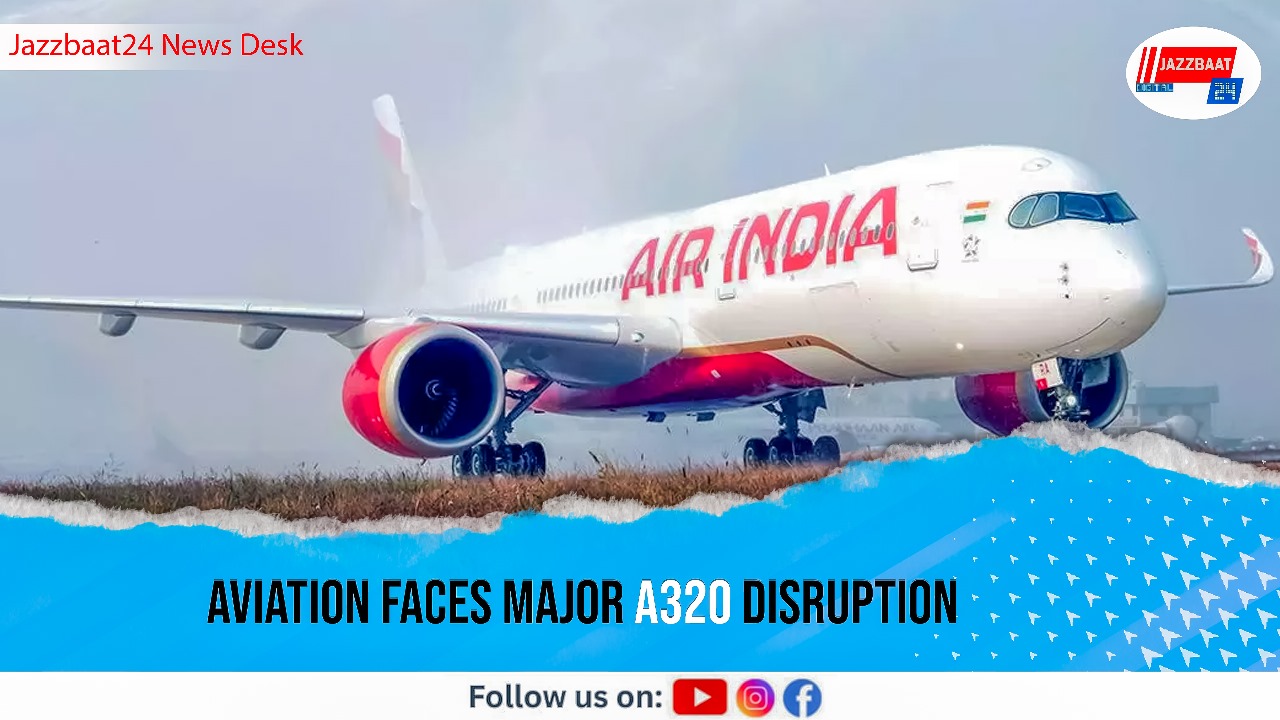
Flight operations across India are expected to face significant delays and cancellations after Airbus flagged a potential safety issue affecting a large number of A320 family aircraft. Sources on Friday said between 200 and 250 aircraft operated by IndiGo, Air India and Air India Express will need to be grounded for software changes or, in some cases, hardware realignment.
The issue centres on the aircraft’s flight control systems. Airbus announced that intense solar radiation might corrupt data vital to flight controls in certain A320 family aircraft. The European Union Aviation Safety Agency (EASA) confirmed the concern and issued an Emergency Airworthiness Directive requiring operators to install a serviceable Elevator Aileron Computer before the next flight of any affected aircraft. ELAC systems play a key role in flight control functions.
Sources said Indian carriers operate around 560 A320 family aircraft, including A319s, A320 ceo and neo variants, and A321 models. Of these, officials estimate up to 250 may require immediate intervention.
IndiGo acknowledged the Airbus notification and said, “We are working closely with Airbus to ensure implementation as per Airbus notification. While we carry out the necessary inspections, we are making every effort to minimise disruptions.” The airline did not reveal the number of aircraft affected.
Air India Express said it has also initiated precautionary measures. “While a majority of our aircraft are not impacted, the guidance applies to operators worldwide and may result in adjustments to flight operations, including potential delays or cancellations,” the airline stated. A source indicated that 31 of its A320 family aircraft will be affected.
Air India confirmed that the directive will extend turnaround times and cause delays. “Air India regrets any inconvenience this may cause to passengers till the reset is carried out across the fleet,” the airline said.
Airbus explained that a recent incident involving an A320 aircraft, where a brief uncommanded pitch-down occurred, led to the discovery. It added, “We apologise for the inconvenience caused and will work closely with operators, while keeping safety as our number one priority.”