
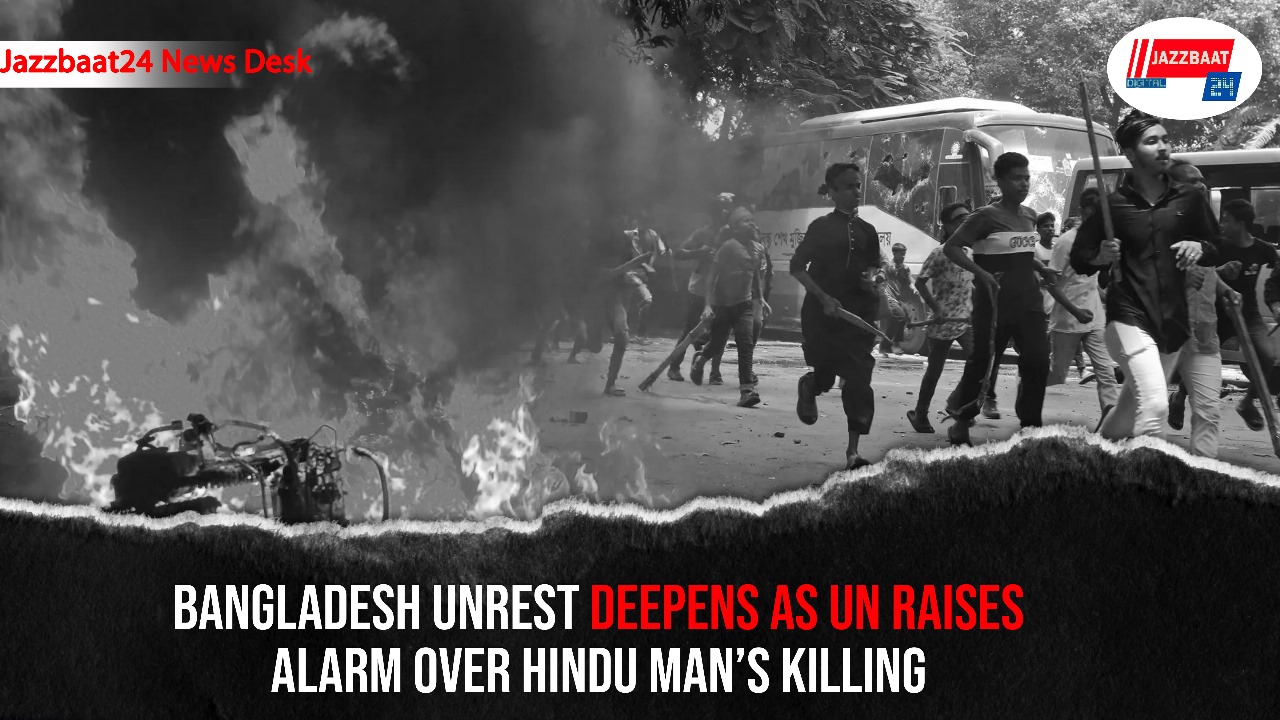
Unrest in Bangladesh continues to escalate following the killing of a Hindu man and the death of student leader Sharif Osman Hadi, triggering nationwide protests, international concern, and diplomatic fallout. The United Nations has voiced serious concern over the violence, urging authorities to ensure the safety of minorities and maintain law and order.
The situation intensified after Dipu Chandra Das, a Hindu resident of Mymensingh, was brutally killed last week over alleged blasphemy. The incident sparked outrage both within Bangladesh and across the border in India, where protestors have demanded justice. Responding to the growing tension, Bangladesh has suspended visa and consular services in New Delhi, Siliguri, and Agartala, citing “unavoidable circumstances.”
UN Secretary-General António Guterres, through his spokesperson Stéphane Dujarric, said the organisation is “very concerned” about the violence. He stressed that people belonging to minority communities must feel safe and expressed hope that the Bangladeshi government would take necessary steps to protect all citizens.
Meanwhile, the country is also grappling with fallout from the killing of Sharif Osman Hadi, a prominent student leader and spokesperson of the platform Inqilab Moncho. Hadi was shot in Dhaka on December 12 and later died during treatment in Singapore on December 18. His death triggered violent protests, including attacks on media offices. His organisation has now threatened to launch a mass movement to topple the interim government led by Muhammad Yunus if justice is not delivered.
Bangladesh’s Home Adviser Lt Gen (retd) Jahangir Alam Chowdhury has assured that efforts are underway to arrest the prime accused in Hadi’s murder, stating that the case will be tried under the Speedy Trial Tribunal Act with the aim of concluding proceedings within 90 days.
Amid the turmoil, Yunus has reaffirmed that general elections will be held as scheduled on February 12, promising a free and peaceful process. Concerns are also mounting over the safety of Indian medical students stranded in Bangladesh, with appeals made to the Indian government for urgent intervention.
As tensions remain high, the unfolding events continue to draw close regional and global attention.