
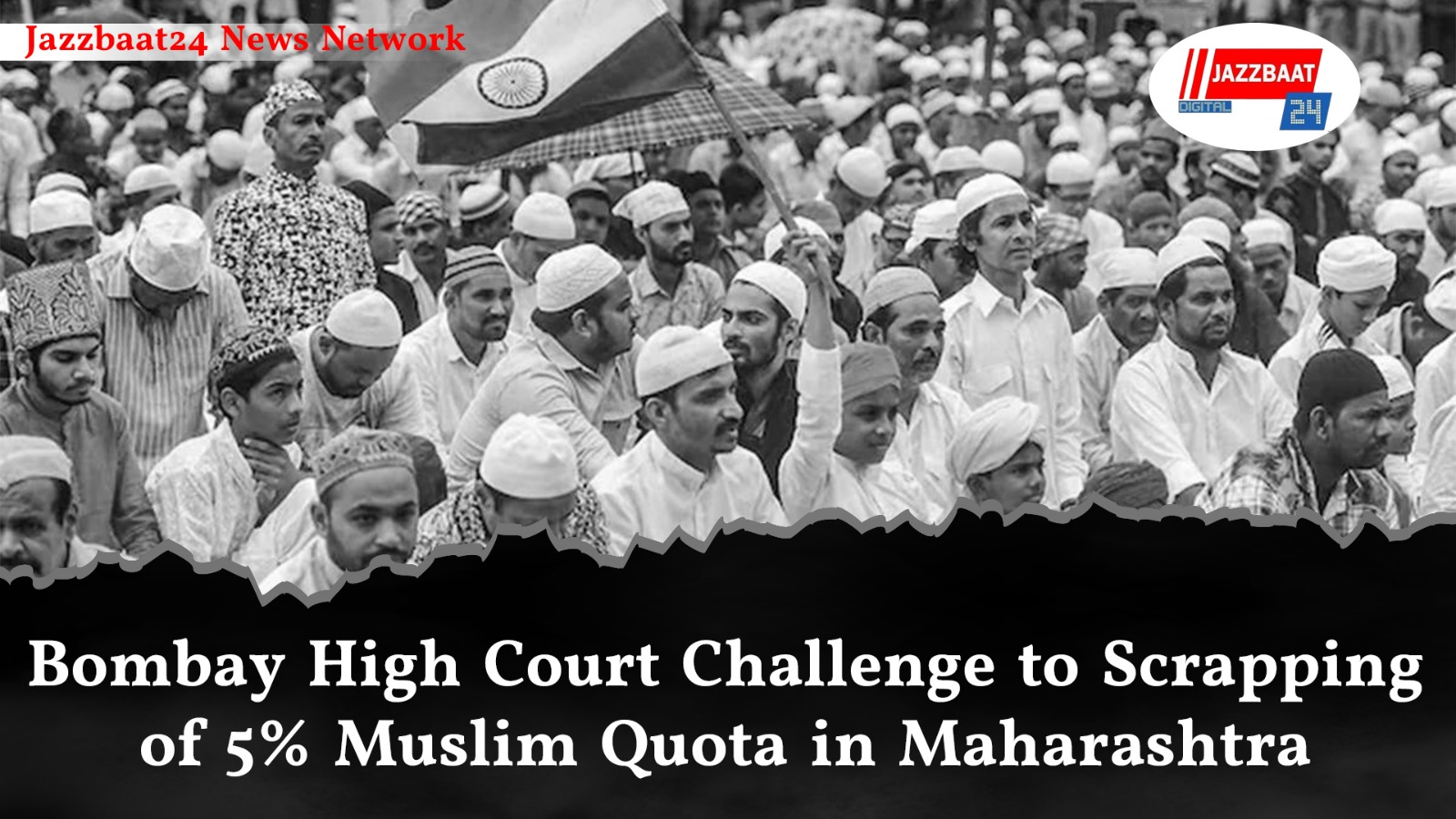
A lawyer has moved the Bombay High Court challenging the Maharashtra government’s recent decision to scrap the 5 per cent reservation for Muslims in education and government jobs, calling the move unconstitutional and discriminatory. The petition was filed after the state’s Department of Social Justice and Special Aid issued a Government Resolution (GR) on 17 February cancelling the quota.
Advocate Syed Ejaz Abbas Naqvi, represented by counsel Nitin Satpute, filed a writ petition before the High Court in Mumbai, arguing that the decision to revoke the quota is “deliberate, arbitrary and amounts to discrimination against minorities.” The plea claims the move violates fundamental rights guaranteed by the Indian Constitution, including the principles of equality and non‑discrimination, and lacks any fresh factual data to justify removing the reservation.
The 5 per cent quota for Muslims had originally been introduced by the Congress‑NCP government in July 2014, placing about 50 Muslim sub‑communities in the Socially and Educationally Backward Classes (SEBC) category, aimed at helping them access education and jobs. Although the quota faced legal challenges at the time, the Bombay High Court had upheld the educational reservation for Muslims while striking down the broader quota for jobs. The 2014 ordinance eventually lapsed, and the recent GR formally nullified the earlier decisions and stopped issuance of caste and non‑creamy layer certificates for Muslims under this category.
The petition seeks to quash the February 17 GR and obtain an interim stay on its operation while the case is heard. The court is expected to take up the matter in the coming days. Supporters of the challenge argue that removing the quota undermines affirmative action for socially and educationally disadvantaged groups, while critics of the quota have said religion‑based reservations are constitutionally problematic.
The legal battle now places the spotlight on how reservations for minority communities should be shaped within the framework of constitutional equality, and could have broader implications for affirmative action policies in the state.