

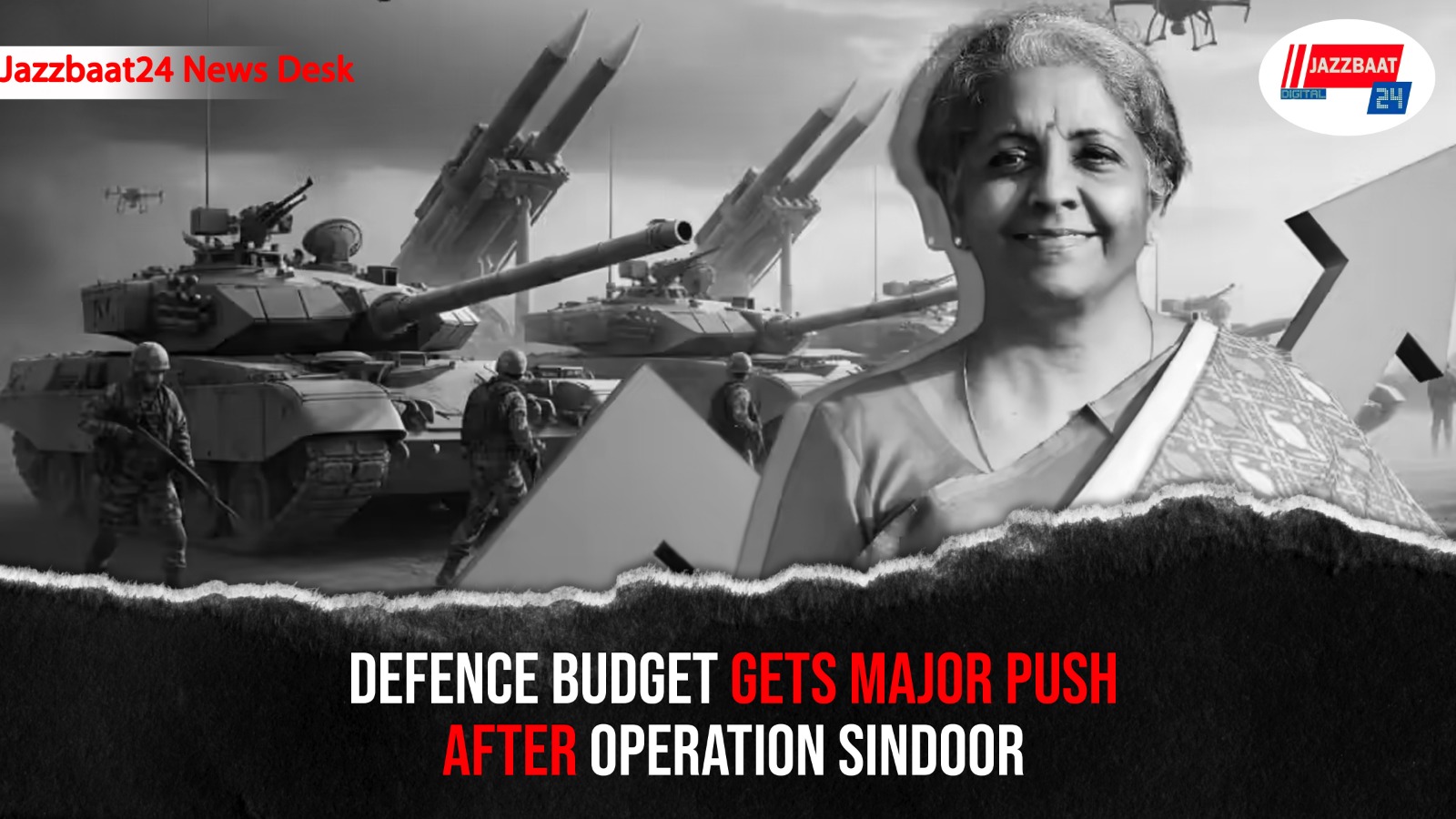
In the first Union Budget presented after Operation Sindoor, the central government has announced a sharp increase in defence spending, signalling a clear focus on military modernisation and strategic preparedness. Finance Minister Nirmala Sitharaman on Sunday allocated a capital outlay of ₹5.95 lakh crore for defence, a significant jump from last year’s ₹4.92 lakh crore. This marks an overall increase of around 22%, with funds earmarked specifically for modernisation rising by nearly 24%.
According to sources familiar with the discussions, the defence ministry had sought a 20% hike, but the final allocation went beyond expectations. The additional funds will be channelled towards enhancing long-range standoff capabilities, strengthening air power, and expanding missile and armed drone programmes in the aftermath of Operation Sindoor. Officials see this as a decisive move to address emerging security challenges and bridge capability gaps.
Several high-value projects are already in the pipeline, including those linked to Rafale fighter jets, submarine acquisitions, and unmanned aerial vehicles. In the current financial year, the defence ministry’s capital outlay stands at ₹1.8 lakh crore, with ₹63,733 crore allocated specifically for aircraft and aero engines. The overall defence budget for 2025–26 was ₹6.8 lakh crore, with revised estimates pushing capital expenditure slightly higher.
The Budget also introduced measures aimed at boosting domestic defence manufacturing and maintenance capabilities. The finance minister announced an exemption on basic customs duty for raw materials imported to manufacture aircraft parts used in maintenance, repair, and overhaul operations within the defence sector. Similar duty exemptions were extended to components required for civilian and training aircraft.
Defence officials believe these steps will not only accelerate modernisation of the armed forces but also support the growth of India’s aerospace and defence ecosystem. Coming in the wake of Operation Sindoor, the Budget is being viewed as a strategic statement of intent, backing military readiness with substantial financial commitment.