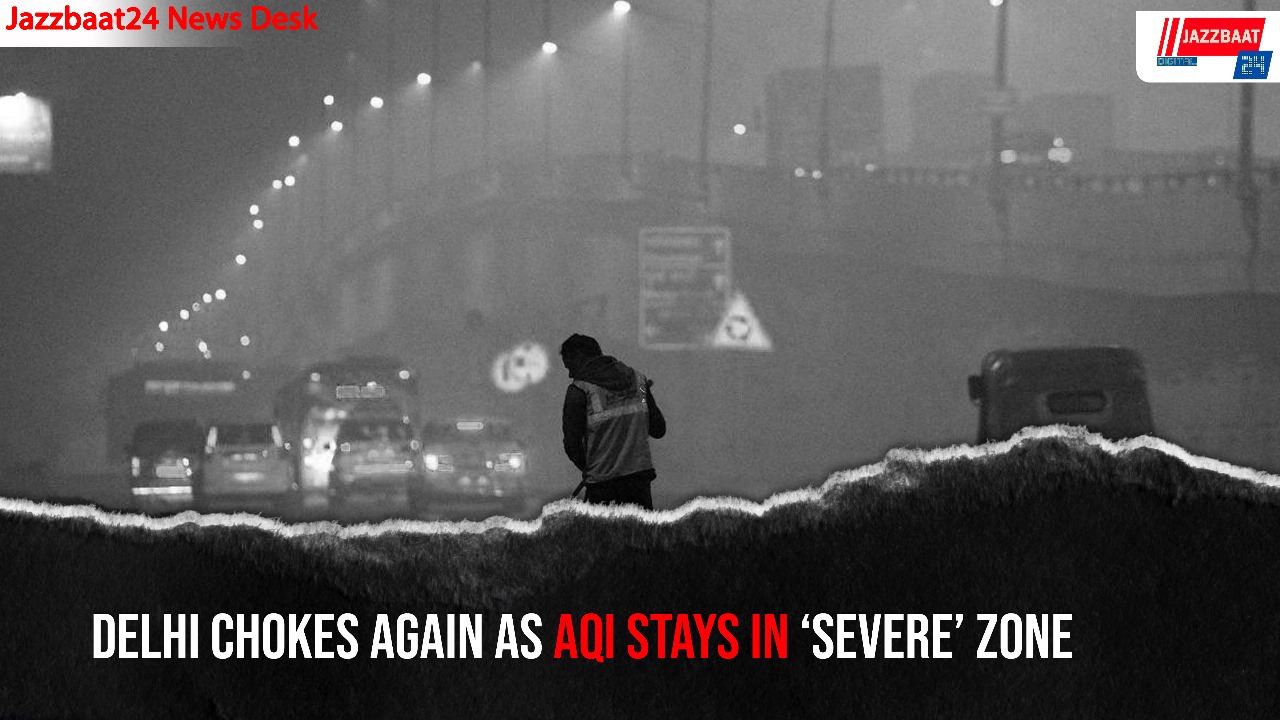
Delhi and the National Capital Region (NCR) continued to reel under hazardous air quality on Sunday, December 14, with pollution levels worsening compared to the previous day. According to the Central Pollution Control Board (CPCB), the city’s overall Air Quality Index (AQI) stood at 460 at 8 am, firmly in the “severe” category and close to the maximum threshold of 500.
Several monitoring stations across Delhi recorded AQI readings well above 400, indicating extremely poor air conditions. Calm winds, dense fog and unfavourable weather conditions have prevented pollutants from dispersing, leading to a thick blanket of smog and sharply reduced visibility. The India Meteorological Department (IMD) reported visibility dropping to as low as 200 metres at Safdarjung and 350 metres at Palam airport on Sunday morning.
Experts attribute the pollution spike mainly to a Western Disturbance that has resulted in very low wind speeds since Friday. Delhi’s basin-like topography further worsens the situation by trapping cold air and pollutants close to the ground during winter. While stubble burning has reduced significantly in Punjab and Haryana, local sources such as vehicular emissions, construction dust and combustion-related activities continue to drive pollution levels higher.
The rapid deterioration prompted authorities to enforce Stage 4 restrictions under the Graded Response Action Plan (GRAP) on Saturday evening the first time this season such severe measures have been implemented. Under these curbs, offices have been advised to allow 50% work-from-home, schools up to Classes 9 and 11 have shifted to hybrid mode, and older heavy diesel vehicles have been restricted from entering Delhi.
Across the wider NCR, pollution remains equally alarming. Noida recorded the worst AQI in the country at 455, followed closely by Greater Noida at 442. The Commission for Air Quality Management (CAQM) has directed stricter enforcement on traffic congestion, road dust control and waste management, especially in pollution hotspots.
Relief, however, may be limited. Forecasts suggest a slight improvement from Monday as wind speeds increase, but air quality is expected to remain in the “very poor” category through midweek, offering only temporary respite to residents.