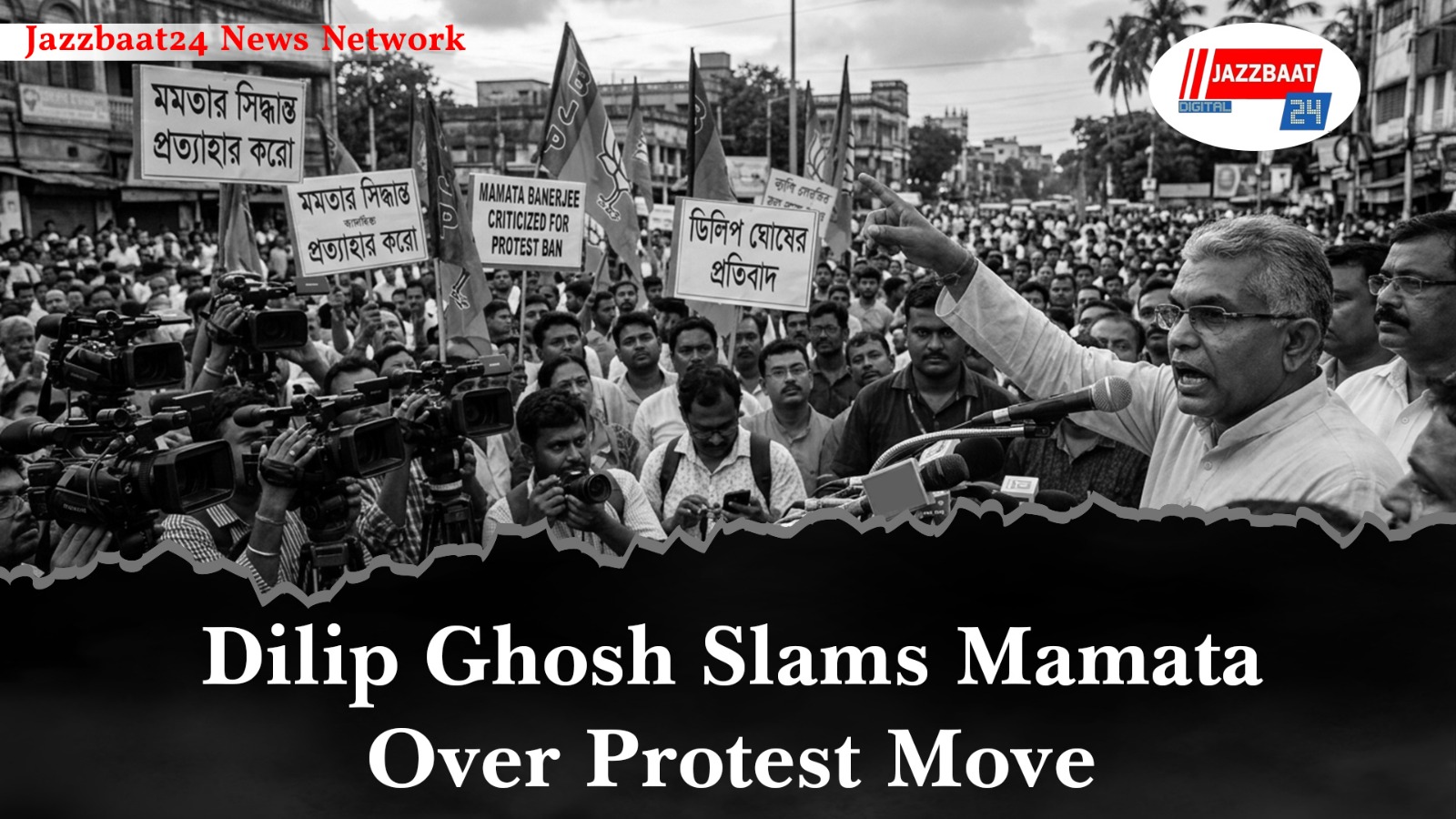
Senior Dilip Ghosh on Thursday sharply criticised Mamata Banerjee over her decision to stage a protest against the Special Intensive Revision (SIR) of electoral rolls, saying the move reflects political desperation and that “it is time for her to go.”
Reacting to the Chief Minister’s planned protest, the Bharatiya Janata Party leader accused the All India Trinamool Congress government of trying to create unnecessary controversy around the electoral process. According to him, raising objections to the revision exercise is an attempt to divert attention from governance failures in West Bengal.
Ghosh claimed that the protest was politically motivated and aimed at influencing public perception ahead of future elections. “Instead of focusing on development and administration, the Chief Minister is choosing agitation politics,” he said while addressing reporters.
The BJP leader further alleged that the ruling party in West Bengal often questions constitutional processes whenever it feels politically threatened. He argued that the revision of electoral rolls is a routine exercise conducted under the supervision of the Election Commission of India to ensure accuracy and transparency in the voting system.
According to Ghosh, attempts to oppose such procedures raise doubts about the intentions of the state leadership. “The electoral process must remain transparent and free from political pressure,” he added.
On the other hand, leaders of the Trinamool Congress have defended Mamata Banerjee’s stance, claiming that the protest is meant to protect the democratic rights of voters. Party leaders argue that the SIR process could lead to the exclusion of genuine voters from the electoral rolls if not implemented carefully.
The political confrontation between the BJP and the Trinamool Congress over electoral issues has intensified in recent months, with both sides accusing each other of undermining democratic institutions.
Political observers believe that such exchanges are likely to continue as the parties prepare for future electoral battles in the state. As tensions rise, the debate over electoral processes and political accountability is expected to remain a key issue in West Bengal’s political landscape.