
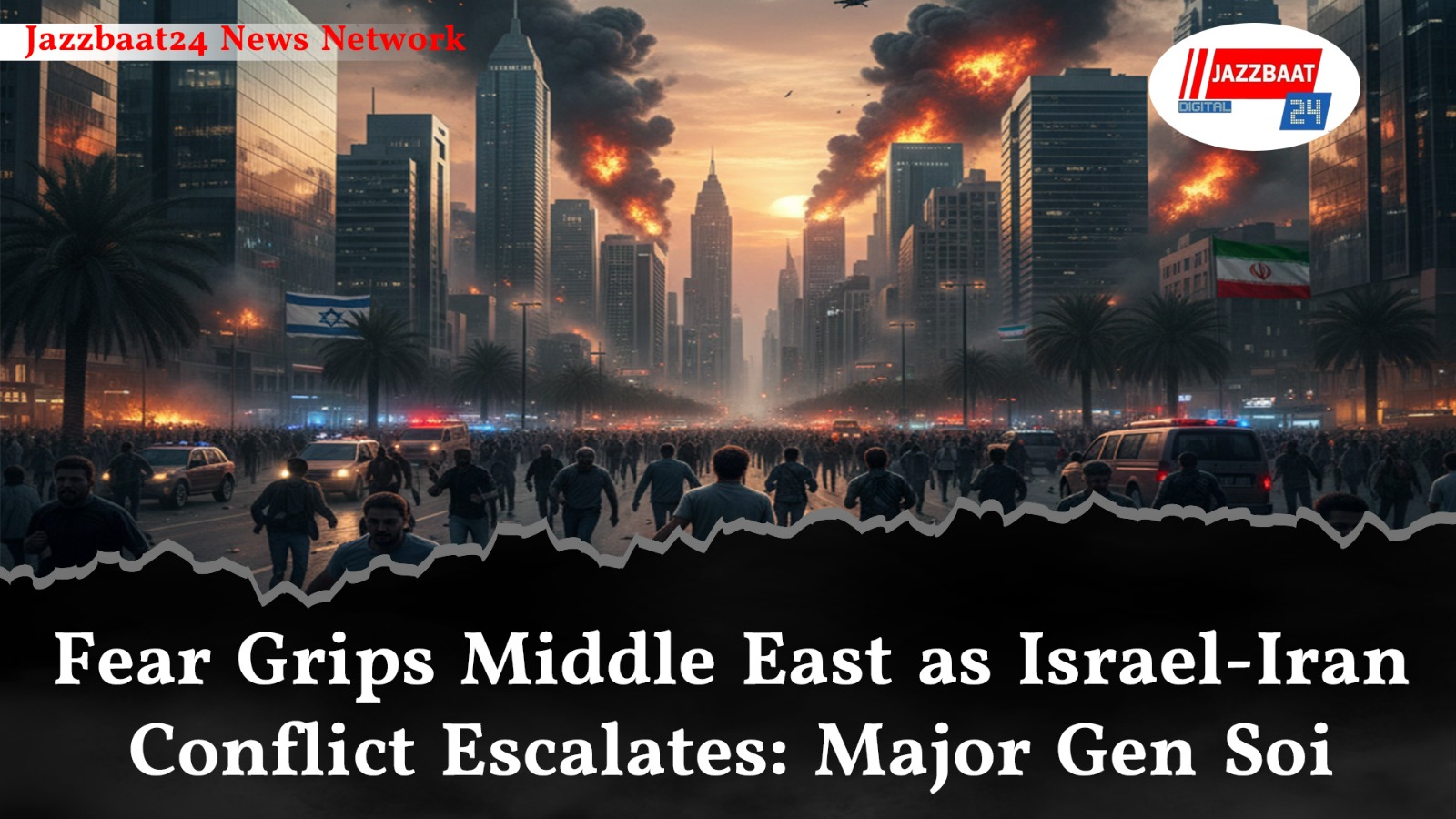
An “atmosphere of fear” is sweeping across the Middle East as tensions intensify between Israel and Iran, according to defence expert Major General Sanjay Soi (Retd). Speaking to ANI on Monday, Soi warned that the recent sharp escalation, involving military strikes by the United States and Israel on Iranian targets, has thrown the region into deep instability and uncertainty.
Soi claimed that the US-Israel offensive was pre-planned and part of a long-standing strategic blueprint, rather than a spontaneous response to an immediate threat. He asserted that the initial strikes reportedly targeted top Iranian leadership figures, including Supreme Leader Ali Khamenei, and were executed with powerful munitions possibly bunker-buster bombs indicating a high-intensity operation. According to the defence expert, both Washington and Jerusalem show no signs of scaling back military activities, hinting at a broader strategic objective beyond immediate conflict containment.
“There is an atmosphere of fear in the Middle East right now. The war seems to be spreading… they are not looking to stop the war,” Soi said, adding that Tehran has vowed revenge for the reported deaths of its top leadership. He suggested that regime change in Iran could be a driving aim behind the military campaign, a move that could rock regional geopolitics.
The fallout of the conflict is not confined to strategic calculations alone. On the ground, Israeli cities have reported rocket and missile exchanges, and at least nine people were killed in a missile strike on Beit Shemesh, west of Jerusalem, according to international media reports. Rescue operations continued amid the rubble of collapsed buildings, underscoring the human cost of the confrontation.
Beyond battlefield developments, the ripple effects are being felt globally. Travel disruptions have hit flight schedules as airlines cancel or reroute services, leaving passengers stranded at major hubs like Indira Gandhi International Airport in New Delhi amid growing safety concerns over Middle East airspace.
For ordinary people across the Gulf and neighbouring states, there is mounting unease as air raid alerts, missile interceptions, and sporadic violence challenge daily routines and fuel anxiety about wider escalation. Reports from the region describe closures of schools and heightened vigilance by local authorities, particularly among large expatriate communities, reflecting the broader climate of tension.
With diplomatic channels under strain and conflicting strategic interests at play, the international community is watching closely, aware that any wider conflagration could have deep economic and humanitarian consequences far beyond the Middle East.