
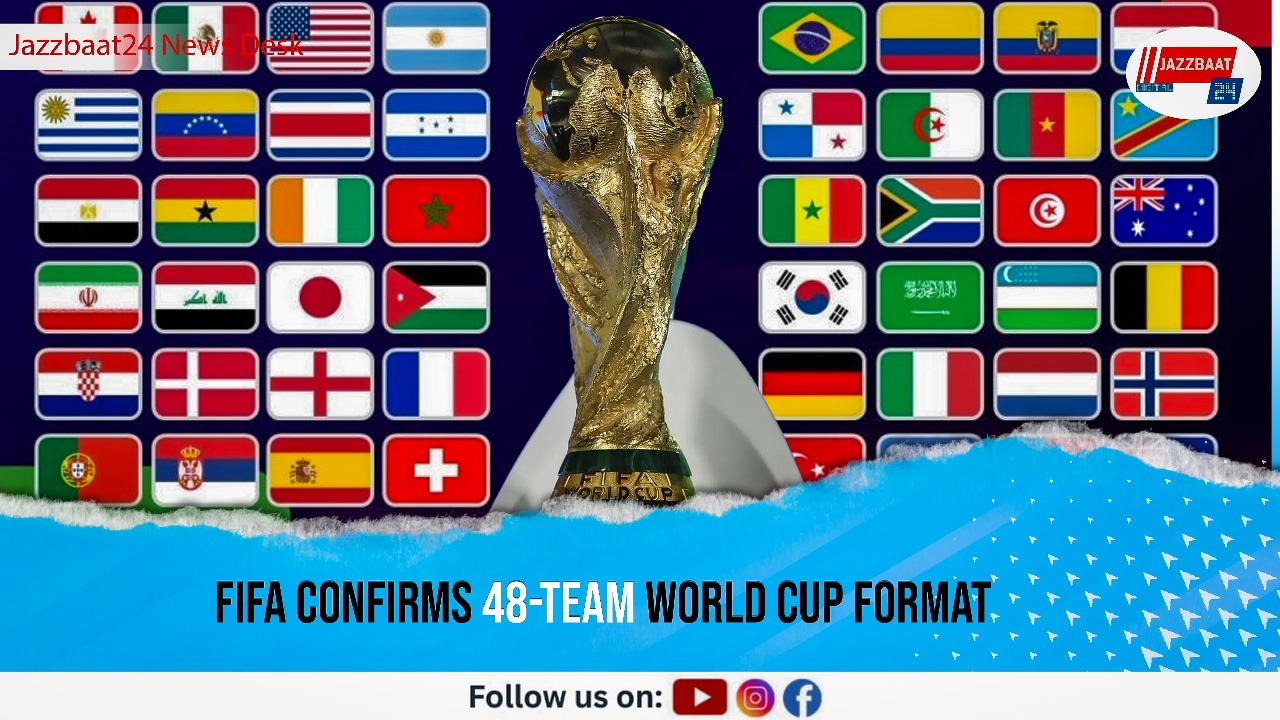
For the first time, the FIFA World Cup will feature 48 teams. With the increased number of teams, the total matches will also rise from 64 in the previous 32-team format to 80 in the new structure.
The 48 teams will be divided into 12 groups, with the group-stage draw scheduled for Friday. FIFA has set several conditions for forming these groups. Teams will be distributed into four pots based on FIFA rankings. Already, 42 teams have qualified, while six more will join after the final round of qualifiers. These remaining slots are being considered during the draw. Each group will include one team from each pot, but with strict rules: A group cannot have more than two European teams. Teams from other continents cannot have more than one representative in the same group.
Pot 1: Spain (1), Argentina (2), France (3), England (4), Brazil (5), Portugal (6), Netherlands (7), Belgium (8), Germany (9), USA (14), Mexico (15), Canada (27)
Pot 2: Croatia (10), Morocco (11), Colombia (13), Uruguay (16), Switzerland (17), Japan (18), Senegal (19), Iran (20), South Korea (22), Ecuador (23), Austria (24), Australia (26)
Pot 3: Norway (29), Panama (30), Egypt (34), Algeria (35), Scotland (36), Paraguay (39), Tunisia (40), Ivory Coast (42), Uzbekistan (60), Qatar (51), Saudi Arabia (60), South Africa (61)
Pot 4: Jordan (66), Cape Verde (68), Ghana (72), Curaçao (82), Haiti (84), New Zealand (86), UEFA Playoff A, B, C, D, FIFA Playoff 1 & 2
As host nations, the USA, Mexico, and Canada have been placed in Pot 1. The world’s top four teams Spain, Argentina, France, and England will be assigned to separate groups and arranged so they cannot meet before the semifinals.
Each group will play round-robin matches. The top two teams from every group, plus the eight best third-placed teams, will qualify for the second round. A total of 32 teams will move into the knockout stage.