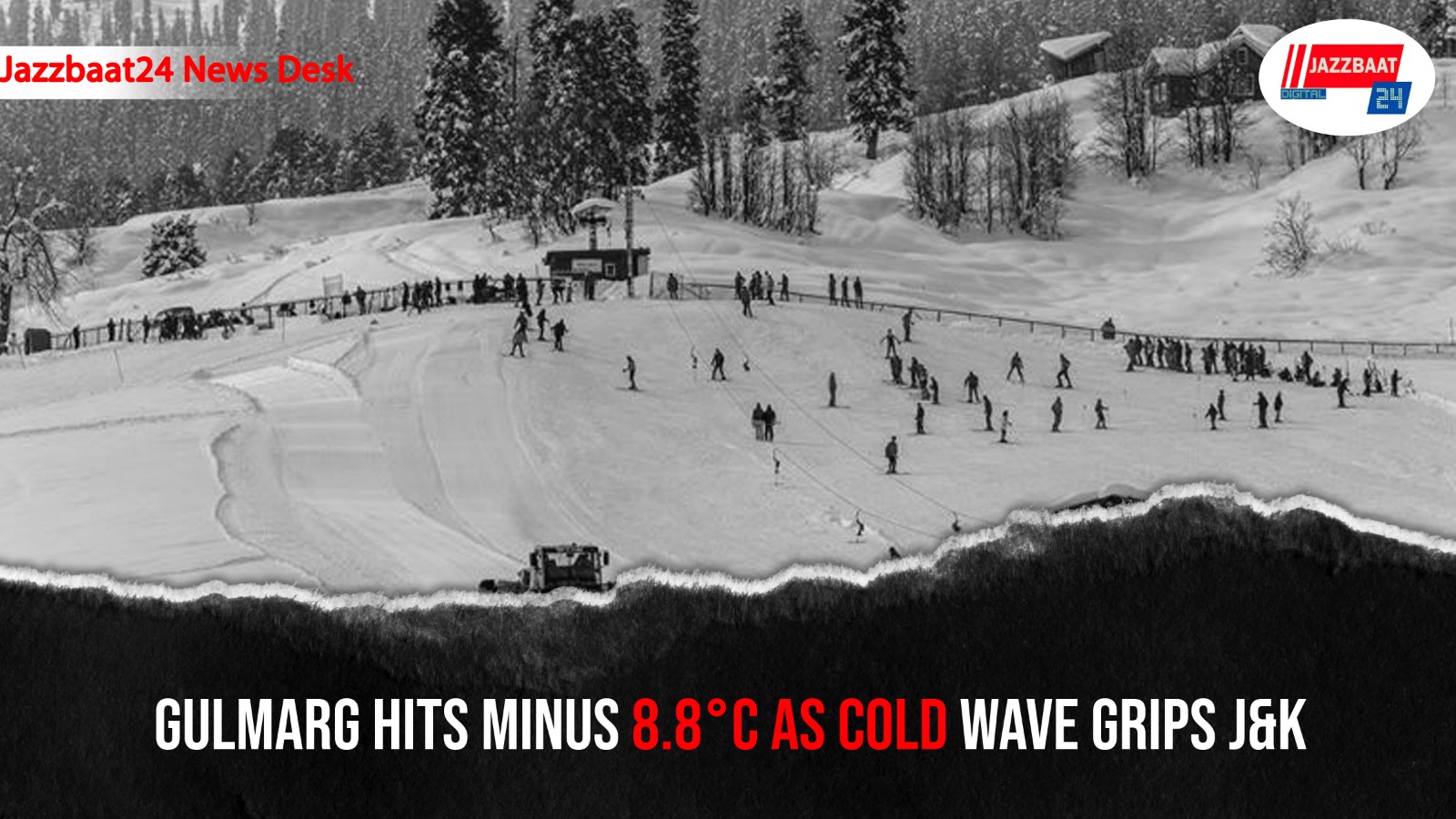
The cold wave in Jammu and Kashmir intensified on Monday, with the famous ski resort of Gulmarg recording a bone-chilling minus 8.8°C, marking the season’s coldest night so far. Srinagar registered a minimum of minus 3.6°C, while Pahalgam recorded minus 4.8°C, according to the Meteorological Department.
Jammu city saw a low of 8.7°C, Katra 5.6°C, Batote 2.1°C, and Bhaderwah minus 2.1°C. Despite fresh snowfall in Gulmarg and Sonamarg, major snowfall across the Valley has remained elusive. The MeT Department predicts generally dry weather until January 20, dimming hopes of significant snowfall during the ongoing 40-day Chillai Kalan period.
Chillai Kalan, the harshest phase of winter in Kashmir, is crucial for replenishing the perennial water reservoirs that sustain rivers, streams, lakes, and wells during summer. A lack of heavy snowfall could result in low water levels in the coming months, worrying farmers and orchardists across the region.
Doctors have urged residents, particularly those with heart and lung conditions, to avoid venturing outdoors in the severe cold. A recent weak Western Disturbance brought light snowfall in higher reaches and drizzle in the plains but did little to improve conditions in the Valley.
With plains like Srinagar yet to witness the season’s first snowfall, the combination of low temperatures and dry weather has made this winter particularly harsh. Residents are bracing for more cold days, while authorities continue to monitor weather patterns for any upcoming Western Disturbances that might bring relief.
The prolonged dry spell during Chillai Kalan underscores the importance of timely snowfall in maintaining Kashmir’s water and agricultural resources, highlighting the delicate balance between winter weather and the region’s ecology and livelihoods.