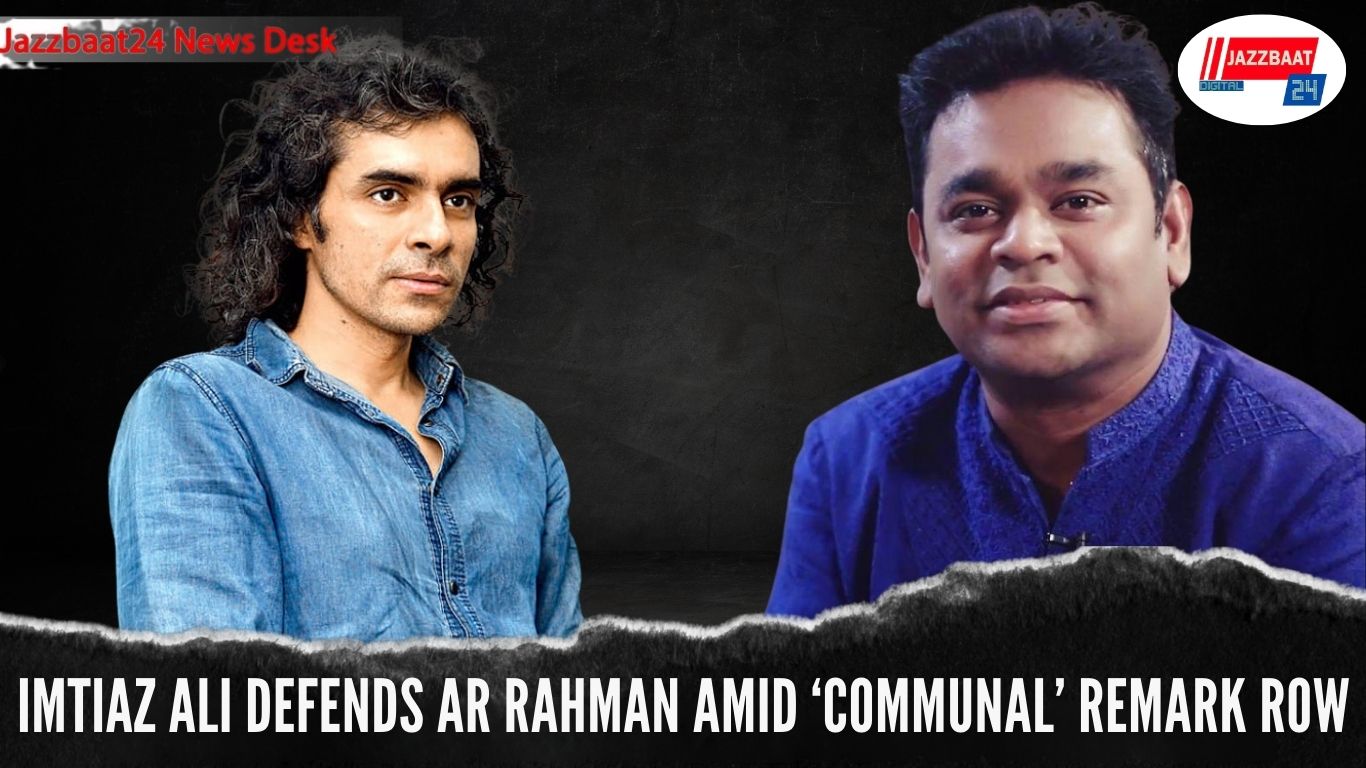
Filmmaker Imtiaz Ali has come out strongly in support of Oscar-winning composer AR Rahman following the backlash over remarks described by some as “communal.” Speaking amid the ongoing controversy, Imtiaz said Rahman’s comments were being misinterpreted and insisted that he has never witnessed communal bias within the Indian film industry.
Imtiaz Ali, who has collaborated with AR Rahman on several films including Rockstar, Tamasha and the recent Amar Singh Chamkila, addressed the issue in an interview with India Today. “I don’t think there is a communal bias in the film industry. I’ve been here for a long time and I’ve never seen it,” he said, adding that Rahman is “one of the brightest figures” he has worked with.
Defending the composer, Imtiaz remarked that the statements attributed to Rahman may have been misconstrued. “I do not actually believe that he made all the comments that are being attributed to him. In fact, I know that he did not say exactly what is being perceived,” he said, stressing that he could not recall a single instance of communal animosity in the industry.
The controversy began after Rahman, in an interview with BBC Asian Network, spoke about changes in the industry and suggested that a “power shift” may have affected creative spaces, adding that it “might be a communal thing,” though he clarified that it was not something he experienced directly. The remarks triggered criticism on social media.
Subsequently, Rahman issued a clarification and apology, saying his intention was never to hurt sentiments. Reaffirming his love for India, he said music has always been his way of honouring the country and its culture. He also shared visuals of his iconic patriotic composition Maa Tujhe Salaam/Vande Mataram being played at a cricket stadium.
Several figures from the film and music fraternity, including Varun Grover and Chinmayi, have also backed Rahman. Meanwhile, the composer is currently working on Nitesh Tiwari’s upcoming epic Ramayana, in collaboration with Hans Zimmer, slated for release on Diwali 2026.