

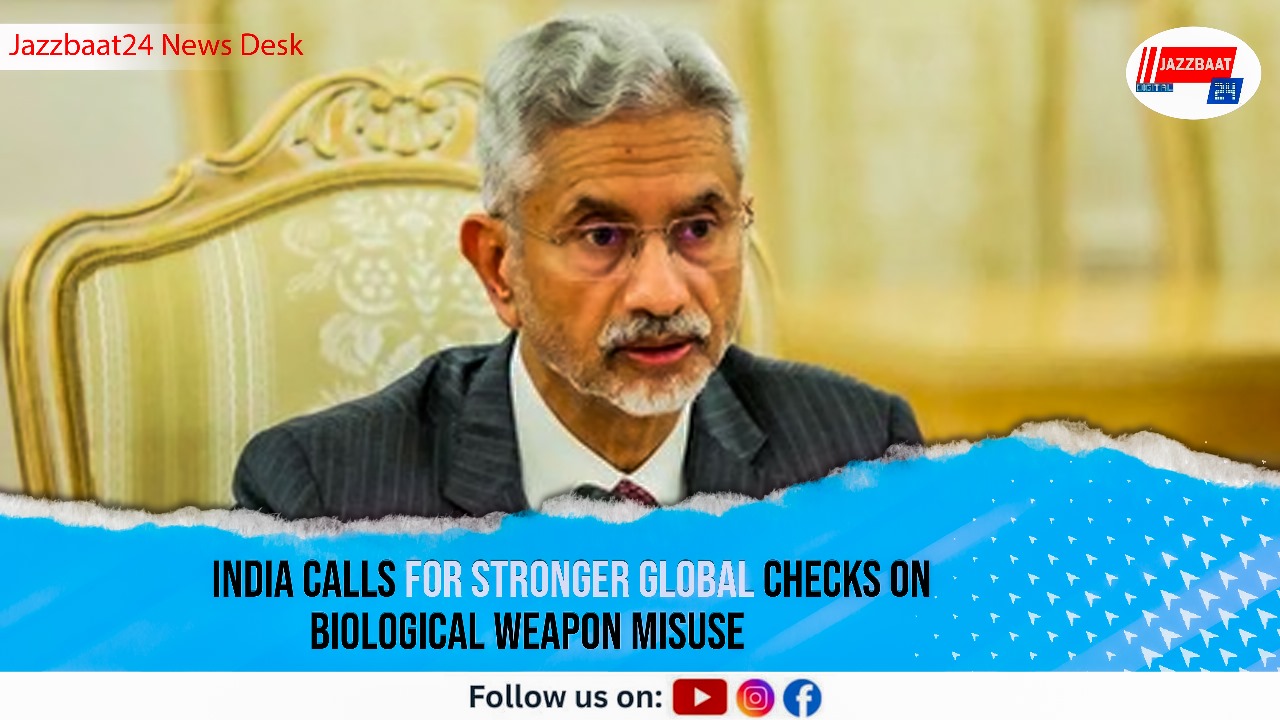
India has urged the international community to establish a stronger global framework to prevent the misuse of biological weapons amid an increasingly unpredictable security environment. The call was made as countries gathered in New Delhi to mark the 50th anniversary of the Biological Weapons Convention (BWC), a key global agreement that bans the development and stockpiling of biological agents for harmful purposes.
During the conference, India emphasised that the threat posed by non-state actors using biological agents is no longer theoretical. Rapid advances in biotechnology, easier access to materials and equipment, and the dual-use nature of many scientific innovations have created new vulnerabilities. India stressed that the world must act collectively and urgently to reinforce global safeguards.
Despite being central to global biosecurity, the BWC still operates without many of the institutional mechanisms that other major arms-control treaties possess. It lacks a dedicated compliance system, an independent technical body, and a structured process to monitor emerging scientific developments. India argued that these gaps weaken global preparedness and must be addressed through coordinated reforms.
New Delhi has consistently supported the idea of a stronger, modernised verification regime under the BWC. It believes that updated compliance tools reflecting today’s technological reality are essential to maintain trust between nations. India also reaffirmed its support for responsible international cooperation, enabling the sharing of biological materials, technology, and equipment for peaceful research, healthcare, and innovation.
India called for a systematic global review mechanism to keep track of scientific progress, ensuring governance frameworks evolve alongside rapid advancements in fields like synthetic biology, gene editing, and bioengineering. Strengthened oversight, the country said, is essential not only to prevent misuse but also to promote safe and ethical innovation.
The message from the conference was clear: in an era of fast-changing scientific capabilities and rising security concerns, global unity and stronger institutional mechanisms are crucial to stop the potential misuse of biological tools and safeguard humanity.