

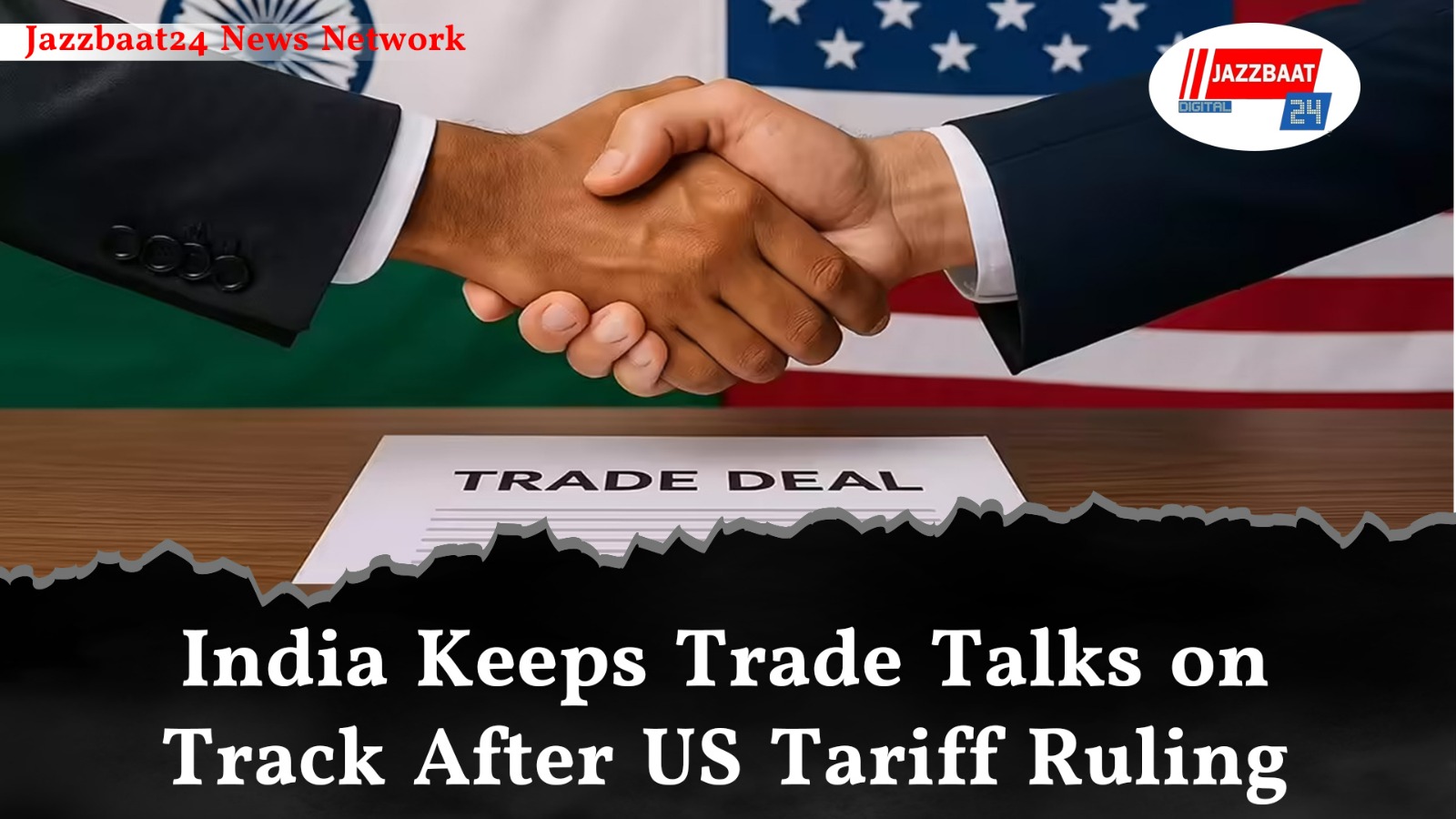
India will continue negotiations on an interim trade deal with the United States despite fresh uncertainty triggered by the US Supreme Court’s decision to strike down the legal basis of former President Donald Trump’s proposed reciprocal tariffs.
The ruling has altered the tariff landscape just weeks after both countries signalled progress toward a bilateral trade agreement (BTA). The previously discussed 18% reciprocal tariff on Indian goods is now effectively irrelevant. Instead, Washington has announced a uniform 15% tariff on trading partners, replacing the earlier 10% rate imposed briefly after the court setback.
For India, this means the existing 25% reciprocal tariff would fall to 15%, though the new levy will apply in addition to product-specific Most Favoured Nation (MFN) duties. Officials familiar with the development said both sides remain committed to formalising a “mutually beneficial” interim pact, factoring in the changed circumstances.
India’s commerce ministry said it is studying the implications of the US court judgment and subsequent announcements. An Indian delegation led by chief negotiator Darpan Jain is expected to travel to Washington for discussions aimed at finalising the legal text of the agreement ahead of a proposed visit by the US Trade Representative in March.
Experts say the verdict may restore predictability in global trade by limiting arbitrary tariff impositions. However, the US administration has indicated it may rely on alternative legal provisions including Sections 232, 301 and 122 to sustain certain tariff actions.
Industry reactions in India are mixed. Exporters in labour-intensive sectors such as textiles, gems and jewellery see partial relief, as the scrapped reciprocal tariff reduces cost pressures. However, uncertainty over future US trade measures continues to weigh on sentiment.
Both governments are expected to seek clarity and recalibrate commitments in line with evolving trade realities.