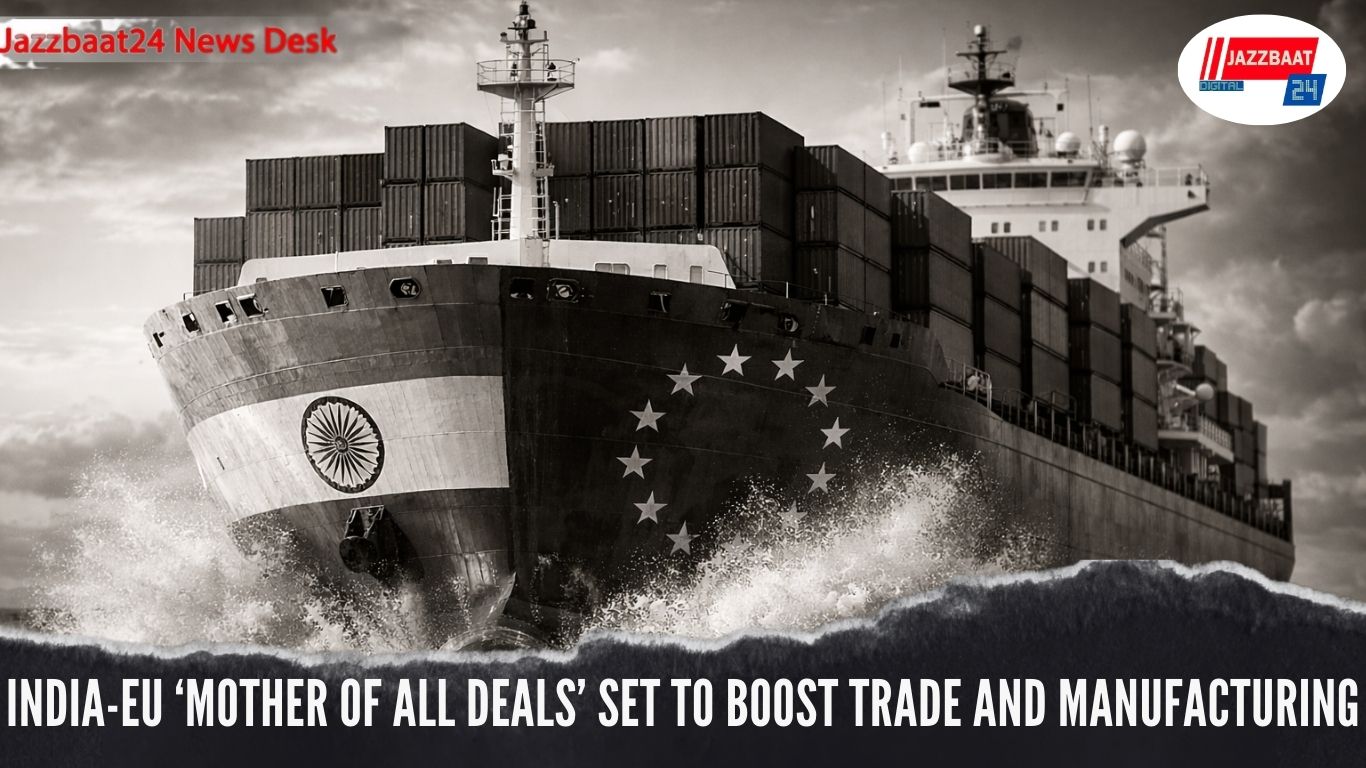
India and the European Union have concluded negotiations on a landmark Free Trade Agreement (FTA), a move Prime Minister Narendra Modi has described as the “mother of all deals.” The proposed pact is expected to significantly boost two-way trade, strengthen economic cooperation, and open new opportunities for businesses and workers on both sides.
Speaking at an event on Tuesday, PM Modi said the agreement would provide a major push to India’s manufacturing sector while also supporting services. He highlighted that the deal connects two of the world’s largest economies and represents around 25 per cent of global GDP and nearly one-third of global trade.
“This agreement brings tremendous opportunities for India’s 1.4 billion people and for millions across European countries,” the Prime Minister said. He added that the pact reflects a shared commitment to not just trade, but also democratic values and the rule of law.
Officials from both sides have described the agreement as balanced and forward-looking. The FTA is expected to reduce tariffs, improve market access, and promote investment flows between India and the 27-nation European Union. It is also seen as a strategic move to diversify supply chains and reduce dependence on a limited number of global markets.
The India-EU deal is expected to complement the recently concluded India-UK trade agreement. Together, these pacts could position India as a more attractive global manufacturing hub, while giving European companies better access to one of the world’s fastest-growing major economies.
Beyond trade in goods, the agreement is likely to include provisions on services, digital trade, intellectual property, sustainability, and worker mobility. These areas are expected to benefit sectors such as IT, pharmaceuticals, automobiles, renewable energy, and advanced manufacturing.
Commerce and industry officials have indicated that the formal announcement and signing could take place shortly. If implemented smoothly, the India-EU FTA could mark a new chapter in India’s global trade strategy, helping drive growth, create jobs, and deepen economic ties with Europe in the years ahead.