
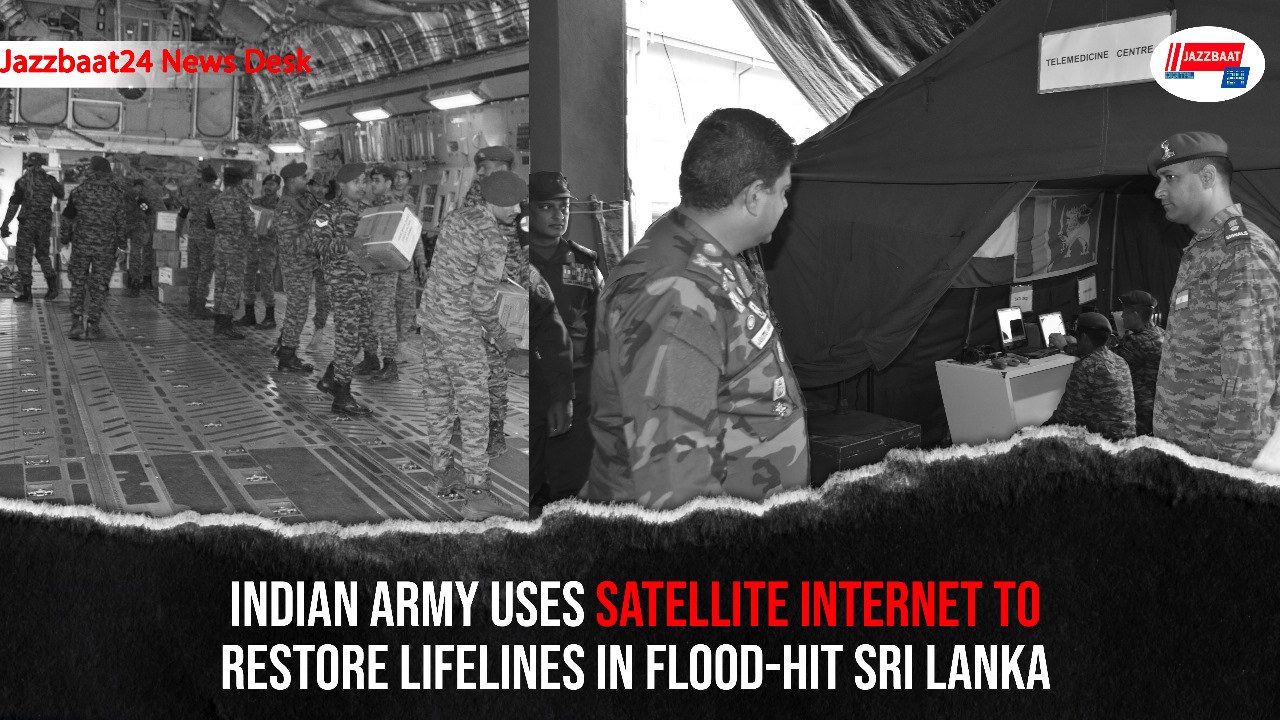
In a landmark move showcasing technology-driven humanitarian aid, the Indian Army has successfully deployed satellite-based internet connectivity to support flood relief operations in Sri Lanka, marking a first-of-its-kind initiative.
Triggered by Cyclone Ditwah, unprecedented flooding across Sri Lanka severely damaged roads, power supply and terrestrial communication networks, leaving large areas isolated. As part of Operation Sagar Bandhu, India’s humanitarian assistance and disaster relief (HADR) mission, the Army turned to space-based connectivity to overcome the communication blackout.
Using Eutelsat’s OneWeb Low Earth Orbit (LEO) satellite network, in partnership with Airtel, the Indian Army established high-speed, low-latency internet links in remote and devastated regions. The satellite terminals enabled uninterrupted, secure communication for rescue teams operating on the ground, significantly improving coordination, logistics planning and real-time situational awareness.
One of the most critical outcomes of this deployment was the launch of 24/7 telemedicine services. Through satellite connectivity, Army medical teams in Sri Lanka were able to consult specialist doctors in India, allowing faster diagnosis and treatment advice for injured and vulnerable civilians. Officials said this capability proved vital in saving lives during the peak of the crisis.
Experts say the operation highlights the growing importance of satellite internet during disasters, when conventional infrastructure often collapses. LEO satellites, which orbit closer to Earth than traditional systems, offer rapid deployment and reliable coverage, making them ideal for emergency response.
However, despite this success, satellite internet services in India still face regulatory hurdles. While OneWeb currently operates under limited permissions, broader commercial rollout awaits policy clearances. Industry observers believe that enabling satellite broadband at scale could transform connectivity in remote regions and disaster-hit zones.
Under Operation Sagar Bandhu, India also sent 53 tonnes of relief material, deployed NDRF teams, and evacuated over 2,000 people, reinforcing its role as a first responder in the Indian Ocean region.