
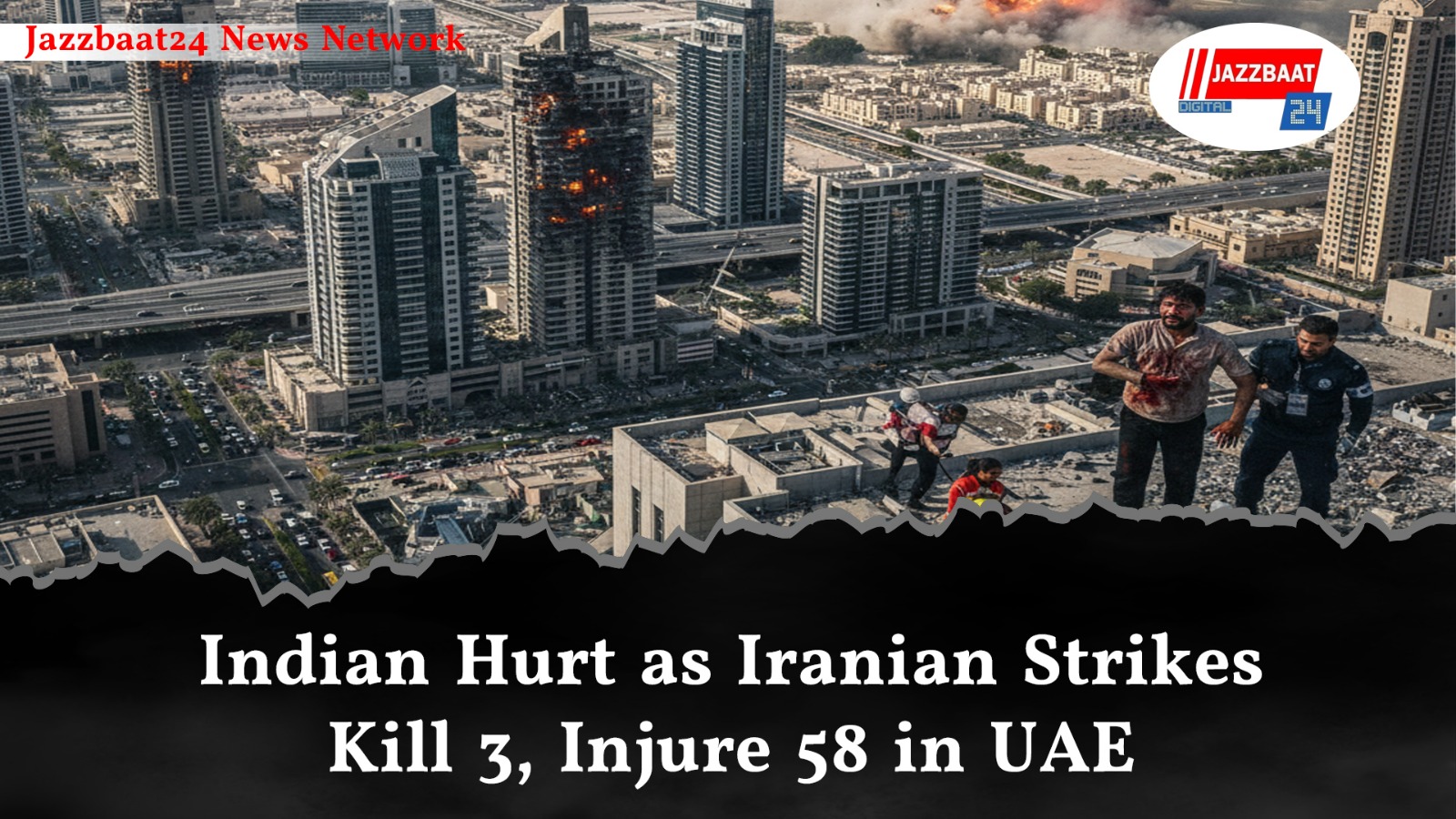
At least three people have been killed and 58 others injured in the United Arab Emirates after Iran launched a series of missile and drone strikes on the Gulf nation in retaliation for Western military actions against Tehran, the UAE Ministry of Defence said.
The three fatalities were foreign workers from Pakistan, Nepal and Bangladesh, authorities confirmed. Among those wounded was an Indian national, the Indian Embassy in Abu Dhabi said in a social media post, adding that the person is stable and not in danger. The embassy also said it was in contact with hospital authorities and providing all necessary assistance.
The 58 injured included residents and visitors of many nationalities, such as Emirati, Egyptian, Ethiopian, Filipino, Pakistani, Iranian, Indian, Bangladeshi, Sri Lankan, Azerbaijani, Yemeni, Ugandan, Eritrean, Lebanese and Afghan, according to the UAE defence ministry’s list of casualties.
Since Iran’s retaliation began on February 28, the UAE’s air defence forces have intercepted a massive barrage of ballistic missiles and drones, the ministry said. Authorities reported detecting 165 ballistic missiles, destroying 152, and intercepting 506 of 541 Iranian drones, while the remainder fell inside the country, causing material damage.
On the second day of strikes, the UAE armed forces shot down 20 ballistic missiles and two cruise missiles, and intercepted hundreds of drones, though some penetrated the defence shield and hit civilian areas, sparking fires and scattering debris across parts of Abu Dhabi and Dubai.
The attacks have caused widespread alarm in the Gulf, disrupted daily life, and raised concerns among expatriate communities and tourists. Airports and major transport hubs reported heightened security measures and some service interruptions as authorities urged people to stay in safe locations until the threat level stabilised.
The UAE government reiterated that its air defence forces remain fully prepared to counter ongoing threats and stressed that protecting the safety of citizens, residents and visitors remains a top priority. Officials urged the public to rely on official sources for information and avoid sharing unverified reports.
Iran launched the strikes after a coupled U.S.–Israeli military operation inside Iran earlier this week, which killed Iran’s Supreme Leader and key military figures. Tehran vowed a fierce response, marking a major escalation in the wider Middle East conflict as regional tensions continue to rise.
The situation remains fluid, with defence forces on alert and diplomatic efforts underway to prevent further escalation and safeguard civilians across the Gulf region.