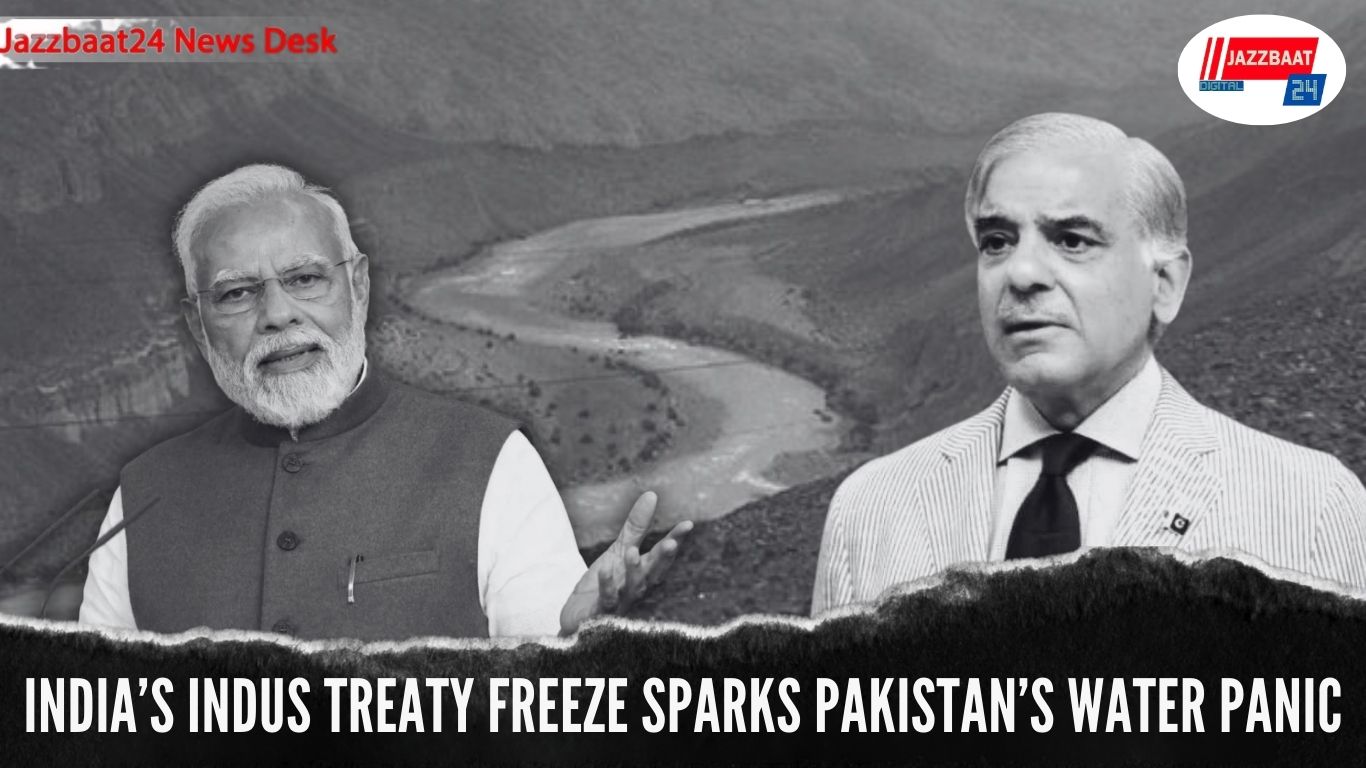
India’s decision to put the Indus Waters Treaty (IWT) on hold following the Pahalgam terror attack in April 2025 has triggered an unprecedented diplomatic and political scramble in Pakistan. The move, coming a day after 26 civilians were killed by Pakistan-linked terrorists, was more than a technical measure—it was a strategic signal linking water cooperation to Pakistan’s approach to cross-border terrorism.
Since the freeze, Pakistan has launched a series of high-level responses: eight top-level foreign visits, participation in major international conferences, over ten legal proceedings, and multiple domestic parliamentary resolutions—all within nine months. Islamabad has declared water a “vital national interest,” warning that disruption could be treated as an act of war.
Pakistan’s dependence on the Indus system is acute, with 80–90% of its agriculture reliant on these waters and storage levels at critically low levels. The country’s major dams, Tarbela and Mangla, are near dead storage, amplifying its vulnerability.
India, however, has clarified that the treaty is suspended, not scrapped, with revival contingent on Pakistan dismantling terrorist networks operating on its soil. The contradiction is stark: while Pakistan demands full treaty compliance from India, it continues to allow globally designated terrorist groups to operate openly, including Lashkar-e-Taiba and Jaish-e-Mohammed fronts.
Internationally, Pakistan has sought to “globalize” the issue, reaching out to the UN, OIC, SCO, and the World Bank, while pursuing legal action in The Hague. Despite the diplomatic blitz, India’s move has exposed the asymmetric nature of dependence on the Indus and highlighted the link between terrorism and strategic resources.
Analysts say India’s freeze has transformed the treaty from a technical water-sharing agreement into a geopolitical lever, sending a strong message: normal cooperation cannot coexist with sustained hostility. Pakistan’s panic underscores the pressure it faces, both internally and internationally, over its continued use of terrorism as state policy.