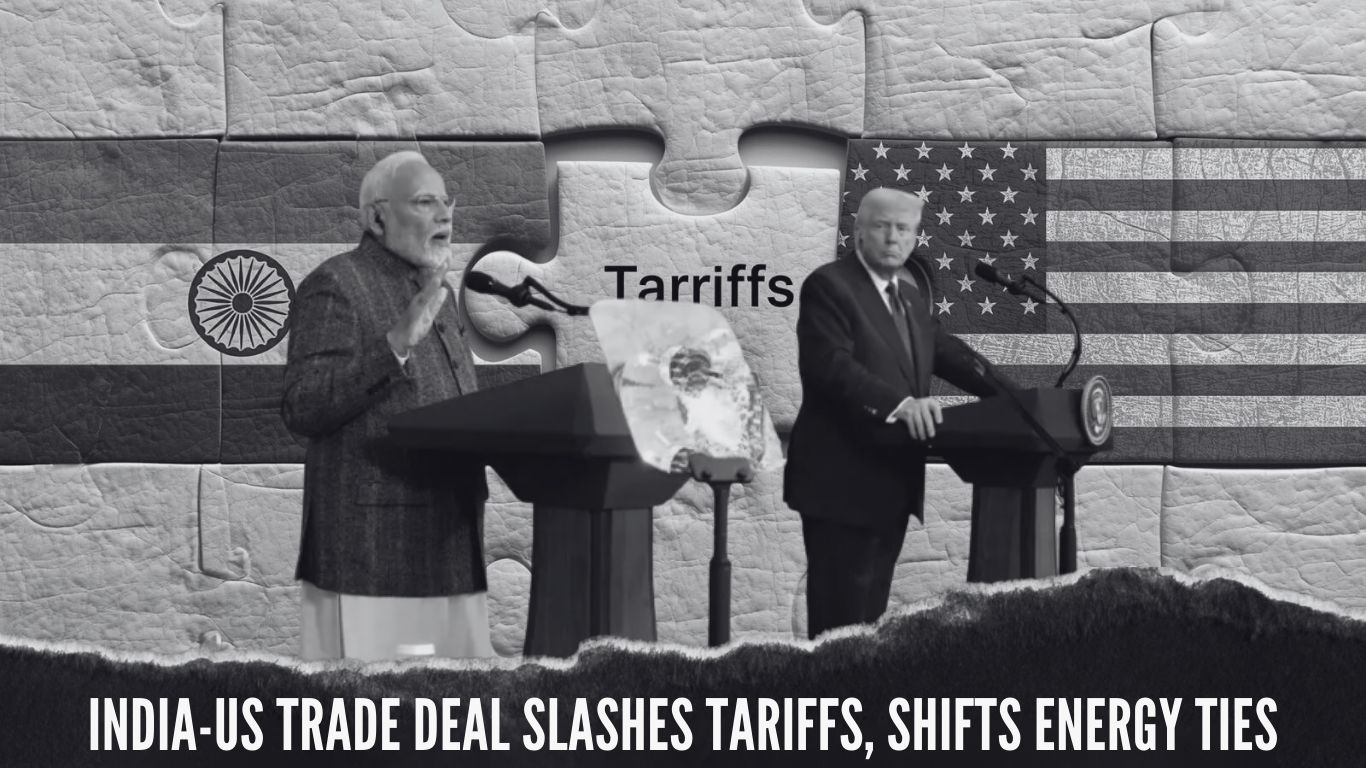
India and the United States have announced a new trade agreement that significantly lowers US tariffs on Indian goods, marking a major reset in bilateral economic ties. US President Donald Trump said Washington will cut duties on Indian exports to 18 per cent from the earlier combined level of up to 50 per cent. In return, India will halt purchases of Russian oil and move to reduce trade and non-tariff barriers for American products.
Prime Minister Narendra Modi welcomed the announcement, calling it a big boost for “Made in India” products in the US market. He said closer cooperation between the world’s two largest democracies would unlock fresh opportunities for trade, investment and technology partnerships.
With the revised tariff rate, India now enjoys a more favourable position compared to several Asian peers such as China, Pakistan, Bangladesh and Vietnam, which continue to face higher duties on exports to the US. However, India’s tariff level remains slightly above that of close US partners in Europe, as well as Japan and South Korea.
According to reports, the US has agreed to withdraw an additional punitive duty that had been imposed on Indian imports over New Delhi’s purchases of Russian crude, which were layered on top of a reciprocal tariff. President Trump also indicated that India would substantially step up purchases of American energy, including oil and coal, along with agricultural produce, technology and other goods. He added that India would work towards sharply lowering barriers for US exports.
Key details of the agreement, including timelines for implementation and the deadline for ending Russian oil imports, have not yet been formally notified by either government. There is also no official word on specific investment commitments linked to the deal.
Markets reacted positively to the announcement, with Indian equities rising and the rupee strengthening, reflecting investor optimism that lower tariffs could boost exports, improve trade flows and deepen strategic ties between New Delhi and Washington in the months ahead.