
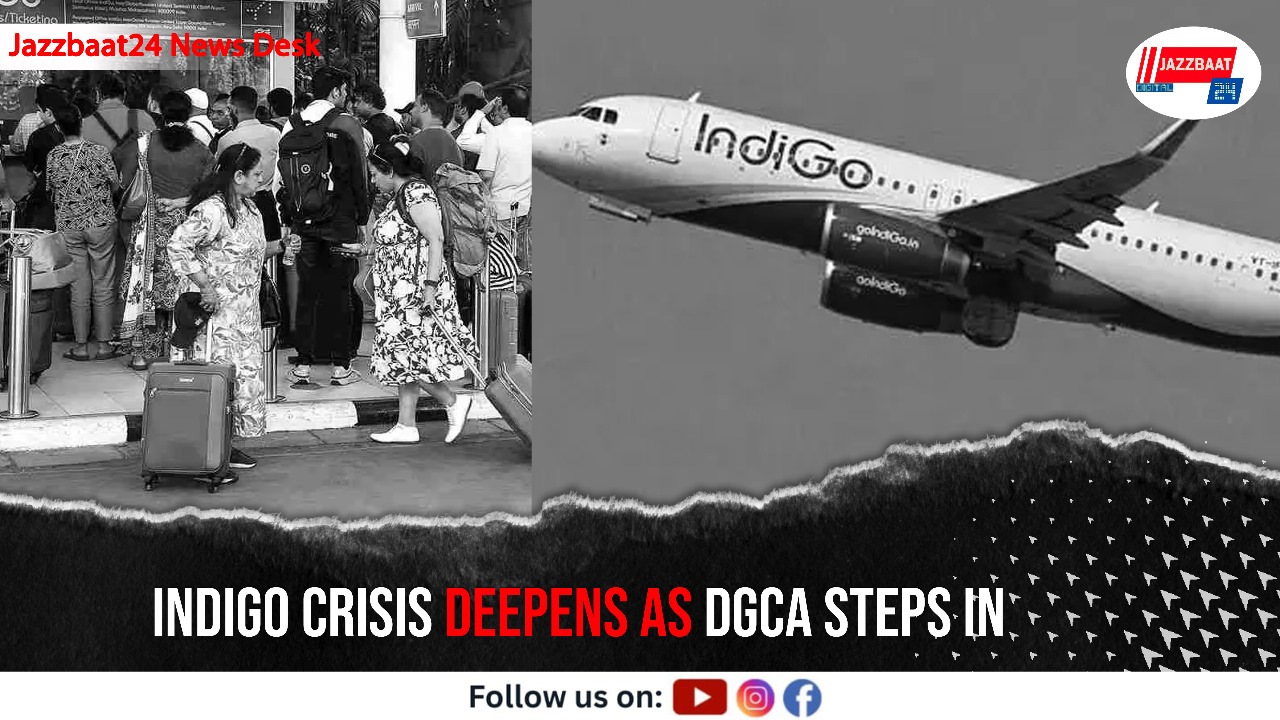
India’s largest airline, IndiGo, is facing its worst operational meltdown in years, leaving lakhs of passengers stranded across major airports. Since December 2, more than 4,500 flights have been cancelled, with Bengaluru and Delhi among the hardest hit. On Monday alone, 562 flights were scrapped, while 1,800 managed to operate.
The Directorate General of Civil Aviation (DGCA) has issued show-cause notices to IndiGo’s top executives, CEO Pieter Elbers and COO Isidre Porqueras, demanding accountability for the chaos. Both leaders submitted replies by the December 8 deadline, though the content remains undisclosed. The regulator confirmed that IndiGo is “profusely apologetic” and has promised corrective measures.
Passengers, however, continue to face long queues, missing baggage, and poor communication. Many reported receiving no alerts before cancellations, forcing them to spend thousands on alternate travel. The airline claims it has assisted over two lakh customers daily, arranged 9,500 hotel rooms, and delivered 4,500 bags, with the rest expected within 36 hours. Refunds worth ₹827 crore have already been processed, with a waiver on rescheduling and cancellations announced.
The crisis stems from new Flight Duty Time Limitation (FDTL) rules that increased pilots’ mandatory rest hours, triggering a severe crew shortage. While the civil aviation ministry defended the move as necessary for safety, critics argue the abrupt implementation without review caused the disruption. Political leaders, including Mamata Banerjee, have blamed the Centre for poor planning, while others accused IndiGo of mismanagement and profiteering.
IndiGo’s market value has plunged by $4.3 billion, with shares down 16% in a week. The government’s crisis group is monitoring the situation daily, vowing strict action to “set an example.” IndiGo says it aims to restore full operational integrity by December 10, but for now, passengers remain caught in the turbulence of India’s aviation crisis.