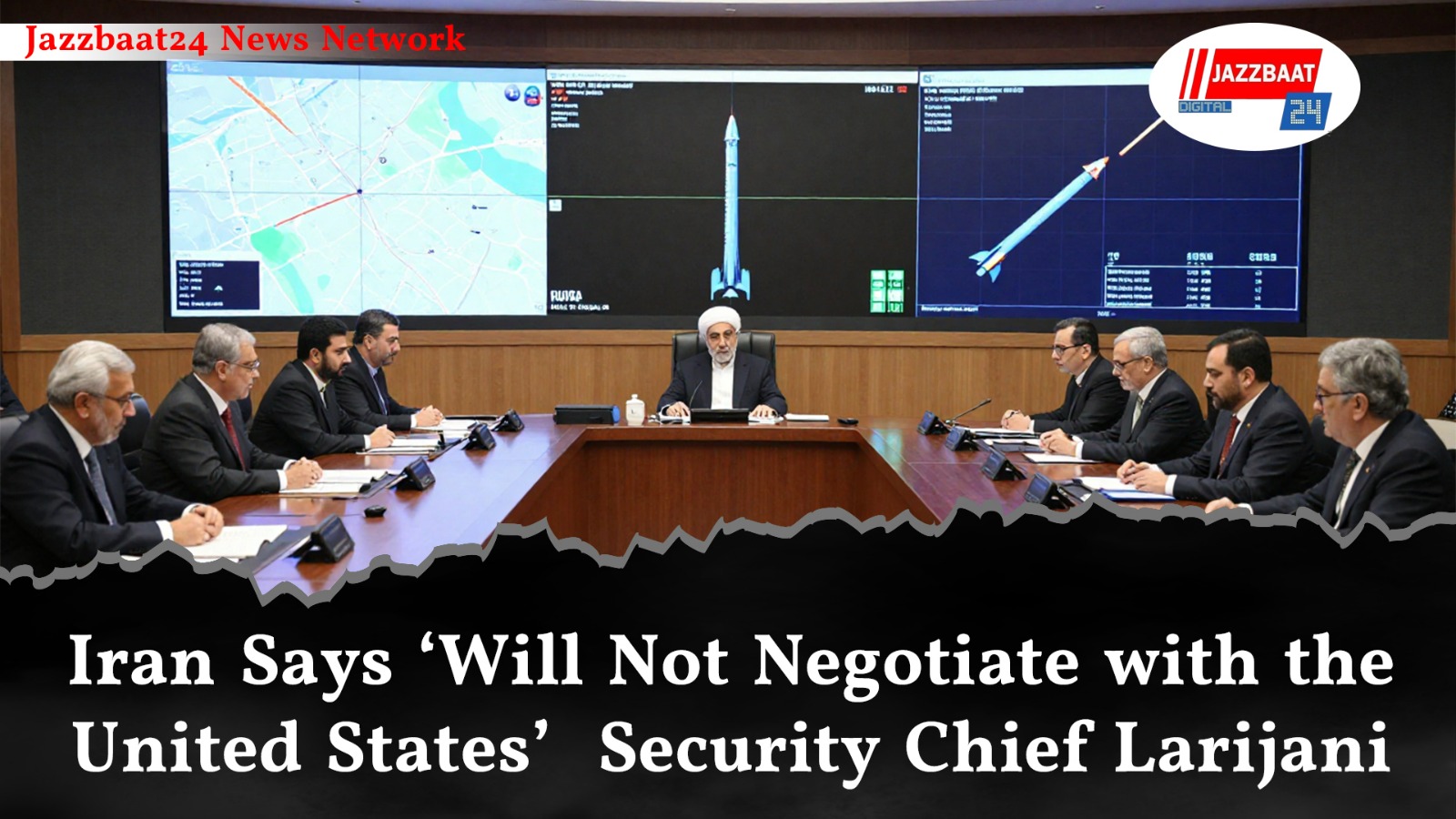
Iran’s top security official Ali Larijani, who serves as Secretary of the Supreme National Security Council, has firmly rejected reports of renewed negotiations with the United States, saying Iran “will not negotiate with the United States” amid the escalating conflict in the Middle East. His statement, posted on social media platform X on Monday, comes as tensions soar following recent military actions involving the U.S., Israel and Iran.
Larijani’s remarks contradict earlier claims in international media that he or other Iranian officials had sought to reopen a diplomatic channel with Washington through intermediaries such as Oman. In his post, he explicitly denied reaching out to U.S. officials and reaffirmed Tehran’s refusal to engage in talks with Washington at this time, underscoring the depth of mistrust between the two countries.
The comments follow a sharp escalation of conflict after U.S.-Israeli airstrikes targeted Iranian territory and leadership figures, sparking a broader military confrontation across the region. Iran retaliated with missile strikes against targets in Israel and U.S. positions in the Gulf, leading to further tensions and widespread international concern.
While Larijani dismissed negotiation reports, the broader context shows negotiations between Iranian and U.S. officials had resumed earlier this year in an attempt to address longstanding disputes, particularly over Iran’s nuclear program. Talks held in recent months in venues like Oman and Geneva involved high-level envoys from both sides, although progress was uncertain and talks ultimately failed to produce a deal before the current crisis intensified.
The refusal to engage diplomatically comes amid calls from various global leaders and diplomatic sources urging restraint from both Tehran and Washington, warning that continued hostilities could destabilize the wider Middle East and affect global security and energy markets. Analysts note that, even before recent clashes, indirect discussions were underway on nuclear limits and sanctions relief, but mutual distrust and unresolved core demands stalled any meaningful breakthrough.
Iran’s strategic posture remains combative, with senior officials asserting that military resistance and not dialogue with the United States is the current priority. This hardline stance reflects deep-seated grievances around U.S. pressure campaigns, sanctions and past diplomatic failures, factors that Tehran says have shaped its approach to Washington.
As the conflict continues to evolve, the sharp rejection of negotiations by Larijani signals a further hardening of positions, making diplomatic solutions to the crisis more elusive even as global pressure mounts to find a peaceful way forward.