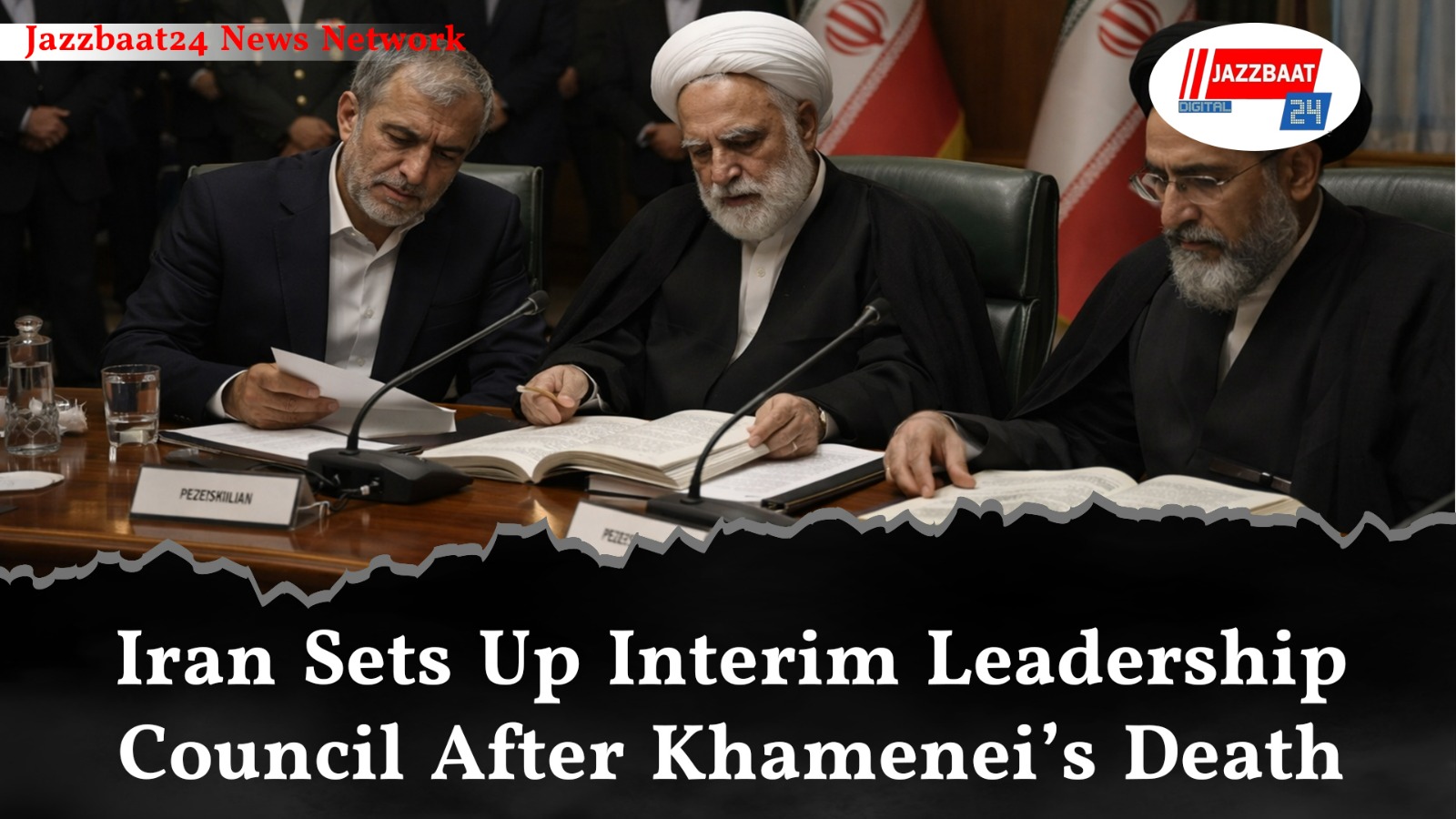
Iran has formed a temporary leadership council to run the country after the reported killing of Supreme Leader Ayatollah Ali Khamenei in joint U.S.–Israel strikes, according to state media and official sources.
The three‑member interim body operating under Article 111 of Iran’s Constitution has assumed the supreme leader’s powers while Tehran moves toward selecting a permanent successor. It includes President Masoud Pezeshkian, Judiciary Chief Gholam‑Hossein Mohseni‑Ejei, and Ayatollah Alireza Arafi, a senior cleric from the influential Guardian Council who has been appointed to the council as its jurist member.
State news agencies reported that the council will temporarily take on the wide-ranging duties traditionally held by the supreme leader, including oversight of military, political and religious affairs, while Iran’s powerful clerical body known as the Assembly of Experts begins the process of choosing a new supreme leader.
Iran’s constitutional procedure mandates this transitional step whenever the office of supreme leader is vacant, and it aims to maintain continuity of governance during the uncertain period following Khamenei’s death. The Assembly of Experts, an 88‑member body of senior Shiite clerics, is expected to meet and select a permanent successor as soon as possible once the immediate turmoil subsides.
President Pezeshkian, speaking after the council began its work, said the interim body would carry forward the policies of the Islamic Republic and vowed that Iran’s military would continue defending the nation’s interests.
The formation of the council comes at a volatile moment, with Iran’s leadership under intense pressure from ongoing military retaliation and deepening regional conflict.