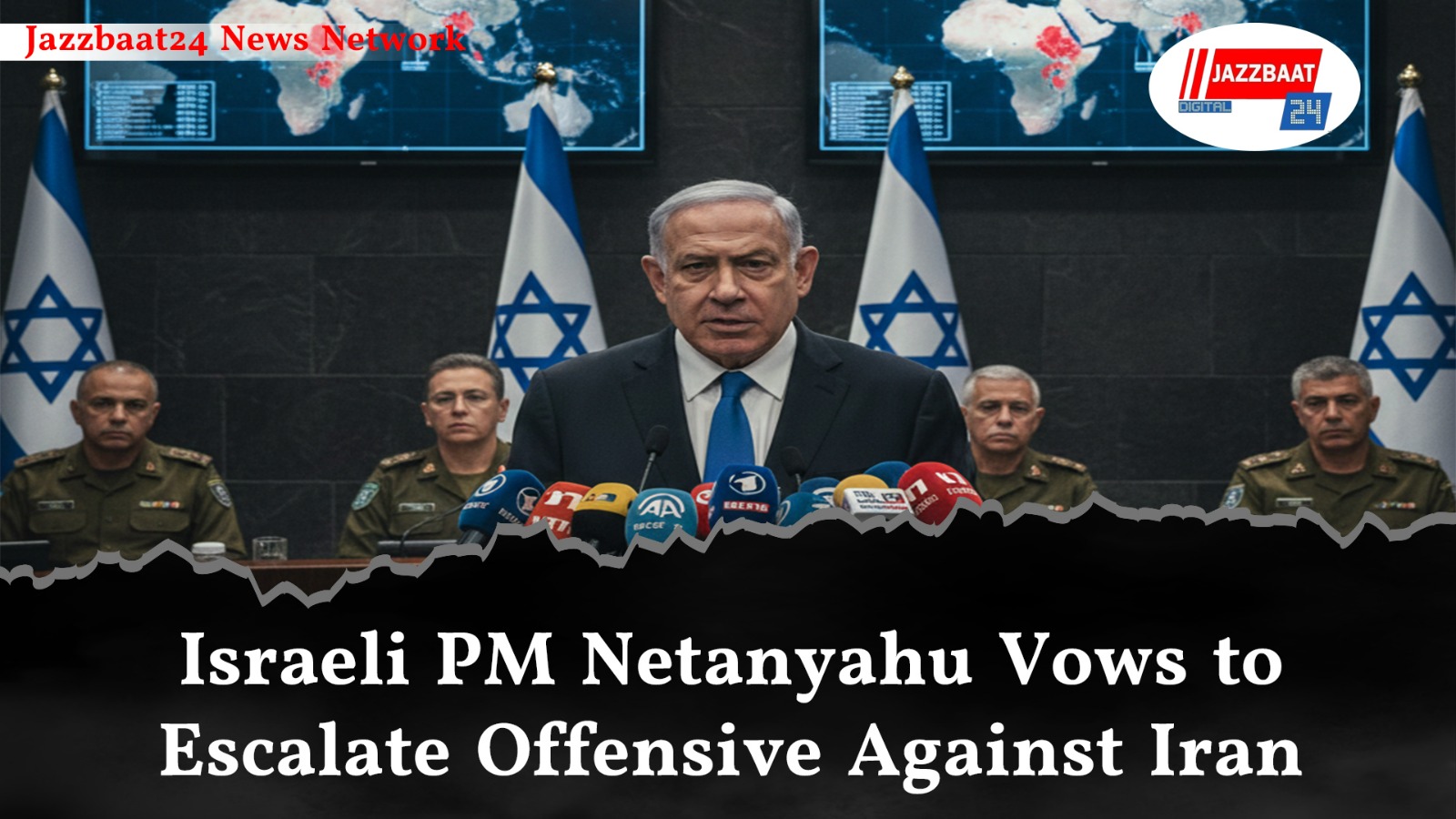
Jerusalem: Israeli Prime Minister Benjamin Netanyahu has said Israel will continue its military offensive against Iran with increased intensity following Tehran’s retaliatory strikes and mounting casualties, reaffirming that the campaign will not stop soon. Officials confirmed Iran’s Supreme Leader Ayatollah Ali Khamenei was killed in a joint U.S.–Israel attack, deepening the already volatile conflict in the Middle East.
Speaking from the Defence Headquarters in Tel Aviv, Netanyahu declared that he has ordered the continuation and escalation of Israel’s campaign, which has now reached deep into Iranian territory, including strikes on Tehran’s infrastructure. He said Israeli forces are hitting key targets at the heart of Iran and the offensive will intensify in the coming days.
“We have given instructions to press on with the campaign,” Netanyahu said, calling the operation necessary to secure Israel’s survival and future. He mourned recent civilian casualties inside Israel from Iranian ballistic missile attacks and expressed support for the ongoing joint effort with the United States.
Netanyahu also urged Iranian citizens to rise against their government, framing the moment as a historic opportunity for internal change. He said Israel aims to strike “thousands of targets” in the coming days to weaken Tehran’s leadership structure and create conditions for possible uprisings within Iran itself.
The intensifying offensive comes as Iran has launched missile strikes on Israeli cities and U.S. military installations in the Gulf, and Israel has expanded military action into Lebanon against Hezbollah targets following militant attacks linked to Tehran.
International reactions have been mixed. Indian Prime Minister Narendra Modi called Netanyahu to urge an early cessation of hostilities and stressed the importance of protecting civilians amidst the deepening crisis.
Despite global concern over the widening conflict, Netanyahu’s government appears firm in its strategy signaling that Israel will not ease its military pressure on Iran until it believes its objectives are met, amid one of the most dangerous escalations in the region in years.
With tensions climbing and regional alliances tested, analysts warn that the conflict could linger into a prolonged phase of military and diplomatic confrontation, potentially drawing in other nations as combatants and further destabilizing the Middle East.