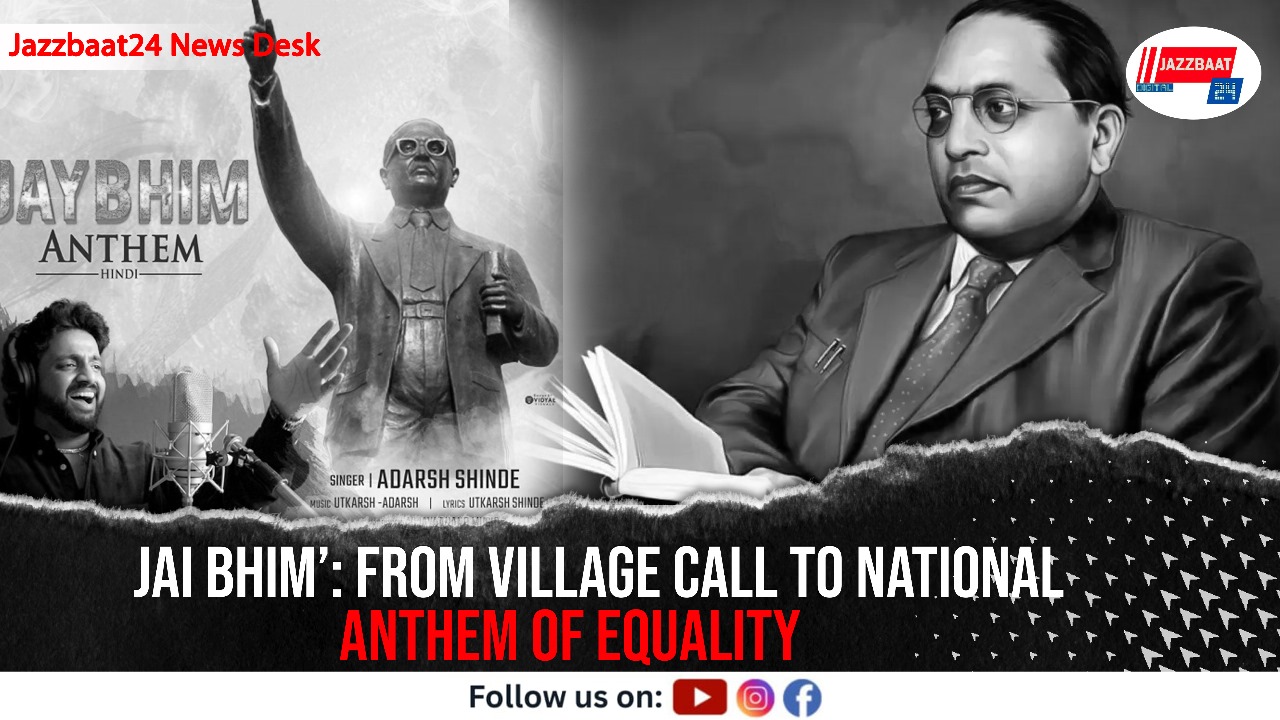
The phrase Jai Bhim is more than just a slogan. It is a rallying cry, a declaration of identity, and a symbol of social justice that resonates across India. What many may not realise is that this powerful expression of pride and assertion for Dalits first emerged in a small village in central Maharashtra, Makranpur, during the Makranpur Parishad, decades before it became a nationwide phenomenon. Its humble beginnings underscore the profound influence of grassroots movements in shaping the country’s social and political consciousness.
At the Parishad, participants invoked Jai Bhim to honour Dr Bhimrao Ramji Ambedkar, the chief architect of India’s Constitution and a relentless champion of equality. In an era when the social hierarchy was rigid and the voices of the oppressed were largely unheard, these two words carried a revolutionary message: a declaration that dignity, justice, and equality were non-negotiable rights. From that small gathering in Kannad tehsil of today’s Chhatrapati Sambhajinagar district, the slogan began its journey, spreading across Maharashtra and gradually being adopted nationwide as a marker of identity and solidarity for Dalits.
The enduring appeal of Jai Bhim lies in its simplicity and universality. It encapsulates the struggle against caste-based discrimination, the celebration of Ambedkar’s life and vision, and the assertion of dignity for marginalised communities. Unlike political slogans that fade with time, Jai Bhim has remained relevant across generations, inspiring not only social movements but also cultural expressions, educational discourse, and public debates. It is a reminder that meaningful change often begins in the smallest of spaces, nurtured by conviction and courage.
As India observes the death anniversary of Dr Ambedkar on 6 December, it is worth reflecting on the significance of this slogan. Jai Bhim is not merely a historical relic; it is a living affirmation of the ongoing struggle for equality and justice. In contemporary India, where social inequalities persist despite constitutional guarantees, the call resonates as strongly as it did in Makranpur decades ago.
The story of Jai Bhim is a reminder that the fight for dignity and equality is both local and national, personal and collective. It began in a small village but grew into a powerful symbol of hope, unity, and resilience for millions. In honouring Dr Ambedkar and his vision, every utterance of Jai Bhim continues to inspire a nation to live up to the ideals of justice, liberty, and equality enshrined in the Constitution.
This is more than a slogan; it is a commitment to the values that define the soul of India.