
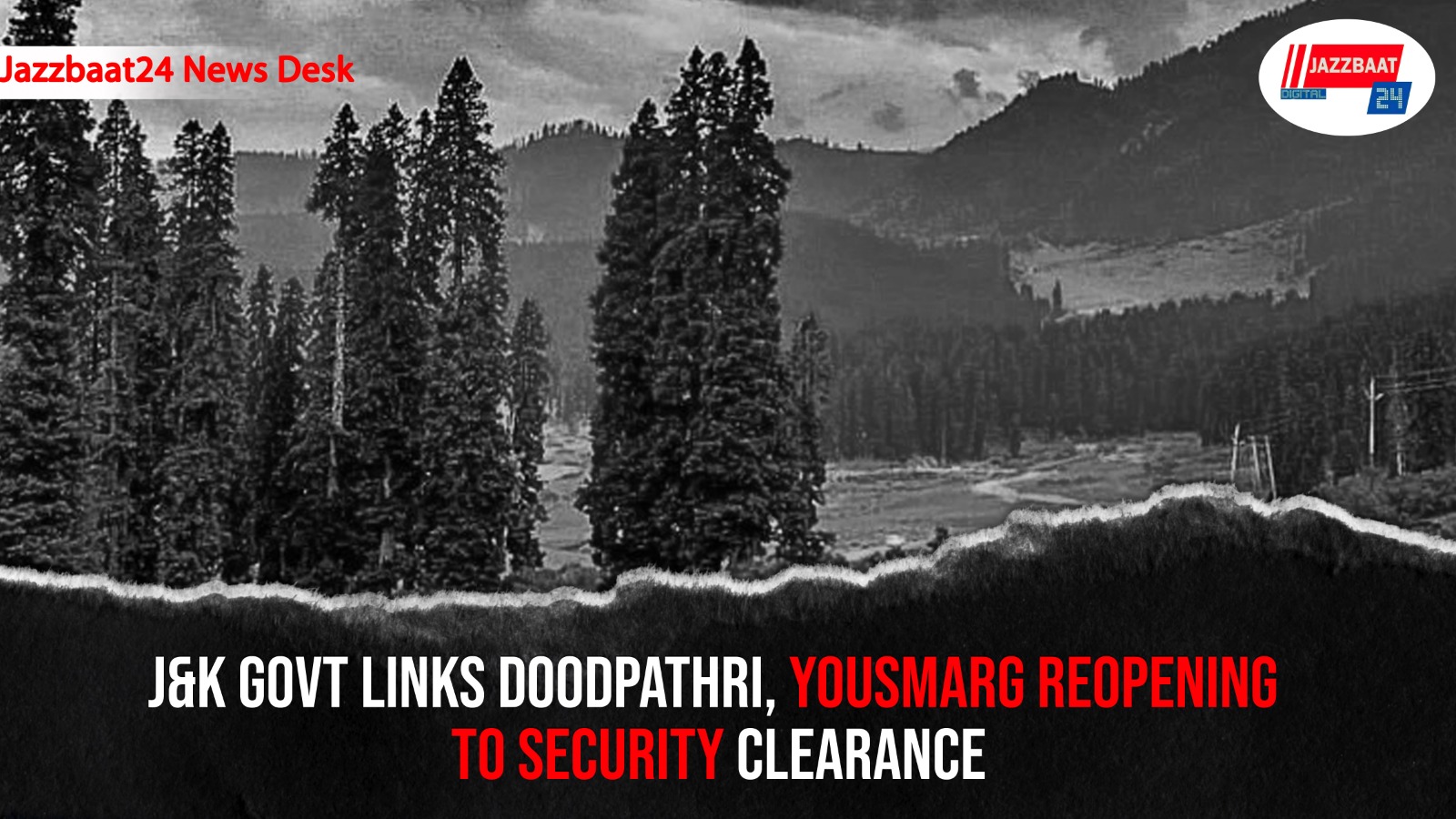
Jammu: The Jammu and Kashmir government on Friday informed the Legislative Assembly that the reopening of popular tourist destinations Doodpathri and Yousmarg is contingent upon security clearance, which falls beyond the jurisdiction of the Tourism Department. The matter has reportedly been referred to the Deputy Commissioner of Budgam for necessary action, following a query by MLA Aga Syed Muntazir Mehdi.
The government highlighted that recent incidents in the tourism sector have negatively affected visitor numbers in the Union Territory, directly impacting the livelihood of stakeholders, including hoteliers, tour operators, and local businesses dependent on tourism. Officials stressed that ensuring safety and security remains a top priority before allowing tourists to access these destinations.
To rejuvenate the tourism industry, the J&K Tourism Department has undertaken several confidence-building measures, including promotional campaigns and infrastructure upgrades. A series of thematic festivals and promotional events are being organized both within the UT and across India to attract domestic tourists. Authorities noted that the current winter tourist season has seen increased activity in other regions, reflecting gradual recovery in visitor interest.
While Doodpathri and Yousmarg remain temporarily closed, the government reassured stakeholders that all efforts are being made to assess security conditions and enable reopening at the earliest possible time. Tourism officials also emphasized that the closures are precautionary, aimed at safeguarding both tourists and local communities.
Political observers note that the decision underscores the delicate balance in J&K between promoting economic activity through tourism and ensuring security amid ongoing concerns. Residents and tourism operators continue to monitor developments closely, hoping for a swift resolution that allows the destinations to welcome visitors safely.
The government’s statement signals a proactive approach to reviving the sector while prioritizing safety, reflecting a broader strategy to maintain public confidence and sustain tourism-driven economic benefits in the region.