

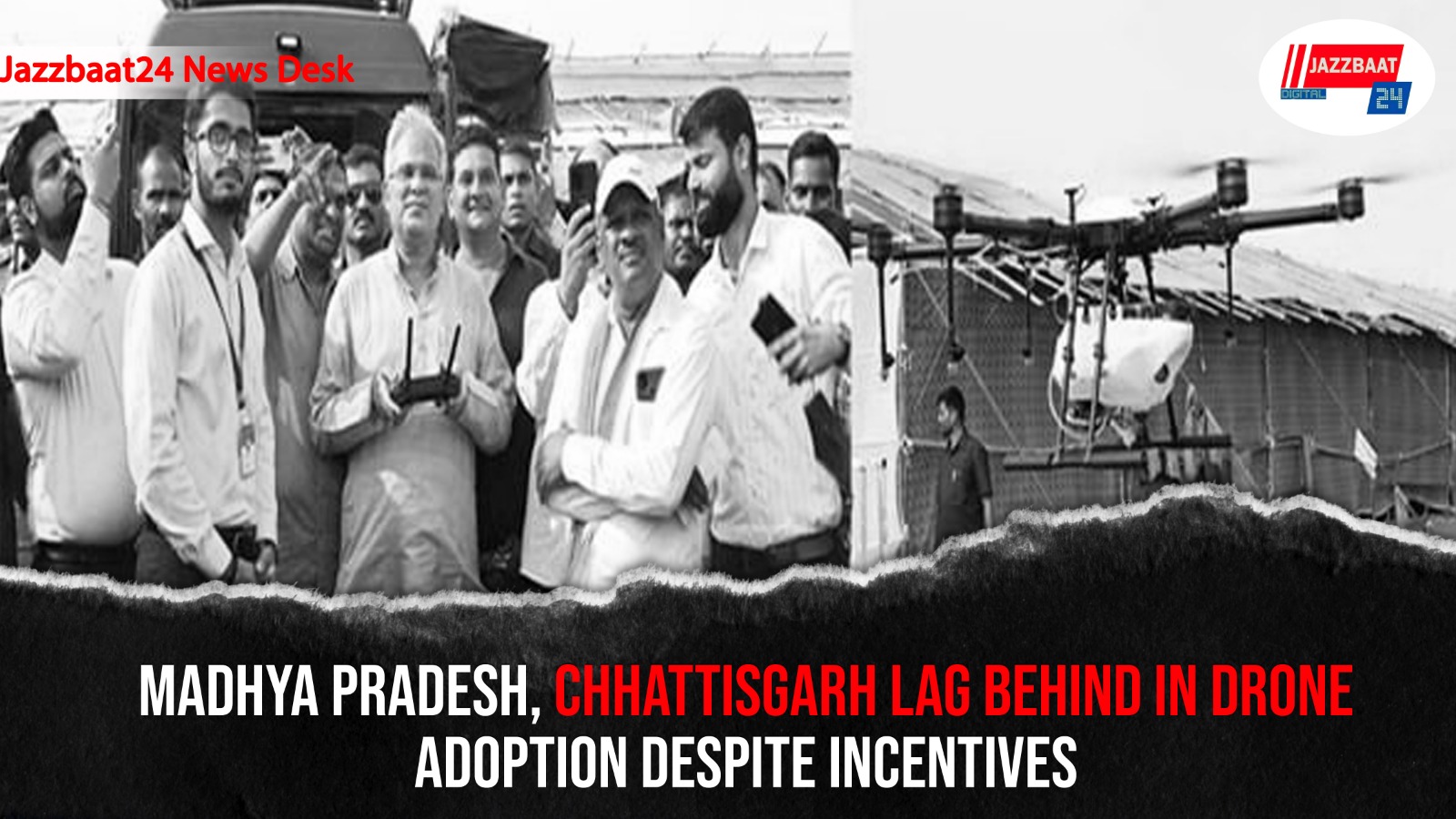
Recent parliamentary data has highlighted a significant gap in drone adoption in central India, with Madhya Pradesh and Chhattisgarh lagging far behind other states despite government incentives. As of January 31, 2026, Madhya Pradesh has only 480 registered drones, ranking 13th nationally, while Chhattisgarh trails with just 161 registrations. In contrast, Maharashtra leads the country with 8,210 drones, followed by Tamil Nadu (5,878), Telangana (3,657), Karnataka (3,258), and Haryana (2,179). Nationwide, 38,475 drones are currently registered.
Minister of State for Civil Aviation Murlidhar Mohol, responding in the Lok Sabha to a question from MP Sajda Ahmed, outlined India’s drone policy framework. He noted that the Drone Rules, 2021, along with amendments in 2023 and 2024, have simplified compliance, removed passport requirements for Remote Pilot Certificates, and made 90% of airspace “Green Zone,” allowing drone operations without prior permissions. A global certification scheme for unmanned aircraft was also implemented in 2022 to streamline validation, alongside strict regulations to prevent misuse.
Despite these policy measures and the launch of the “MP Drone Promotion and Utilisation Policy-2025,” which offers up to 40% capital subsidies for drone manufacturing and grants for research, Madhya Pradesh’s adoption remains sluggish. The state, with its vast agricultural land, forests, mining areas, and infrastructure corridors, has immense potential for drones in agriculture, monitoring, and logistics. Chhattisgarh, with only 161 drones, faces similar challenges, even though drones could play a critical role in forest management, disaster response, and healthcare delivery.
Experts suggest that while the central government has created a conducive regulatory environment, translating these policies into actual industrial growth requires stronger local implementation, awareness, and training. For now, the slow uptake in Madhya Pradesh and Chhattisgarh signals that policy incentives alone may not be enough to drive drone adoption in regions that could benefit most.