

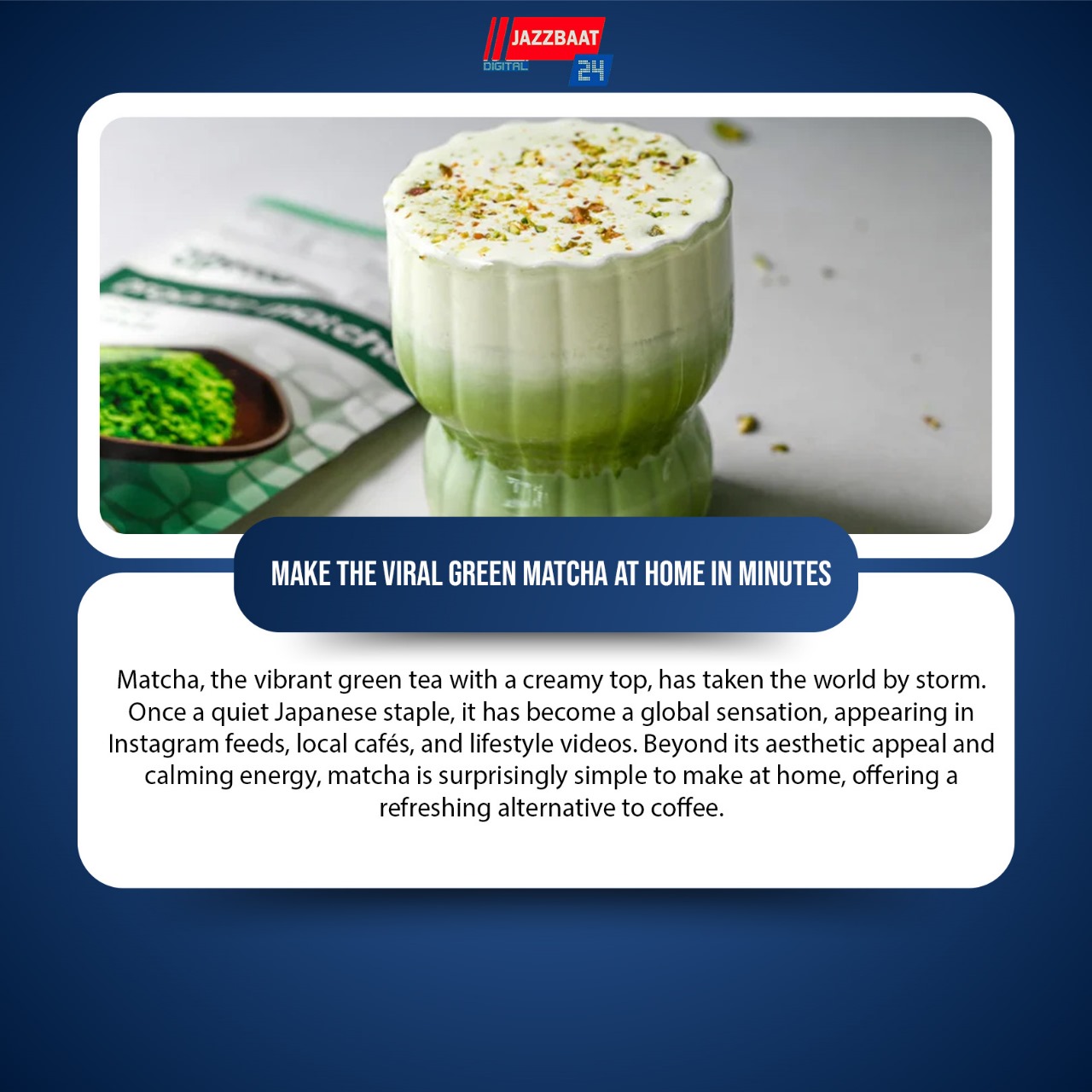
Matcha, the vibrant green tea with a creamy top, has taken the world by storm. Once a quiet Japanese staple, it has become a global sensation, appearing in Instagram feeds, local cafés, and lifestyle videos. Beyond its aesthetic appeal and calming energy, matcha is surprisingly simple to make at home, offering a refreshing alternative to coffee.
To start, quality matcha powder is key. Look for bright green, finely ground powder, ideally ceremonial grade. You’ll also need hot water that’s warm but not boiling, and a whisk, milk frother, or even a spoon. Milk is optional and can be dairy or plant-based like oat or almond, while honey or maple syrup can add a touch of sweetness.
The preparation is straightforward. Sift half to one teaspoon of matcha into a cup or bowl to remove clumps for a smoother drink. Add a splash of hot water and whisk in quick zig-zag motions until the powder dissolves and foam forms on top. This forms the matcha base. For a hot latte, mix in steamed milk, or use cold milk and ice for an iced version. Sweeten to taste if desired. No blender or boiling is required.
Matcha isn’t just a pretty beverage; it’s packed with benefits. Unlike regular green tea, matcha uses whole leaves, providing antioxidants, amino acids, and other nutrients. One important compound, L-theanine, combines with caffeine to offer calm, focused energy without the spikes and crashes associated with coffee. It’s also rich in EGCG, an antioxidant linked to skin health, metabolism, and reduced inflammation. Low in calories and free from added sugar or dairy (unless added), matcha fits into most routines and is highly customizable strong and grassy or soft and milky, hot or iced, with optional flavors like cinnamon or vanilla.
With its simplicity, versatility, and health perks, matcha is an easy way to upgrade your daily beverage routine. Whether for focus, relaxation, or just a touch of elegance, this viral green drink is well worth making at home.