
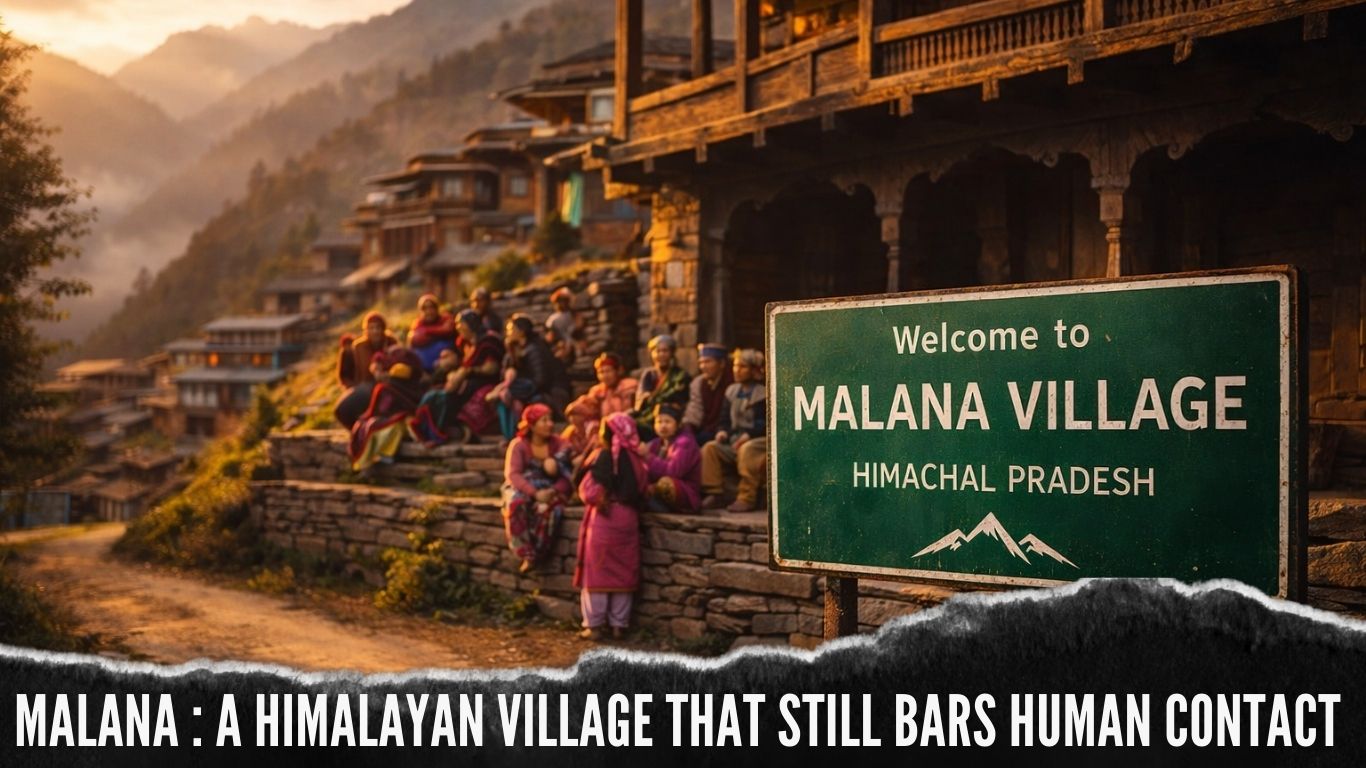
Tucked deep in Himachal Pradesh’s Parvati Valley, Malana is often described in travel circles as an “offbeat” Himalayan village known for its dramatic landscapes, ancient traditions, and legendary cannabis strain. But behind the postcard views lies a reality that continues to shock and divide visitors: a strict social code that forbids outsiders from touching local people, homes, temples, or even common objects.
Located a steep trek away from the nearest motorable road, Malana has long maintained its isolation. The village prides itself on a self-governing system that locals believe is one of the world’s oldest democracies. Decisions are traditionally taken by a council of elders under the guidance of their local deity, Jamlu Devta. For generations, this system has helped preserve Malana’s distinct identity. However, it has also upheld practices that many see as rooted in caste-based notions of purity and pollution.
For visitors, the rules are clear and often displayed on signboards: do not touch walls, houses, temples, or residents. Even basic transactions are done without physical contact. Tourists place money on a wooden plank, from where shopkeepers collect it, avoiding direct hand-to-hand exchange. The logic, according to local belief, is to maintain ritual purity by limiting physical contact with outsiders.
While villagers describe this as cultural preservation, critics argue that the practice closely mirrors untouchability, something India’s Constitution explicitly outlaws. Travel writers and social commentators have increasingly questioned whether such customs should be romanticised as “exotic traditions” or challenged as discriminatory social practices that no longer have a place in modern India.
The irony is hard to miss. Malana is globally famous for “Malana Cream,” a cannabis product that has made the village a magnet for backpackers from across India and abroad. Despite strict social boundaries, the village has become part of an underground economy linked to illegal cannabis trade, bringing in outsiders even as the community seeks to limit physical and social interaction with them.
Local authorities and tourism stakeholders in Himachal Pradesh have, over the years, tried to balance respect for indigenous traditions with the need to uphold constitutional values and ensure visitor safety. Tourists are generally advised to respect local customs, avoid touching property or people, seek permission before photographing residents, and follow trekking and village guidelines strictly.
For many travelers, Malana offers a striking contrast: breathtaking mountain views paired with a social system that feels frozen in time. The village serves as a reminder that India’s travel destinations are not just about scenery, but also about complex histories, beliefs, and social realities.
As tourism in the region continues to grow, Malana’s story raises a larger question for Indian travel culture: how should travelers, communities, and authorities navigate the fine line between cultural preservation and the need to move beyond practices that perpetuate exclusion?
For now, Malana remains a place where the mountains welcome you, but human touch does not.