
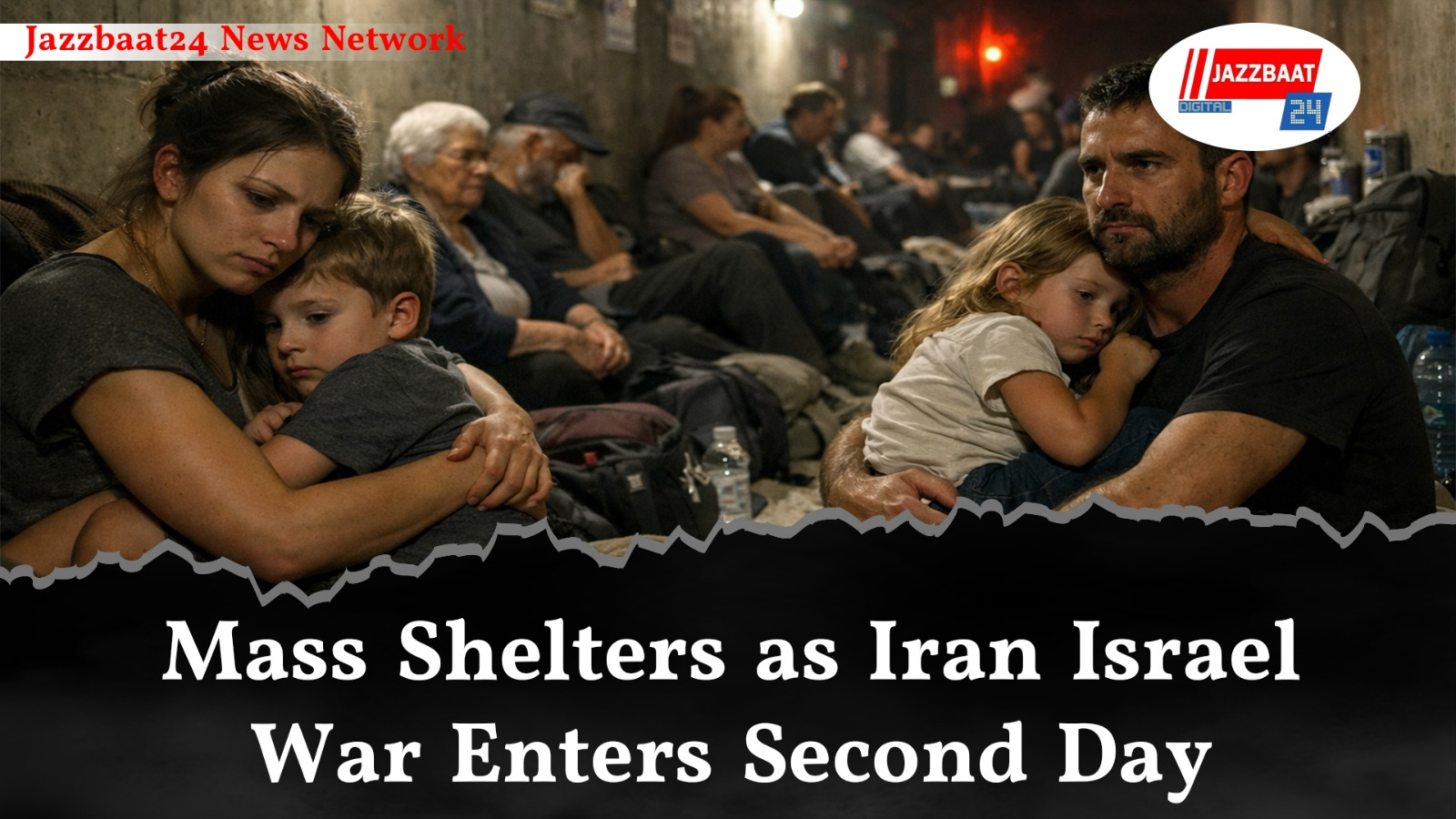
Millions of Israelis spent Sunday huddled in bomb shelters and rushing for cover as Iran’s missile barrage marked the second day of a rapidly escalating war following a major military offensive by Israel and the United States against Iran.
According to Israeli military officials, roughly 100 ballistic missiles were launched by Iranian forces over the past 24 hours toward Israeli territory. While most of these were knocked down by Israel’s advanced air‑defence systems, some penetrated and struck densely populated areas, especially around Tel Aviv. One missile late Saturday night hit a residential building in Tel Aviv, killing a woman in her 40s and injuring at least 25 people, including several children and a seriously wounded man.
Air‑raid sirens blared repeatedly across central and southern Israel, prompting widespread closure of schools and workplaces. Emergency services remained on high alert, treating the wounded and reinforcing civil defence measures. Authorities urged citizens to strictly follow shelter instructions as further missile launches were expected.
The Iranian retaliation comes after coordinated U.S. and Israeli airstrikes targeted key Iranian leadership and military infrastructure. Tehran has acknowledged the death of Supreme Leader Ayatollah Ali Khamenei in the opening strikes, and Israeli officials have vowed to continue their offensive.
Political leaders across Israel have voiced unity in the face of the crisis. Despite deep domestic divisions, figures from opposition parties have backed the government’s military response, emphasizing national defence amid what many see as an existential threat.
Analysts warn the conflict could destabilize the wider Middle East and disrupt global markets if it spreads further. International calls for de‑escalation have intensified, even as both sides show little sign of backing down.