
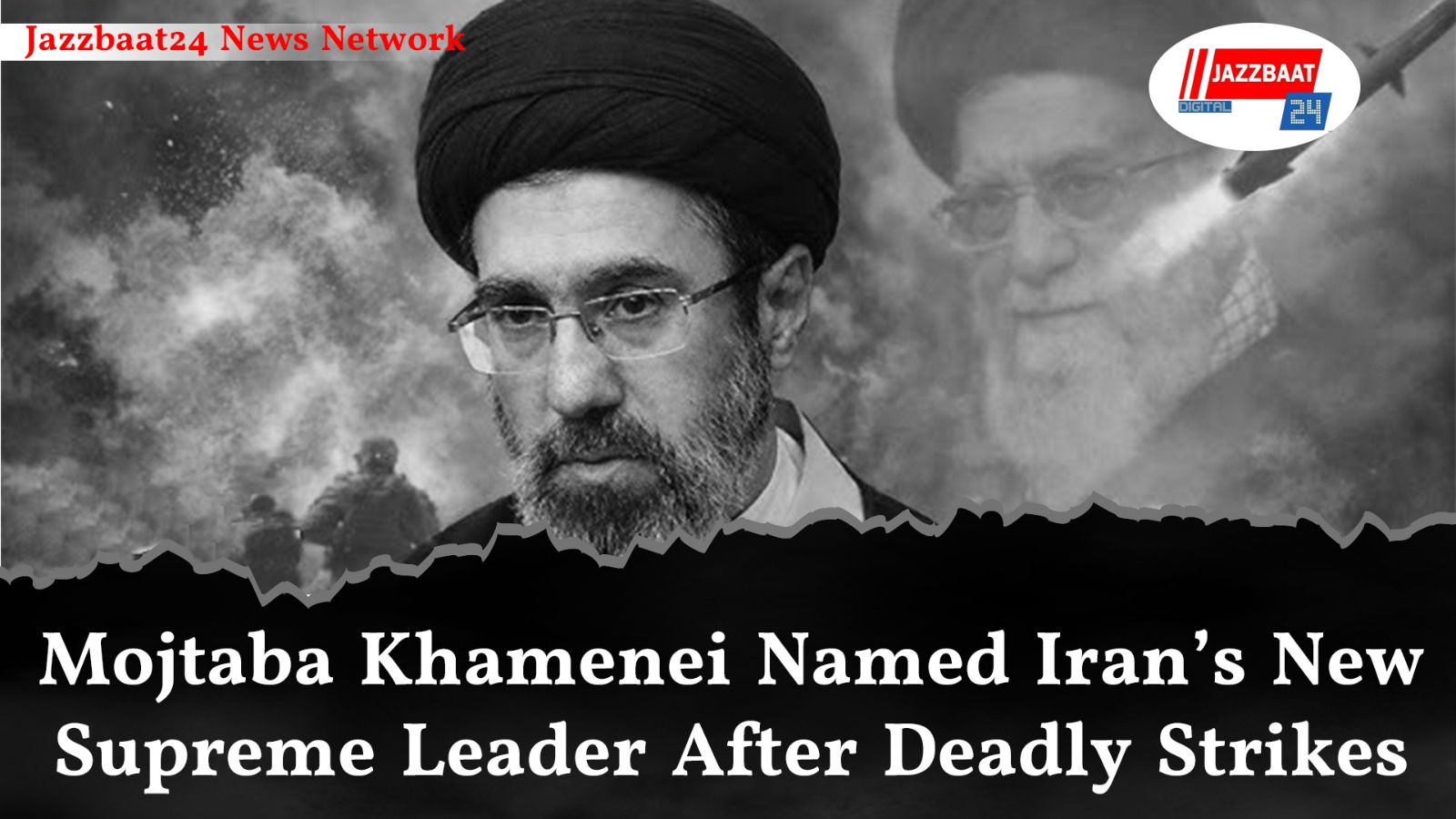
Mojtaba Hosseini Khamenei, the son of late Iranian Supreme Leader Ayatollah Ali Khamenei, has reportedly been elected as Iran’s new Supreme Leader following his father’s death in a joint US-Israeli military operation. The development was first reported by Israeli media, which stated that Iran’s powerful Assembly of Experts selected Mojtaba as the country’s highest authority.
Ayatollah Khamenei, who ruled Iran for 36 years, was killed on February 28 during coordinated US-Israeli airstrikes under what was described as “Operation Epic Fury.” The strikes reportedly targeted multiple Iranian cities, including Tehran. According to reports, Khamenei was inside his residential compound at the time of the attack. Several members of his family, including his daughter, son-in-law, and granddaughter, were also killed. His wife, Mansoureh Khojasteh Bagherzadeh, later succumbed to injuries sustained in the strike.
Iran’s Revolutionary Guards announced that Khamenei will be laid to rest in the holy city of Mashhad. A large farewell ceremony is expected to be held in Tehran, though the burial date has not yet been officially disclosed.
Before Mojtaba’s reported appointment, a three-member interim Leadership Council had assumed the responsibilities of the Supreme Leader. The council included Ayatollah Alireza Arafi, President Masoud Pezeshkian, and Chief Justice Gholamhossein Mohseni Ejei. The temporary arrangement was intended to ensure continuity until a successor was formally chosen.
The escalation follows rising tensions between Iran, the United States, and Israel over stalled nuclear negotiations and allegations that Tehran had resumed sensitive nuclear activities. After the strikes, Iran launched retaliatory missile and drone attacks targeting several Gulf locations, including Dubai, Abu Dhabi, Qatar, and Bahrain. A drone strike reportedly caused a fire near the US consulate in Dubai, though American officials confirmed that all staff were safe.
US President Donald Trump warned that it was “too late” for Iran to seek talks to avoid further conflict, signaling the possibility of prolonged hostilities. As the crisis deepens, concerns are mounting globally over the potential for a wider regional war and its economic and humanitarian consequences.
The appointment of Mojtaba Khamenei marks a critical turning point for Iran’s leadership at a time of intense internal uncertainty and external pressure.