

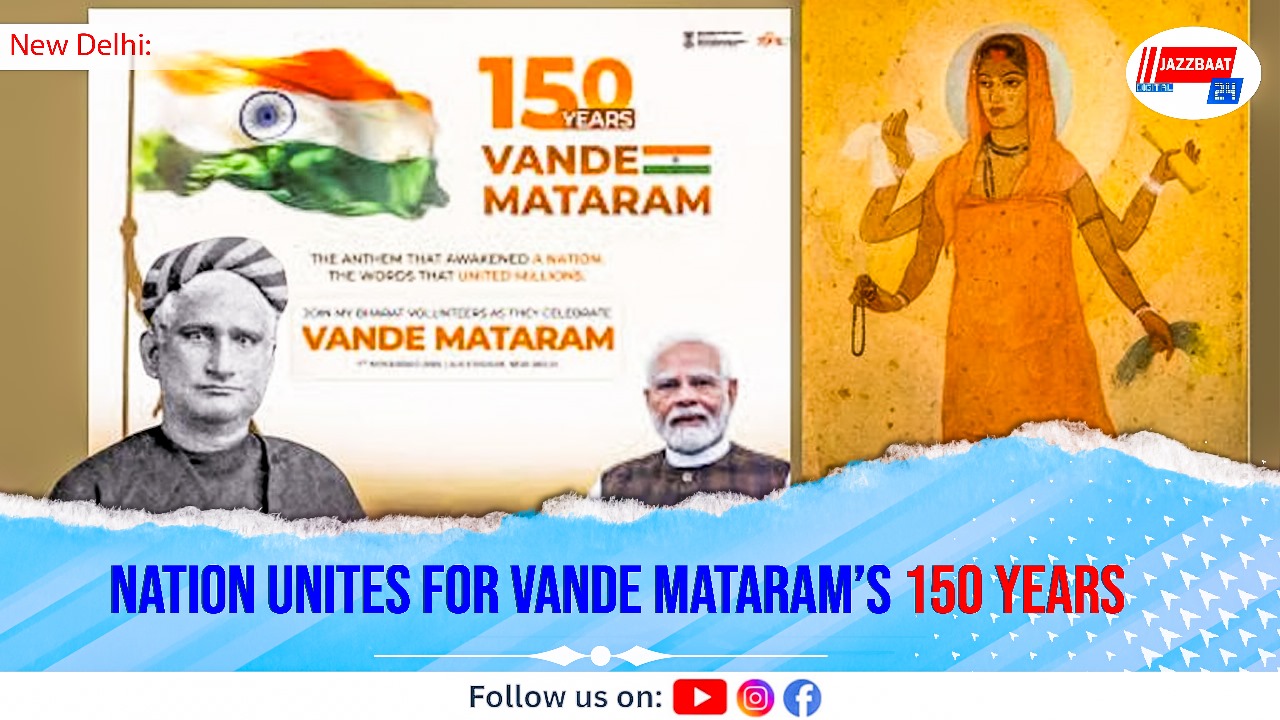
New Delhi: Prime Minister Narendra Modi on Friday led nationwide celebrations marking the 150th anniversary of Vande Mataram, India’s national song, at a grand event in the capital. The commemoration, held at Vigyan Bhawan, brought together artists, scholars and political leaders to honour the song’s enduring legacy in India’s freedom movement.
The ceremony began with a collective rendition of Vande Mataram by a choir of 75 musicians, symbolising 75 years of independence. The Prime Minister also unveiled a commemorative postage stamp and a ₹150 coin in tribute to the song’s sesquicentennial. In his address, Mr Modi described the composition as “the soul of India’s spirit of sacrifice and unity”. Composed in 1875 by Bankim Chandra Chattopadhyay, Vande Mataram first appeared in his novel Anandamath and soon became an anthem of resistance during the freedom struggle. It was later adopted in part as the national song of India.
While the day was marked by celebration, political debate resurfaced over the song’s historical treatment. BJP spokesperson C. R. Kesavan said, “Congress under Nehru, citing religious grounds, deliberately removed stanzas of Vande Mataram which hailed Goddess Ma Durga.” The Congress Party has not issued a formal response, though leaders have previously maintained that the decision reflected India’s secular inclusivity at the time of Independence. Across the country, schools, cultural institutions and community groups organised mass singing events and exhibitions showcasing rare manuscripts and early recordings of the song. In Kolkata, the ancestral home of Bankim Chandra Chattopadhyay was illuminated in tricolour lights, drawing hundreds of visitors.
Scholars at the commemoration highlighted the song’s literary and cultural influence. Historian Dr Ananya Mukherjee noted, “Vande Mataram continues to transcend generations, it reminds us of a shared dream of freedom and identity.” The government has announced that year-long programmes will follow the anniversary, including youth contests, public lectures and digital archives celebrating the song’s 150-year journey from a poem of devotion to a symbol of national pride.