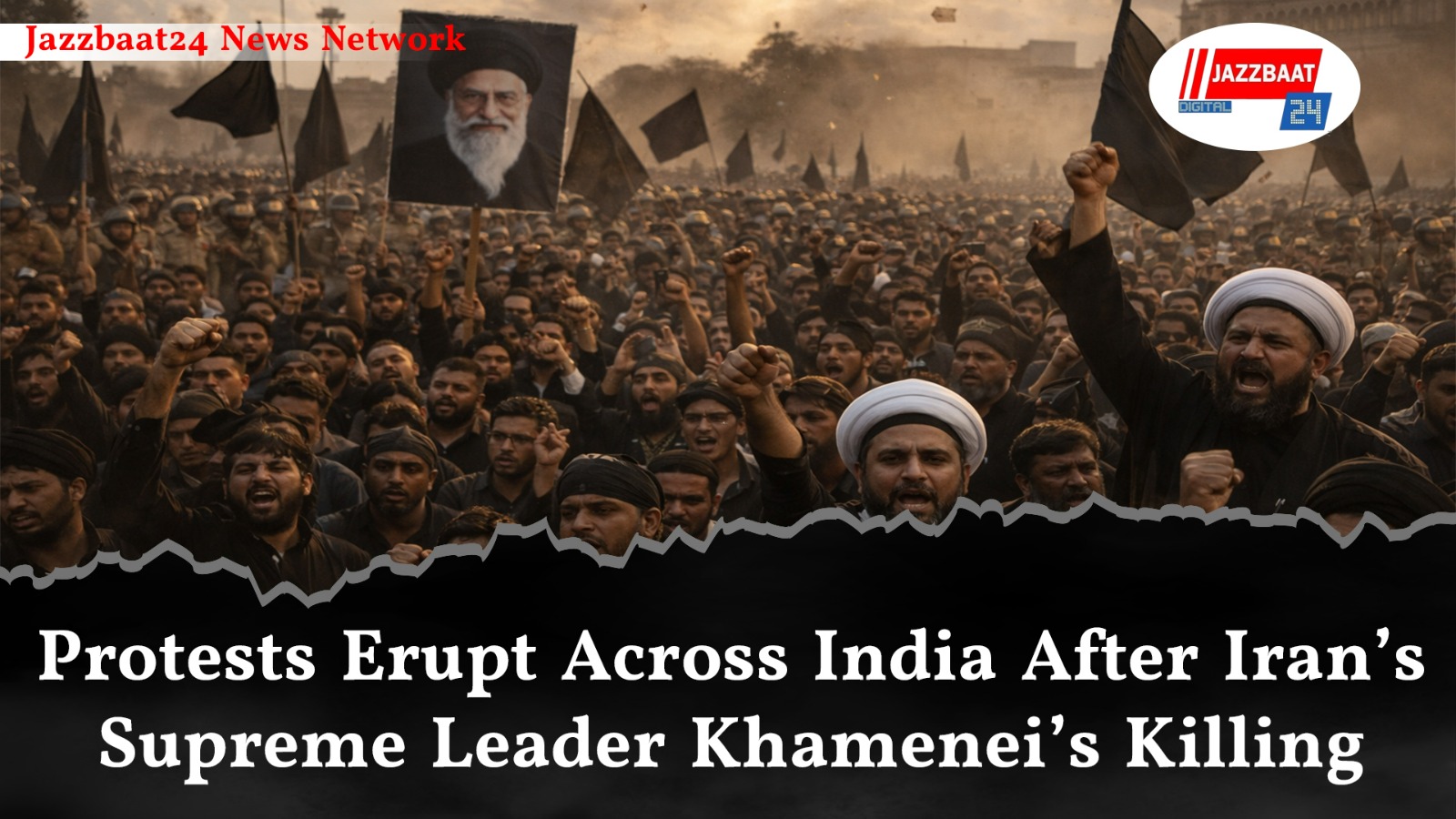
Widespread protests have broken out in several parts of India after reports that Iran’s Supreme Leader Ayatollah Ali Khamenei was killed in joint military strikes by the United States and Israel, stirring deep emotions and political outrage among sections of the population on Sunday.
In Jammu and Kashmir, particularly in Srinagar, Budgam, Baramulla and other districts, large numbers of Shia Muslims marched through the streets carrying black flags and portraits of Khamenei, chanting anti‑US and anti‑Israel slogans while expressing grief over the reported death. Many also performed traditional mourning chants (nauha), with demonstrations described as largely peaceful but emotionally charged.
Protests were also reported in Old Lucknow, Uttar Pradesh, where hundreds from the Shia community gathered at key locations such as Akbari Gate and Hussainabad, holding pictures of Khamenei and condemning the military action against Iran. Clerics in the city called for global justice and voiced strong criticism of the strikes.
Beyond Kashmir and Lucknow, demonstrations were noted in Hyderabad, where men, women and children took to streets in areas like Purani Haveli and Darulshifa, raising slogans and showing solidarity with Iran’s leader. Some communities have also announced periods of mourning, with black flags hoisted and special prayers scheduled.
Authorities in sensitive regions have increased security, and political leaders including Jammu & Kashmir Chief Minister Omar Abdullah have appealed for calm, urging residents to maintain peace and avoid actions that could lead to unrest.
The protests reflect broader regional and international tensions triggered by the killing of a figure revered by many Shia Muslims, and underline how developments in the Middle East are resonating within diverse Indian communities.