
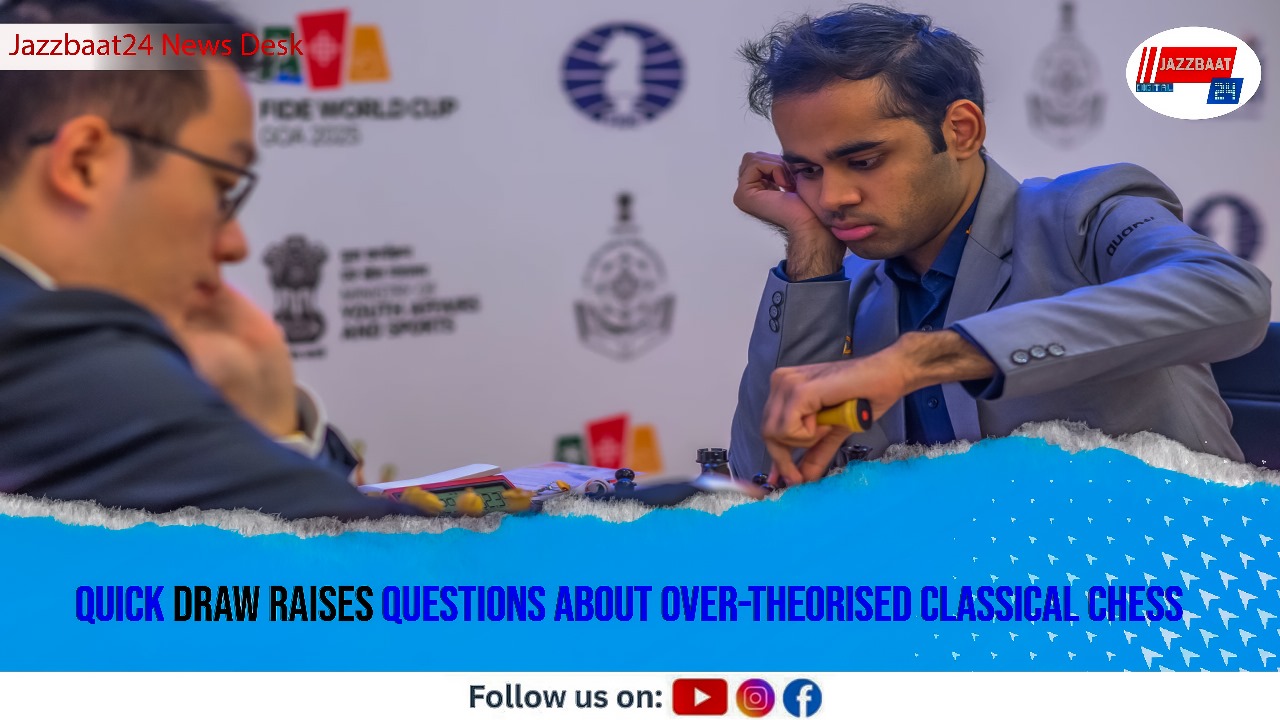
The highly anticipated FIDE World Cup quarterfinal between India's Arjun Erigaisi and China's Wei Yi lasted barely an hour, ending in a draw after just 31 moves and reigniting debate about whether classical chess has become over-theorised.
The match, which began at 3 PM, concluded by 3:59 PM with both players exhibiting over 99% accuracy but offering no real contest. The anticlimactic result followed a tournament trend where players increasingly opt for safety over risk, pushing decisive moments to rapid and blitz tiebreaks rather than classical games.
Statistics reveal the extent of this cautious approach. The fifth round saw a 75% draw rate, with eight of 16 matches going to tiebreaks. The fourth round was even more pronounced, with 84% of games ending drawn and 11 matches requiring shorter time controls to determine winners.
Russian Grandmaster Daniil Dubov, former World Rapid Champion, articulated the dilemma after defeating India's R. Praggnanandhaa in tiebreaks. He revealed spending just five to ten minutes preparing for their classical encounters, winning all his matches in tiebreaks without a single classical victory.
"With this amount of preparation, what's the point? Everybody knows everything," Dubov told FIDE, highlighting how extensive opening theory has created a fundamental contradiction where players attempt to win a classical event without winning classical games.
Grandmaster Vaibhav Suri, Praggnanandhaa's trainer, defended the approach, explaining that the narrow gap in elite players' abilities makes creating novel opening ideas increasingly difficult. "The nature of opening preparation is that you have to create ideas. But creating new ideas every time is not easy," he said.
Three of four quarterfinal matches ended drawn, with only Uzbekistan's Nodirbek Yakubboev defeating Germany's Alexander Donchenko in a decisive result. As stakes increase with each round, players appear more willing to bide their time, waiting for rapid or blitz formats where preparation matters less and tactical sharpness dominates.
The trend raises questions about classical chess's future in knockout tournaments.