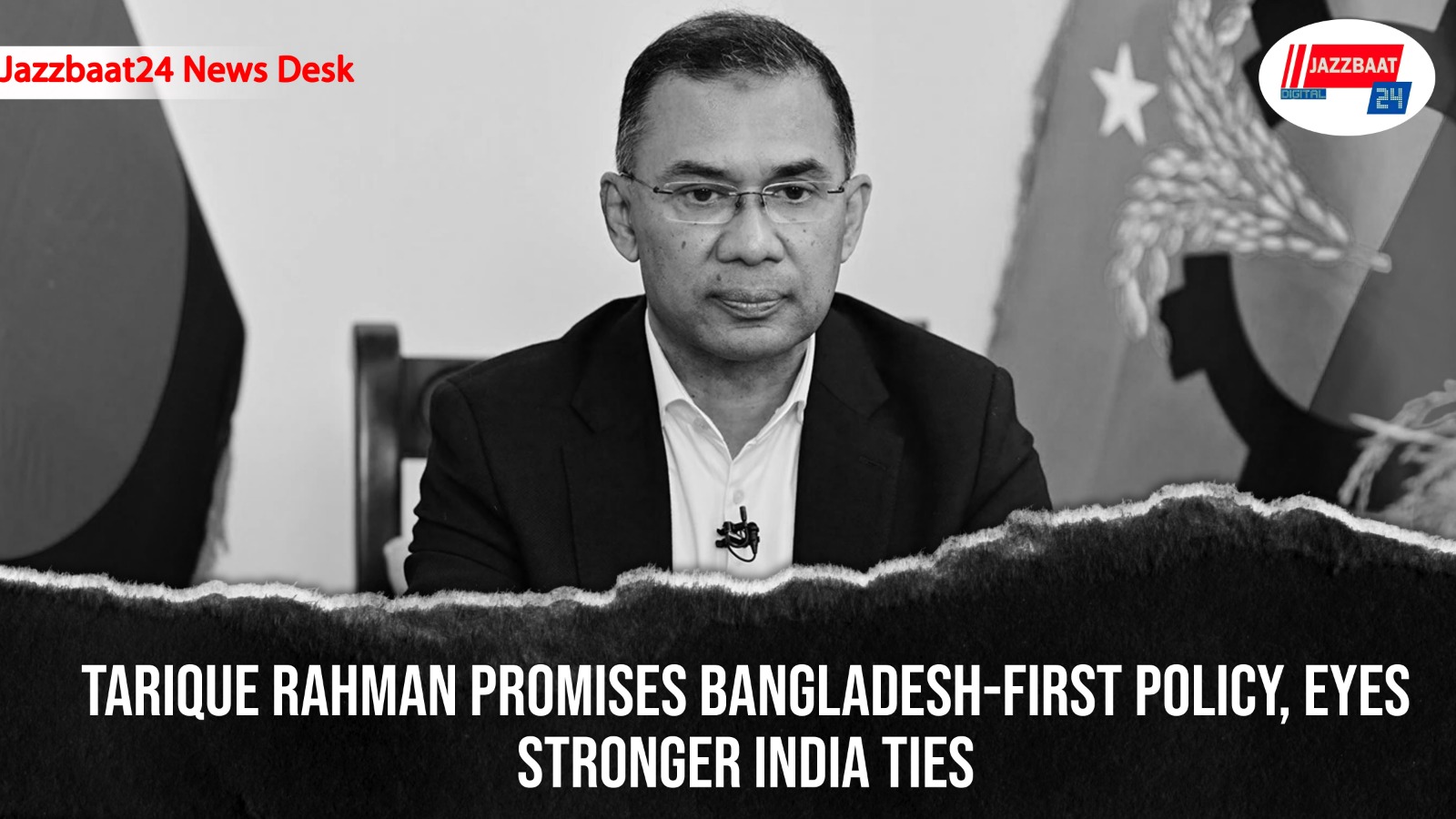
Bangladesh’s Prime Minister-elect Tarique Rahman has signaled a pragmatic approach to foreign policy, emphasizing that the interests of the country and its people will guide decisions. Speaking at his first press conference following the Bangladesh Nationalist Party’s (BNP) landslide victory in the February 12 national elections, Rahman stressed a people-centric agenda while highlighting the importance of maintaining strong regional relations, including with neighbouring India.
The BNP secured a decisive two-thirds majority, winning 212 of 299 contested seats, marking a return to power after nearly two decades. Rahman stated that improving the economy, governance, and law and order would remain top priorities, while international engagement would complement domestic reforms. “The interests of Bangladesh and its people will determine our foreign policy,” he said, indicating a shift from any country-centric approach under previous administrations.
Rahman’s top aide, Humayun Kabir, added that the new government aims to strengthen people-to-people ties with India and other regional neighbours. Kabir noted that India would be a priority destination in Rahman’s diplomatic engagements, reflecting the strategic importance of bilateral relations, especially after heightened tensions surrounding attacks on minority communities in Bangladesh.
The BNP has also indicated a renewed push for the extradition of former Prime Minister Sheikh Hasina from India. Senior party leader Salahuddin Ahmed said the new government will formally request India to send Hasina back to Bangladesh to face trial, following legal protocols. This move reflects the party’s focus on holding previous leadership accountable while asserting its governance agenda.
Preparations for the new government’s swearing-in are reportedly underway, with the interim administration led by Muhammad Yunus coordinating a smooth transfer of power. Officials suggest that the ceremony could take place as early as Monday, February 16, pending formal announcements.
With a strong parliamentary mandate, Rahman’s government is poised to redefine Bangladesh’s domestic and foreign policy trajectory, balancing economic growth, political accountability, and strategic regional engagement, including careful management of ties with India.