
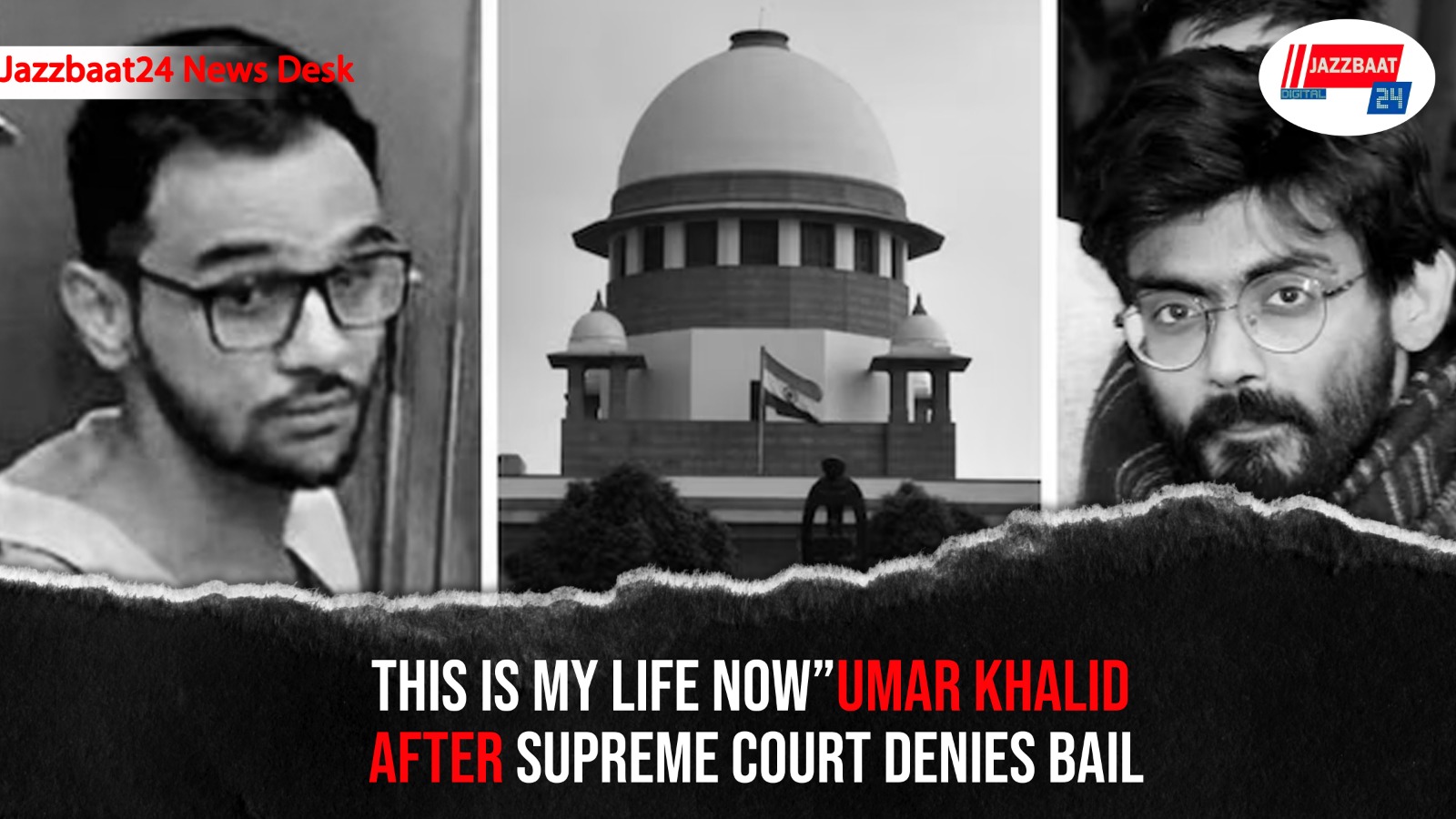
The Supreme Court on Monday denied bail to activist and former JNU student Umar Khalid and fellow student leader Sharjeel Imam in the 2020 Delhi riots conspiracy case, citing sufficient material to indicate their involvement in a larger criminal conspiracy. Khalid, who has spent over five years in jail, reacted to the verdict with quiet resignation, telling his partner that imprisonment has become his life now.
The top court, however, granted bail to five other accused in the case, Gulfisha Fatima, Meeran Haider, Shifa Ur Rehman, Mohd Saleem Khan, and Shadab Ahmed, observing that their alleged roles were not on the same footing as those attributed to Khalid and Imam. A bench of Justices Aravind Kumar and N.V. Anjaria said individuals accused of conceiving, directing, or steering unlawful or terrorist activities stand on a different legal plane from those whose alleged involvement is limited to facilitation or participation at a lower level.
Soon after the verdict, Khalid spoke to his partner, academic Banojyotsna Lahiri, who shared their conversation on social media. When she told him she would visit him at Delhi’s Tihar Jail, Khalid responded, “Good, come. This is my life now.” Lahiri added that Khalid expressed relief and happiness that five co-accused had been granted bail, calling it a moment of comfort amid personal disappointment.
Khalid and Imam were charged under the stringent Unlawful Activities (Prevention) Act (UAPA) in connection with the northeast Delhi riots of February 2020, which left over 50 people dead during protests against the Citizenship (Amendment) Act and NRC. While the Delhi Police has alleged a well-planned conspiracy aimed at destabilising the government, Khalid has repeatedly denied the charges, describing the case as baseless.
The Supreme Court noted that delay in trial alone cannot override statutory safeguards but allowed Khalid and Imam to apply for bail again after the examination of protected witnesses or after one year. The prolonged incarceration has drawn criticism from rights groups and international observers, keeping the case firmly in the public spotlight.