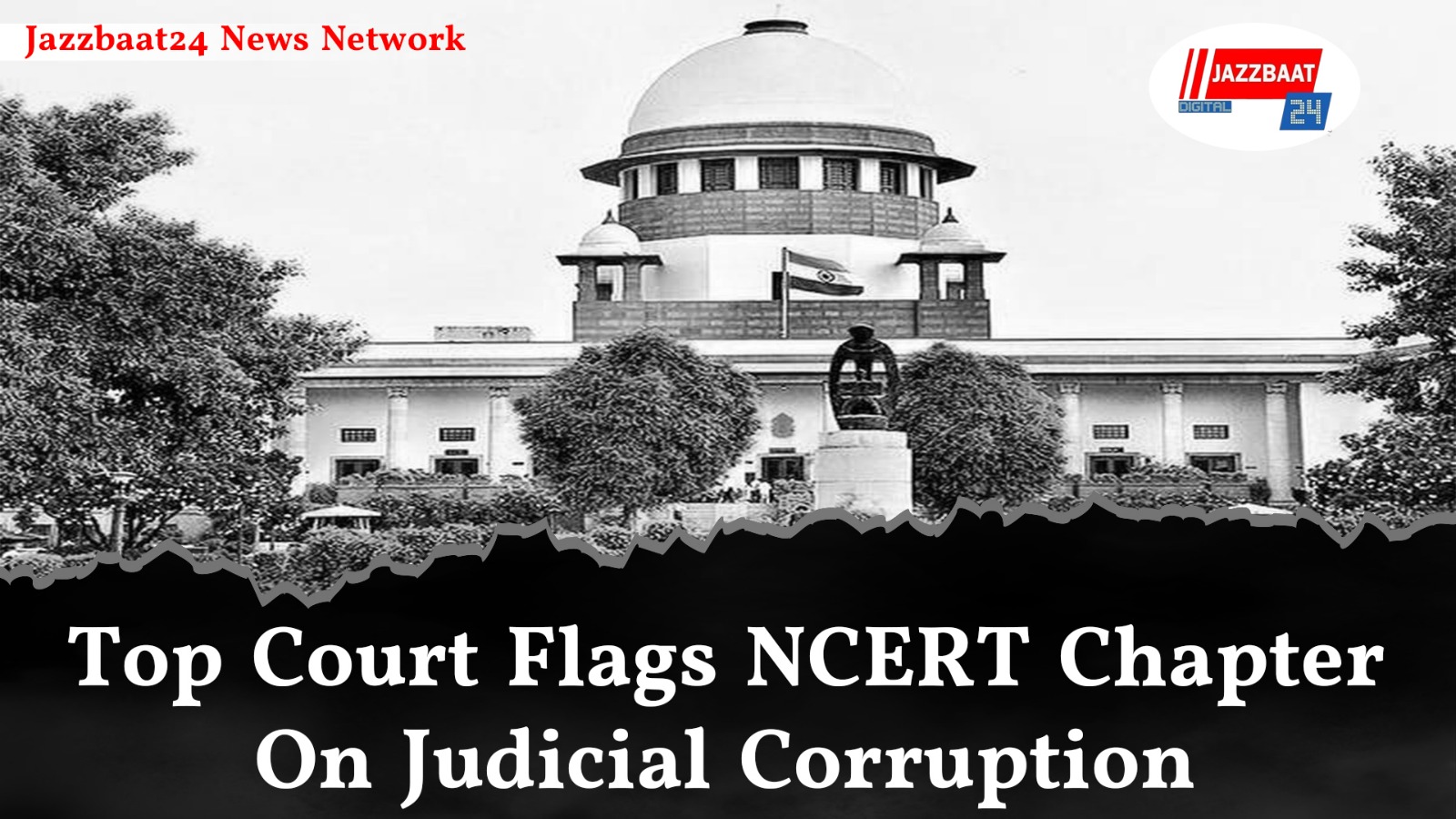
The Supreme Court of India on Wednesday expressed “grave concern” over a chapter in a Class 8 textbook published by the National Council of Educational Research and Training that discusses corruption in the judiciary.
The issue came up during court proceedings when senior advocate Kapil Sibal raised objections to the content included in the new Social Science textbook. According to him, the chapter introduces students to the concept of “judicial corruption”, which he described as a matter of serious concern.
Responding to the issue, Chief Justice Surya Kant said the court has taken cognisance of the matter and may consider initiating suo motu action if necessary. He stressed that the dignity and credibility of the judicial institution must be protected.
“I will not allow anybody to defame the institution. Law will take its course,” the Chief Justice said while reacting to the concerns raised in court.
The new textbook reportedly includes a section that mentions corruption within the judiciary as part of a broader discussion on corruption in public institutions. This marks a notable change from earlier editions of the Class 8 Social Science curriculum, which largely focused on explaining the structure, functions and importance of courts without directly discussing such issues.
According to sources, the top court views the matter seriously and may examine whether the content included in the textbook is appropriate for school students. The court indicated that it could look into whether the material presents the subject in a balanced and responsible manner.
During the hearing, the Chief Justice also remarked that he had taken note of the issue in his capacity as the head of the judicial institution. While refraining from making detailed comments at this stage, he hinted that the development appears to be a deliberate move and may require further examination.
The remarks have sparked debate over how complex institutional issues should be presented in school textbooks. Education experts say discussions on governance and accountability can be part of civic education but must be framed carefully to ensure students understand the context without undermining trust in democratic institutions.
Officials from NCERT have not yet issued a detailed response regarding the concerns raised by the Supreme Court.
The matter is expected to receive further attention as the court considers whether any formal action or review of the textbook content is required in the coming days.