
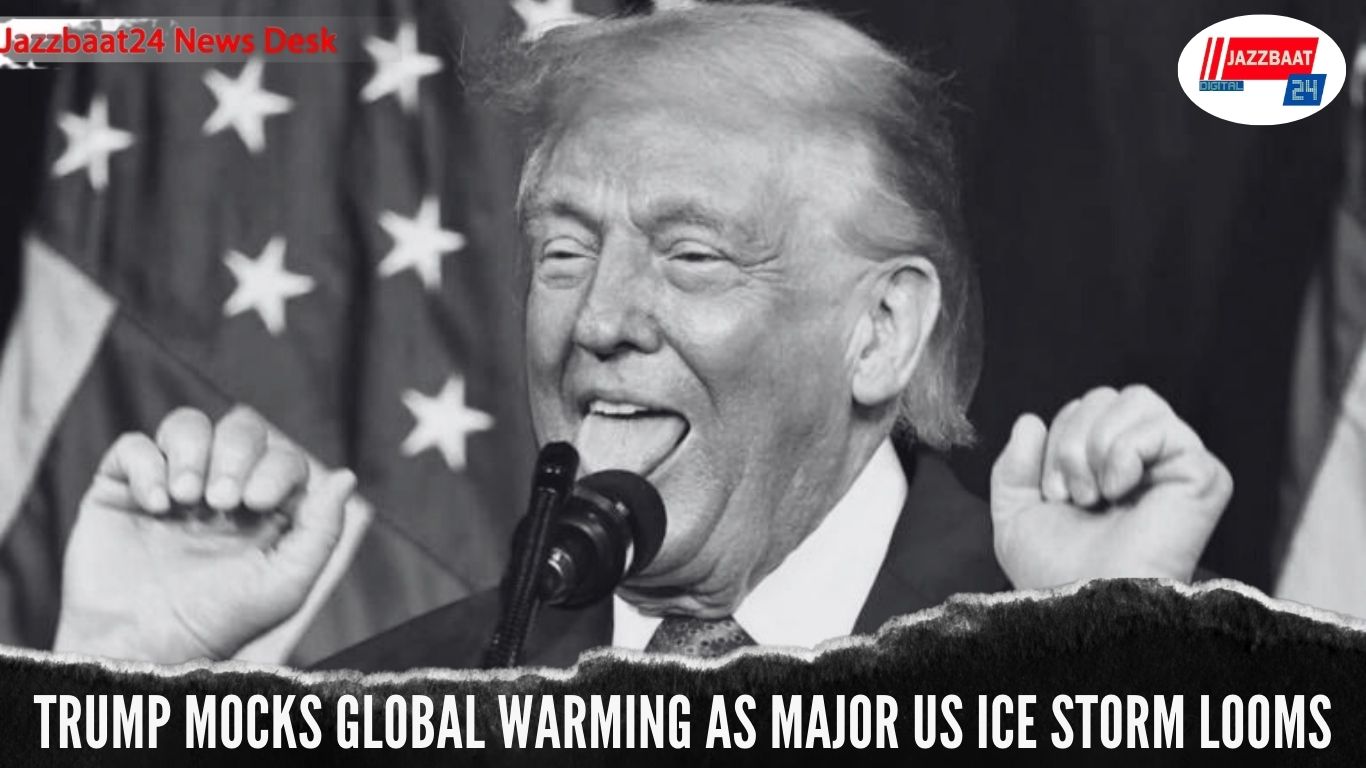
US President Donald Trump has once again questioned the reality of global warming, using an approaching winter storm to mock climate change concerns, even as forecasters warned that extreme weather could affect nearly two-thirds of the United States.
Taking to his social media platform Truth Social, Trump reacted to forecasts of a widespread cold wave expected to impact around 40 US states. In his post, he sarcastically asked what had happened to global warming, suggesting that the severe cold undermined scientific warnings about climate change.
Meteorologists, however, say the storm is expected to bring heavy snowfall, freezing rain, dangerously low temperatures, and strong winds across large parts of the country. The system could cause widespread power outages, hazardous travel conditions, and significant disruption to daily life.
According to flight-tracking service FlightAware, more than 1,500 flights within, into, or out of the United States were delayed or cancelled in advance of the storm. Major airports, including those in Dallas, Atlanta, and Oklahoma, were among those affected. Airlines warned passengers to check flight statuses and prepare for further delays as the storm system advances.
Weather agencies reported that approximately 160 million people were under winter storm, ice storm, or extreme cold warnings and watches. In several regions, residents were advised to limit travel, stock up on essential supplies, and prepare for possible power failures due to ice accumulation and high winds.
Trump has long been a vocal critic of climate change science, previously calling global warming a “hoax” and accusing scientists of pushing a political agenda. During both his first and second terms, he moved to withdraw the US from the Paris Climate Agreement and has promoted expanded fossil fuel production under the slogan “drill, baby, drill.”
Climate experts, however, stress that extreme cold events do not contradict global warming. They note that climate change is linked to more volatile and intense weather patterns, including both heatwaves and severe winter storms, making such events more disruptive and unpredictable.